Injury benefits
PIP and MedPay claims: medical bills from your own policy
What each coverage pays, how no-fault states use PIP and tort thresholds, the deadlines that matter, and how these benefits fit with a claim against the driver at fault.
By Valoroath Editorial Team Updated 7 min read
In plain terms
Personal injury protection (PIP) and medical payments coverage (MedPay) both pay medical bills for you and your passengers from your own policy, whoever caused the crash. PIP goes further: it can also pay lost wages and funeral costs, and in no-fault states it is required and comes first. Those states also limit when you can sue the other driver for pain and suffering, through a tort threshold written in law. MedPay is optional in most states and usually pays medical bills only. Report the injury to your insurer quickly, get care early, and keep every bill: the deadlines are short in several states.
- Who pays first
- Your own insurer
- Fault matters?
- No, for these benefits
- Florida PIP limit
- $10,000 per person
- New York no-fault
- $50,000 per person

What PIP and MedPay each pay
A standard personal auto policy is built in parts: liability (Part A), medical payments (Part B), uninsured motorists (Part C) and damage to your auto (Part D). MedPay sits in Part B. PIP is added where a state requires it or makes insurers offer it, and its terms follow that state's law. Both are first-party coverages: you claim from your own insurer, not from the driver who hit you.
Medical payments (MedPay)
Pays reasonable medical bills for you and your passengers up to a per-person limit, whoever caused the crash. The NAIC lists it as an optional coverage. In Texas, the insurance department notes it also covers you when you are hurt in someone else's car or while walking or biking.
Personal injury protection (PIP)
Pays medical bills and, depending on the state, lost wages, funeral costs and other expenses, up to the policy limit. The NAIC describes it as the coverage that lets your own insurer pay for injuries to you and your passengers regardless of fault in no-fault states.
Some at-fault states also require or offer PIP. Texas insurers must offer at least $2,500 of PIP, and it is included unless you reject it in writing. Delaware requires PIP of at least $15,000 per person and $30,000 per accident, yet keeps your right to sue the driver at fault. The minimum coverage your own state requires is covered by our sister site Brookguard.
No-fault states and the tort threshold
In a no-fault state, your own PIP pays your injury costs first, and you can sue the other driver for pain and suffering only when the injury crosses a line the law draws. That line, the tort threshold, is described in words in some states and in dollars in others. Damage to the car stays outside no-fault: it is paid by the at-fault driver's liability insurer or by your own collision coverage. The table shows four states with state pages on this site.
| State | PIP pays | Suing for pain and suffering |
|---|---|---|
| Florida | Up to $10,000 medical and disability; 80% of medical bills, 60% of lost gross income | Only for significant permanent loss of an important bodily function, permanent injury, significant permanent scarring or disfigurement, or death |
| New York | Up to $50,000 of basic economic loss per person | Only for a serious injury as defined in Insurance Law §5102(d), such as a fracture or significant disfigurement; in suits started since May 26, 2026, nothing if your fault is greater than that of those you sue, combined |
| Hawaii | Up to $10,000 per person in aggregate | Death, significant permanent loss of use, permanent serious disfigurement, or PIP benefits reaching $5,000 |
| Michigan | Medical bills and lost wages | Death, serious impairment of body function or permanent serious disfigurement; nothing if you were over 50% at fault |
Delaware works differently. It requires PIP but is an at-fault state, so you can still sue the driver who caused the crash. You just can't recover in that lawsuit the costs PIP already paid.
A few states let you pick. Pennsylvania, a choice no-fault state, requires at least $5,000 of first-party medical benefits and asks each policyholder to choose full tort or limited tort. Full tort keeps an unrestricted right to sue for pain and suffering. Limited tort keeps your claim for economic losses but allows that suit only for a serious injury or an exception in the statute, such as a crash with a drunk driver. If you never returned the election form, the law presumes full tort. Your choice is printed on your declarations page, so check it before you assume what you can claim.
Making a PIP or MedPay claim
- Tell your insurer quickly, in writing. New York's Department of Financial Services says to give the no-fault insurer written notice within 30 days of the crash. Other policies require notice "promptly".
- Get care early. In Florida, PIP medical benefits apply only if you receive initial services and care within 14 days of the crash, and without a finding of an emergency medical condition PIP pays at most $2,500 for medical care.
- Send the bills and the proof of lost income. Ask the insurer which forms it needs, give your providers the claim number, and keep copies of wage statements from your employer.
- Watch the payment clock. Florida PIP benefits are overdue 30 days after written notice of a covered loss and its amount. Hawaii and Delaware give the insurer 30 days after proof to pay or deny in writing, with interest on late payments.
- Keep a log of each bill, the date you sent it and what was paid. Explanation-of-benefits letters show which charges the insurer reduced and why.
What to do about your health itself is a separate question; our page on getting medical care after a crash covers the records an adjuster will ask for.
A worked example: a Florida PIP claim
Inputs: a Florida crash, care started within 14 days, and a treating provider finds an emergency medical condition. Your medical bills come to $6,000 and you lose $2,000 of gross income while you recover. Florida PIP pays 80% of reasonable medical expenses and 60% of lost gross income, up to $10,000 in total.
| Item | Your loss | PIP pays | Left over |
|---|---|---|---|
| Medical bills | $6,000 | $4,800 (80%) | $1,200 |
| Lost gross income | $2,000 | $1,200 (60%) | $800 |
| Total | $8,000 | $6,000 | $2,000 |
The $6,000 PIP pays stays under the $10,000 limit. The $2,000 left over may be paid by MedPay or health insurance, if you have them, and by the at-fault driver only if your injury meets Florida's threshold. If your policy has a PIP deductible, subtract it first.
How these benefits fit with other payers
- Health insurance may pay what PIP or MedPay doesn't, under its own rules. Tell both insurers about each other so bills aren't paid twice and then clawed back.
- The at-fault driver's insurer pays for injuries above your benefits in an at-fault state, or above the threshold in a no-fault state; see liability claims against the other driver.
- Your insurer may ask for its money back. When another driver caused the crash, an insurer that paid MedPay can seek repayment from that driver or from your settlement, where state law allows; subrogation explains how that works.
Questions people ask
What is the difference between PIP and MedPay?
Both pay medical bills for you and your passengers from your own policy, whoever caused the crash. PIP is required in no-fault states and can also pay lost wages and funeral costs. MedPay is usually optional and pays medical bills only.
Does PIP pay if the crash was my fault?
Yes. PIP and MedPay pay regardless of fault, up to your policy's limits. Fault still matters for damage to the car and for any lawsuit over pain and suffering.
Can I sue the other driver in a no-fault state?
For pain and suffering, only if your injury meets the state's tort threshold, such as a serious injury in New York or PIP benefits of $5,000 or more in Hawaii. Each state's rule is on its page in claim rules by state.
How long does an insurer have to pay a PIP claim?
It depends on the state. In Florida, PIP benefits are overdue 30 days after the insurer gets written notice of a covered loss and its amount; Hawaii and Delaware also give 30 days after proof, with interest on late payments.
Sources on record
- NAIC — What does auto insurance cover? (medical payments and PIP)
- NAIC — Auto insurance consumer guide (optional coverages)
- Texas Department of Insurance — Auto insurance guide (PIP and medical payments)
- Florida Statutes §627.736 — Required personal injury protection benefits
- Florida Statutes §627.737 — Tort exemption and limitation
- New York Insurance Law §5104 — Causes of action for personal injury
- New York State Senate — CPLR §1411 (fault bar for no-fault injury suits started on or after May 26, 2026)
- New York Department of Financial Services — Auto insurance
- HRS §431:10C-306 — Abolition of tort liability and exceptions
- Michigan Compiled Laws 500.3135 — Tort threshold, fault bar and mini-tort
- Delaware Code, Title 21, Chapter 21, Subchapter I — PIP (§2118) and PIP claim payment (§2118B)
- 75 Pa.C.S. §1705 — Election of tort options (2025 edition)
- 75 Pa.C.S. §1711 — Required first party medical benefits (2025 edition)
Facts on this page were checked against these sources on November 11, 2026. PIP limits, thresholds and deadlines are set by each state; the state pages list them with their statutes.
Ask a licensed agent to review your coverage
After a claim, the policy you had is the one you can still change. Describe your situation and Valoroath passes it to licensed insurance agents and insurers who can review your coverage and quote, if you want them to. Valoroath itself does not sell insurance or handle claims.
- 1 Five questions about your car, your record and your policy.
- 2 Who to ask for, and your consent to be contacted.
- 3 A licensed insurance agent or insurer reviews what you have. You change nothing unless you choose to.
Sending this request shares your answers and contact details with the licensed insurance agents and insurers who receive it, which some state privacy laws treat as a sale; see your privacy choices. An agent reviews your coverage; they can't take on your claim or a dispute with your insurer. You pay Valoroath nothing. The licensed insurance agents and insurers who contact you pay Valoroath for requests and set their own prices and terms; your claim stays with your insurer. How we make money.
Next in the file
-
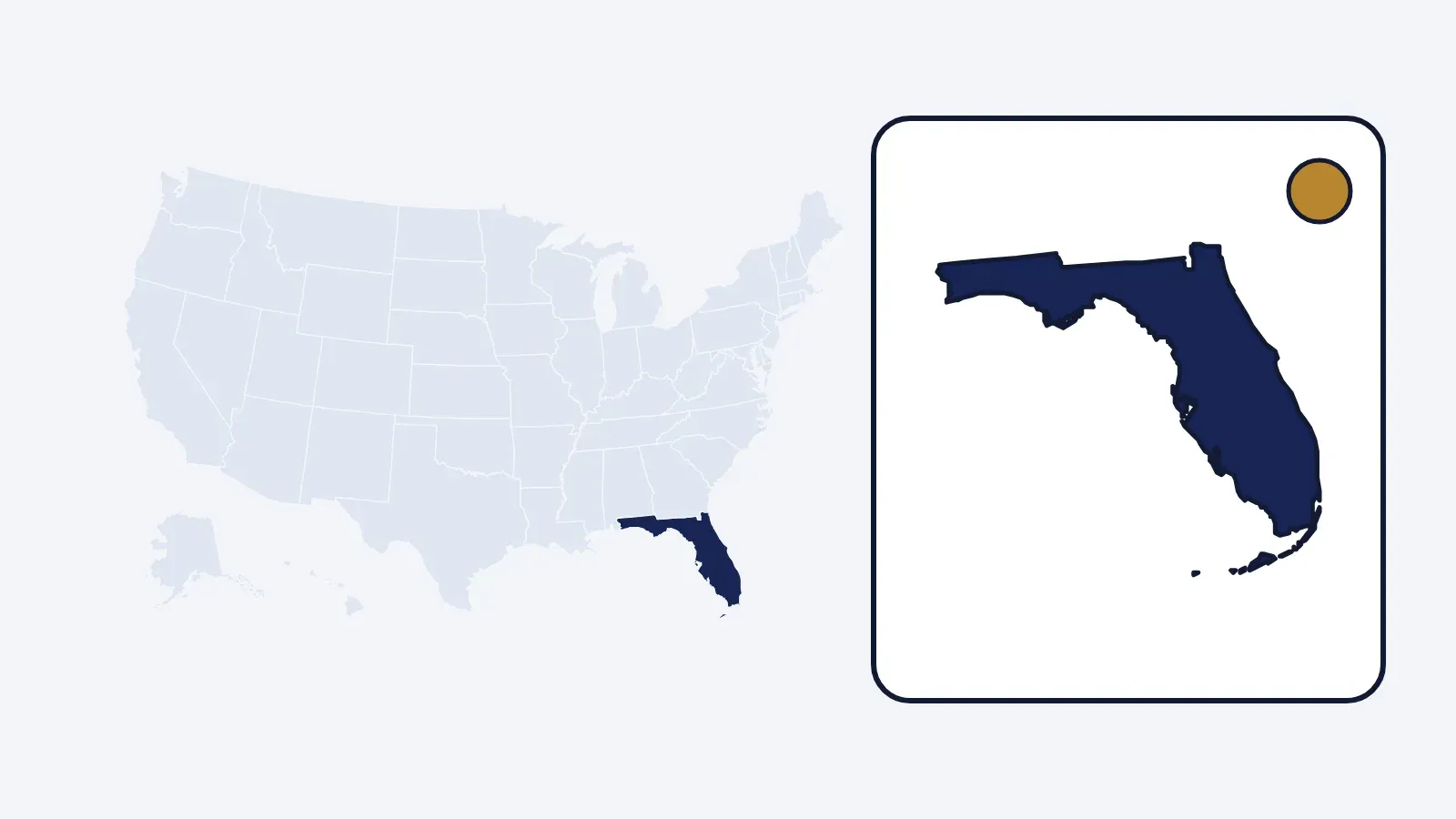
State claim rules
Florida
No-fault PIP up to $10,000, paid in 30 days; 14 days to acknowledge; 80% test only for uninsured cars; 2 years to sue.
-

After a crash
Medical care after a crash
Getting checked, who pays the first bills, the deadlines that can cost benefits, and the records to keep.
-

How claims work
Liability claims against the other driver
What the at-fault driver's insurer pays, the limit that caps it, and how your share of fault cuts the check.