Total loss by formula
Car insurance claim rules in Florida
How Florida's no-fault PIP system pays after a crash, the deadlines an insurer works under, when a car counts as a total loss, what to report, and how long you have to sue.
By Valoroath Editorial Team Updated 7 min read
In plain terms
Florida is a no-fault state: your own personal injury protection (PIP) pays the first $10,000 of medical and income losses, and PIP benefits are overdue if the insurer doesn't pay them within 30 days of written notice of a covered loss. A state rule gives every insurer 14 calendar days to acknowledge a claim communication. Once you and an insurer agree in writing on a settlement, it must pay within 20 days. For an insured car, the insurer's payout decides a total loss; the 80% test in title law applies to uninsured cars. Call the police after a crash with an injury or $2,000 or more of damage. Most negligence suits must be filed within two years.
- Total loss rule
- Insurer's formula, no %
- Insurer must decide
- PIP: 30 days after notice
- Deadline to sue
- 2 years (negligence)
- Fault system
- No-fault (PIP required)
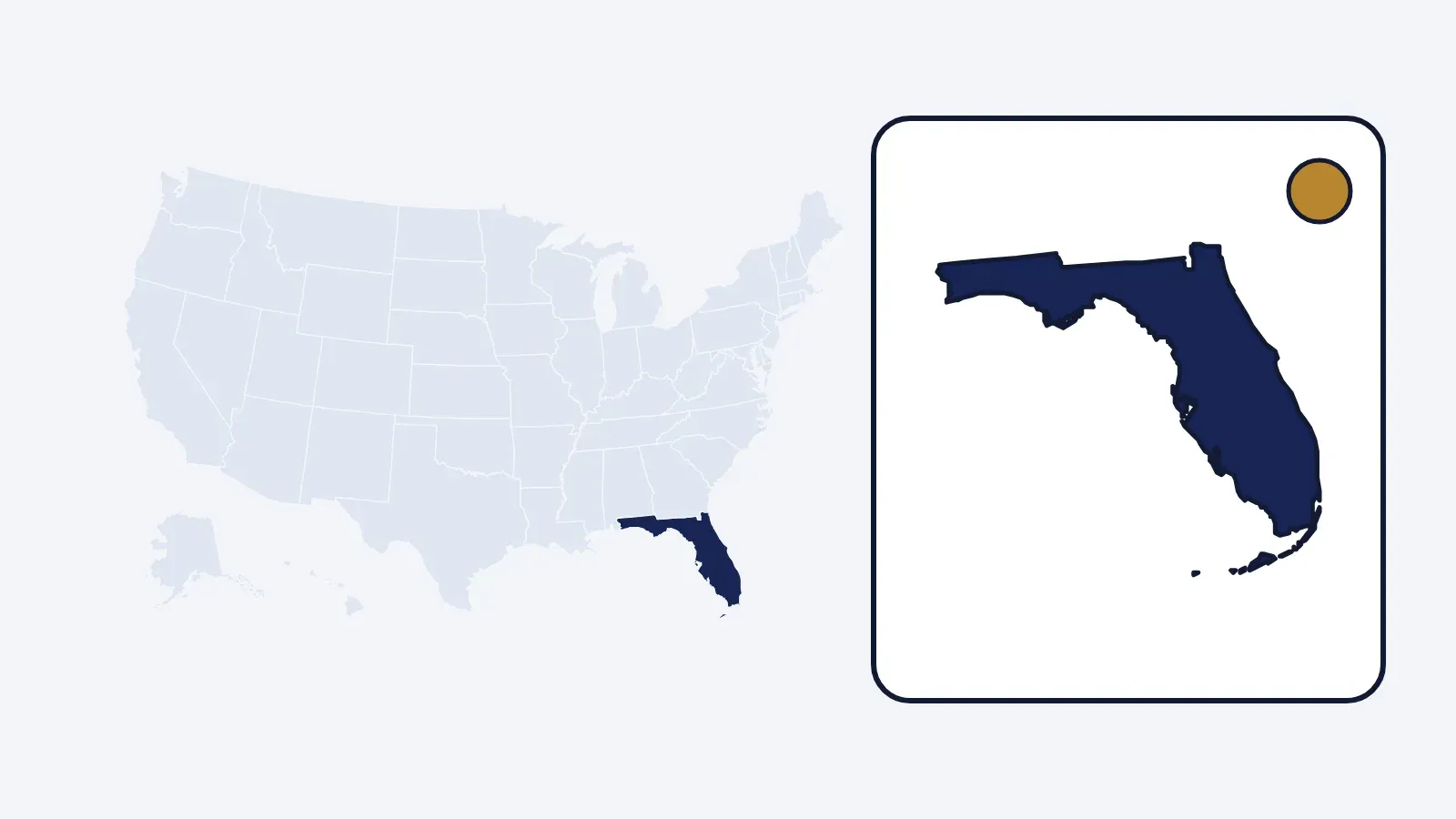
Florida claim rules on one sheet
- Total loss rule No percentage for insured cars; insurer's formula Title law: an insured car is a total loss when the insurer pays to replace it; the 80% test applies to uninsured cars (§319.30).
- Insurer must acknowledge 14 calendar days after a claim communication Investigation must begin within 10 working days of proof of loss statements (Rule 69O-166.024).
- Insurer must decide No fixed days for car damage; PIP overdue 30 days after notice Agreed settlements must be paid within 20 days, with 12% interest if late (§§627.736(4)(b), 627.4265).
- Deadline to sue 2 years for negligence claims §95.11(5)(a). §95.11(3)(g) sets 4 years for injuring personal property; which applies can depend on the claim.
- Fault system No-fault (PIP required); barred above 50% fault Pain and suffering suits need a serious injury under §627.737(2).
- Police report needed At once for injury, death or apparent damage of $2,000 or more
- State crash report Driver report within 10 days if property damage and no police report required Officers file a long-form report within 10 days for injury, pain or towed cars (§316.066).
A summary by Valoroath of the state's statutes and regulations, not an official document. The sources are listed at the end of this page.
The clock on a Florida claim
Florida spreads its claim deadlines across a state insurance rule and several statutes. The ones that matter for a car claim are below.
| Step | Deadline | Source |
|---|---|---|
| Review and acknowledge a claim communication | 14 calendar days | Rule 69O-166.024 |
| Begin the investigation | 10 working days after proof of loss statements | Rule 69O-166.024 |
| Pay PIP benefits | Overdue 30 days after written notice of a covered loss | §627.736(4)(b) |
| Pay an agreed settlement | 20 days after the written agreement, unless it sets a date | §627.4265 |
If an insurer pays a written settlement late, the amount carries interest at 12% a year from the date of the agreement; when payment depends on a release, interest starts once you hand in the signed release. The acknowledgment must answer what you sent; for a new claim it includes claim forms, instructions and a phone number. The rule sets no day count for accepting or denying a car damage claim, so ask in writing what the insurer still needs. Our page on claims that drag on shows how.
PIP and the no-fault rules
Section 627.736 sets the PIP benefit: up to $10,000 in medical and disability benefits and $5,000 in death benefits per person, whoever caused the crash. It pays 80% of reasonable medical expenses and 60% of lost gross income. The minimum policy you must carry is covered by our sister site Brookguard.
- Get care within 14 days. PIP medical benefits apply only if you receive initial services and care within 14 days of the crash.
- $2,500 without an emergency condition. If a treating provider does not find an emergency medical condition, PIP pays at most $2,500 for medical care.
- Suing the other driver. Under Section 627.737, you can sue for pain and suffering only if the injury includes a significant and permanent loss of an important bodily function, a permanent injury, significant and permanent scarring or disfigurement, or death.
What to send with a PIP claim and how payments add up is in our guide to PIP and MedPay claims.
When a Florida car is a total loss
Section 319.30 of the Florida Statutes treats an insured car as a total loss when the insurance company pays the owner to replace it with a comparable car, or pays after a theft. There is no percentage for insured cars, so the insurer's formula decides. The 80% figure often quoted for Florida applies to uninsured cars: one is a total loss when repairs would cost 80% or more of the cost of a car of like kind and quality.
- Title within 72 hours. An insurer that pays a total loss must get the title, notify the national title database, and send the title to the state within 72 hours of receiving it.
- Repairing past 100%. If you and the insurer agree to repair a car whose repair cost exceeds 100% of its replacement cost, you must ask for a Total Loss Vehicle brand on the title within 72 hours.
- What the payout should include is covered in our guide to total loss claims.
Reporting a Florida crash
Section 316.065 requires the driver to notify the police right away after a crash that injures or kills someone or causes property damage that appears to be at least $2,000. Inside a city, call the local police; elsewhere, the county sheriff or the Florida Highway Patrol.
Under Section 316.066, an officer files a long-form crash report within 10 days of finishing the investigation when someone is killed, hurt or complains of pain, when a car must be towed away, and in a few other cases. For other crashes the officer completes a short-form report or gives the drivers a driver exchange-of-information form. If your crash damaged a vehicle or other property and no police report was required, you must send your own written report to the state within 10 days, on its approved form.
Fault, deadlines to sue and complaints
When a claim goes beyond PIP, Florida uses modified comparative fault: under Section 768.81(6), a person found more than 50% at fault for their own harm recovers nothing, and others recover less by their share. Section 95.11(5)(a) gives two years to sue on a claim founded on negligence. A separate four-year period in Section 95.11(3)(g) covers actions for injuring personal property; ask a Florida attorney which one applies to your claim before the two years run out.
- Ask the insurer in writing for the reason for a denial or a low offer and the policy language it relies on.
- Contact your insurer first and keep records, as the Department of Financial Services asks, with your claim number, date of loss and declarations page.
- Ask the Division of Consumer Services for help through its online Consumer Assistance Portal; our guide to insurance department complaints shows what to include.
Questions people ask
How long does a Florida insurer have to pay a PIP claim?
PIP benefits are overdue if they aren't paid within 30 days after the insurer receives written notice of a covered loss and its amount, under Section 627.736(4)(b) of the Florida Statutes.
What percentage of damage totals a car in Florida?
For an insured car, the law sets no percentage: a car is a total loss when the insurer pays to replace it. The 80% test in Section 319.30 applies to uninsured cars. An insurer may total a car when repair cost plus salvage value approaches its value.
Do I have to report a minor crash in Florida?
Call the police if anyone is hurt or damage appears to be $2,000 or more. If the crash damaged property and no police report was required, you must file your own written report with the state within 10 days.
Can I sue the other driver in Florida?
For property damage, yes. For pain and suffering, only if the injury meets the threshold in Section 627.737: a significant permanent loss of an important bodily function, a permanent injury, significant permanent scarring or disfigurement, or death.
Sources on record
- Florida Administrative Code, Rule 69O-166.024 — Acknowledging communications and investigating claims
- Florida Statutes §627.736 — Required personal injury protection benefits
- Florida Statutes §627.737 — Tort exemption and limitation
- Florida Statutes §627.4265 — Payment of settlements
- Florida Statutes §319.30 — Total loss and salvage
- Florida Statutes §316.065 and §316.066 — Crash notice and crash reports
- Florida Statutes §768.81 — Comparative fault
- Florida Statutes §95.11 — Limitations other than for the recovery of real property
- Florida Department of Financial Services — Get insurance help
Facts on this page were checked against these sources on November 11, 2026. The residential property deadlines in Section 627.70131 were checked to confirm they do not apply to car claims.
Ask a licensed agent to review your coverage
After a claim, the policy you had is the one you can still change. Describe your situation and Valoroath passes it to licensed insurance agents and insurers who can review your coverage and quote, if you want them to. Valoroath itself does not sell insurance or handle claims.
- 1 Five questions about your car, your record and your policy.
- 2 Who to ask for, and your consent to be contacted.
- 3 A licensed insurance agent or insurer reviews what you have. You change nothing unless you choose to.
Sending this request shares your answers and contact details with the licensed insurance agents and insurers who receive it, which some state privacy laws treat as a sale; see your privacy choices. An agent reviews your coverage; they can't take on your claim or a dispute with your insurer. You pay Valoroath nothing. The licensed insurance agents and insurers who contact you pay Valoroath for requests and set their own prices and terms; your claim stays with your insurer. How we make money.
Next in the file
-
How claims work
PIP and MedPay claims
How your own policy pays medical bills after a crash, how no-fault thresholds work, and the deadlines.
-

How claims work
Total loss claims
When a car is totaled, what actual cash value should include, and what happens to the loan and the title.
-

Claim dispute
Complaining to your state
When a complaint helps, how to find your insurance department, what to include, and what it can and can't do.