Total loss at 75%
Car insurance claim rules in New York
The deadlines in New York's Regulation 64, when a damaged car is branded a total loss, the reports drivers must make, and how no-fault changes who pays.
By Valoroath Editorial Team Updated 7 min read
In plain terms
New York's claim rules are in Regulation 64 (11 NYCRR Part 216). An insurer must acknowledge your claim within 15 business days, accept or reject it in writing within 15 business days after receiving your proof of loss and anything else it asked for, and pay within 5 business days of agreeing on a settlement. For car damage, it has 6 business days to inspect. A car 8 model years old or newer is branded salvage when damage reaches 75% of its retail value. File an MV-104 within 10 days after a crash with an injury or more than $1,000 of damage. You generally have 3 years to sue.
- Total loss rule
- Damage at 75% of value
- Insurer must decide
- 15 business days
- Deadline to sue
- 3 years
- Fault system
- No-fault (PIP)
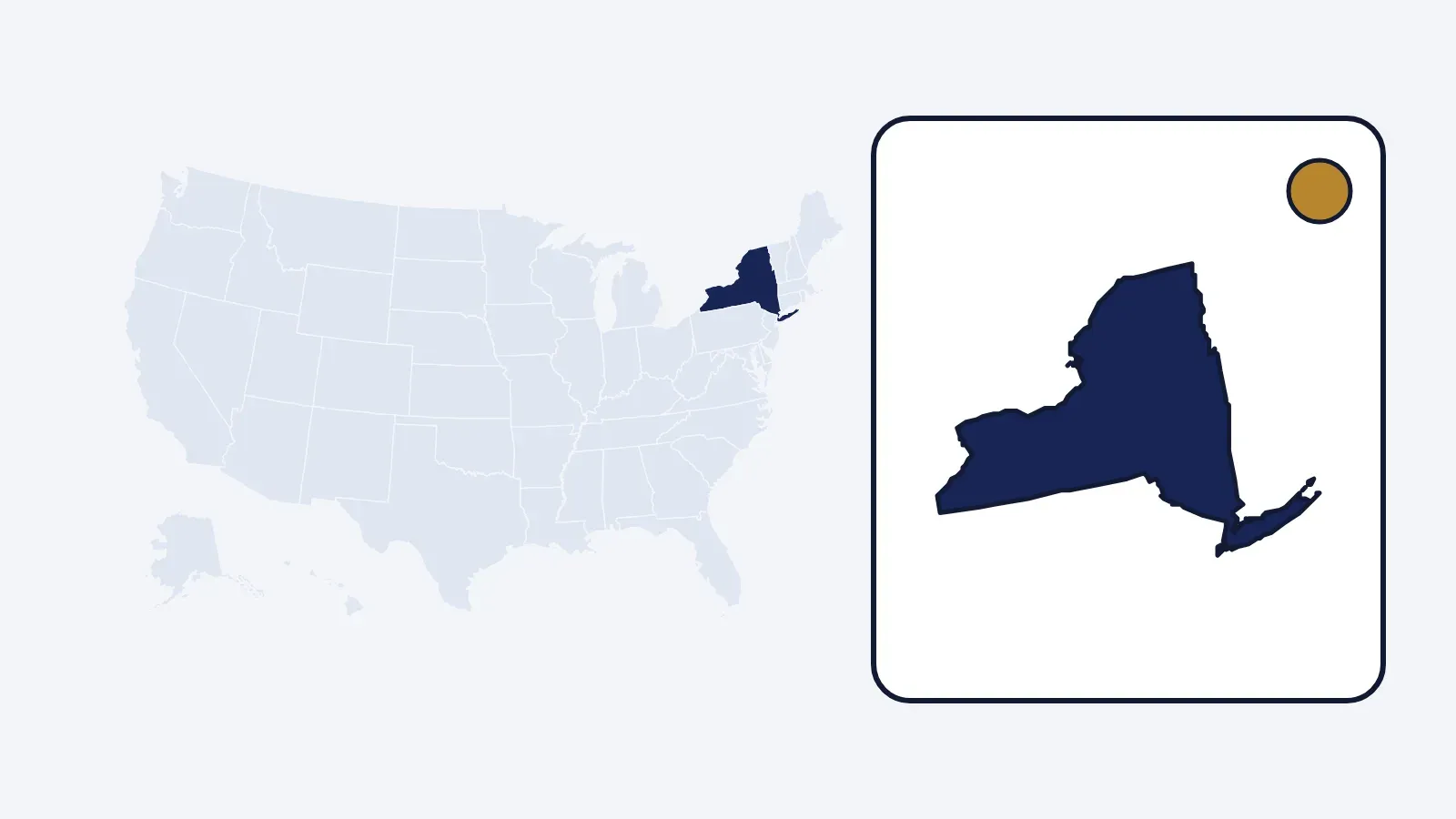
New York claim rules on one sheet
- Total loss rule Damage at 75% or more of retail value DMV salvage branding, for cars 8 model years old or newer.
- Insurer must acknowledge 15 business days after notice of the claim
- Insurer must decide 15 business days after proof of loss and requested items Pay 5 business days after agreement (11 NYCRR 216.6). Car damage: inspect within 6 business days.
- Deadline to sue 3 years for injury and for property damage
- Fault system No-fault (PIP); injury suits barred if you are more at fault (since 5/26/2026) CPLR §1411(b), Ch. 58 of 2026, Part EE: suits started on or after May 26, 2026. Other claims keep pure comparative fault.
- Police report needed Injury with no officer present, or damage when the owner is absent
- State crash report MV-104 to the DMV in 10 days: injury, death or over $1,000 damage Required from drivers even when police file a report (VTL §605).
A summary by Valoroath of the state's statutes and regulations, not an official document. The sources are listed at the end of this page.
Regulation 64 deadlines
The Department of Financial Services (DFS) enforces Regulation 64, which turns the Insurance Law's ban on unfair claim practices into business-day limits. They apply to claims under your own policy and to claims against another driver's insurer.
| Step | Deadline | Section |
|---|---|---|
| Acknowledge the claim | 15 business days after notice | 216.4(a) |
| Reply to your other letters about the claim | 15 business days | 216.4(b) |
| Accept or reject in writing | 15 business days after proof of loss and requested items | 216.6(c)(1) |
| If it needs more time: tell you, then follow up | Within the same 15 days, then every 90 days | 216.6(c)(2) |
| Pay an agreed settlement | 5 business days after it receives your agreement | 216.6(f) |
The decision clock starts only when the insurer has the proof of loss and the items it requested, so send them quickly and keep dated copies. Our page on claims that drag on covers what to do when follow-up letters stop.
Car damage and total loss rules
Section 216.7 adds car-specific steps. If the insurer wants to inspect before repairs, it has 6 business days after notice of the claim; if it misses that window, it loses the right to inspect first. You must receive a copy of its detailed written estimate. On request, it must name a registered repair shop within 10 miles (Nassau, Suffolk, Westchester and cities of 100,000 or more) or 25 miles elsewhere that will do the work.
- The 75% line. The New York DMV brands the title of a car 8 model years old or newer when the damage is 75% or more of its retail value. Older cars generally don't get the brand.
- The minimum offer. A cash offer must follow a method in 216.7(c), such as the average retail value in two valuation manuals, a dealer quote held for 3 days, or an approved database, less any deductions.
- Room to dispute. Within 35 calendar days of payment, you can show the value was too low, and the insurer must reopen the file.
Our guide to total loss claims lists what to check in the valuation, and the total loss check applies the 75% line.
Reporting a New York crash
Vehicle and Traffic Law §600 requires you to stop and give your name, address, insurer, policy and license details. When someone is injured and no officer is present, report it to the nearest police station as soon as you physically can. When only property is damaged and the owner isn't there, report it to the police as well.
Section 605 adds your own report. If anyone is killed or injured, or property damage to any one person is over $1,000, you must file a Report of Motor Vehicle Accident (MV-104) with the DMV within 10 days, even if the police made their own report.
No-fault and the right to sue
New York is a no-fault state. Basic no-fault (personal injury protection) pays up to $50,000 per person for medical bills, lost earnings and other basic economic loss, whoever caused the crash. DFS says to give the no-fault insurer written notice within 30 days of the crash. Our page on PIP and MedPay claims explains the process.
- Suing for pain and suffering. Insurance Law §5104 allows it only for a serious injury, defined in §5102(d) to include death, dismemberment, significant disfigurement, a fracture, loss of a fetus and permanent or significant limitation of use of a body part or system. For suits started on or after May 26, 2026, the category for a temporary injury that kept you from usual activities for 90 of the first 180 days is gone.
- Shared fault. CPLR §1411 reduces what you recover by your share of fault. Since May 26, 2026 (Chapter 58 of the Laws of 2026, Part EE), a new §1411(b) bars recovery in personal injury suits covered by the no-fault law when your fault is greater than that of the people you sue, combined. It applies to suits started on or after that date; other claims, such as car damage, keep pure comparative fault.
- Car damage is not part of no-fault. You claim it from the at-fault driver's insurer or under your own collision coverage.
Deadlines to sue and complaints
CPLR §214 gives 3 years to sue for personal injury and 3 years for injury to property. The 2026 fault and serious-injury changes apply to actions commenced on or after May 26, 2026, so ask a licensed New York attorney if fault is disputed.
- Ask the insurer in writing for the reason for a delay, denial or offer and the policy language behind it.
- Call the DFS Hotline at (800) 342-3736, Monday to Friday, 8:30 a.m. to 4:30 p.m.
- File a complaint through the DFS Portal; our guide to insurance department complaints lists what to include.
Questions people ask
How long does a New York insurer have to decide a car insurance claim?
Under 11 NYCRR 216.6, it must accept or reject the claim in writing within 15 business days after receiving the proof of loss and the items it requested. If it needs more time, it must say so within that period and follow up every 90 days.
What percentage of damage totals a car in New York?
The DMV brands the title of a car 8 model years old or newer when damage is 75% or more of its retail value. The insurer can still total a car for economic reasons.
Do I need to file an MV-104 after a crash in New York?
Yes, within 10 days, if anyone was killed or injured or property damage to any one person was more than $1,000, even when police took a report.
How long do I have to sue after a car accident in New York?
Generally 3 years for personal injury and for property damage under CPLR §214. To recover for pain and suffering, the injury must meet the serious injury definition in the no-fault law.
Sources on record
- 11 NYCRR 216.4 — Acknowledging pertinent communications
- 11 NYCRR 216.6 — Standards for prompt, fair and equitable settlements
- 11 NYCRR 216.7 — Motor vehicle physical damage claims
- New York DMV — About salvage branding (75% of retail value)
- Vehicle and Traffic Law §600 — Leaving the scene; duty to report
- Vehicle and Traffic Law §605 — Reports by drivers
- Insurance Law §5102 and §5104 — No-fault definitions and limits on suits
- CPLR §1411 — Damages recoverable when contributory negligence is shown
- DFS Insurance Circular Letter No. 3 (2026) — Motor vehicle insurance reforms (Chapter 58, Part EE)
- CPLR §214 — Actions to be commenced within three years
- New York Department of Financial Services — Auto insurance
- New York Department of Financial Services — Contact and hotline
Facts on this page were checked against these sources on November 11, 2026. Chapter 58 of the Laws of 2026, Part EE, signed and effective May 26, 2026, amended CPLR §1411 and Insurance Law §§5102(d) and 5104 for actions commenced on or after that date.
Ask a licensed agent to review your coverage
After a claim, the policy you had is the one you can still change. Describe your situation and Valoroath passes it to licensed insurance agents and insurers who can review your coverage and quote, if you want them to. Valoroath itself does not sell insurance or handle claims.
- 1 Five questions about your car, your record and your policy.
- 2 Who to ask for, and your consent to be contacted.
- 3 A licensed insurance agent or insurer reviews what you have. You change nothing unless you choose to.
Sending this request shares your answers and contact details with the licensed insurance agents and insurers who receive it, which some state privacy laws treat as a sale; see your privacy choices. An agent reviews your coverage; they can't take on your claim or a dispute with your insurer. You pay Valoroath nothing. The licensed insurance agents and insurers who contact you pay Valoroath for requests and set their own prices and terms; your claim stays with your insurer. How we make money.
Next in the file
-
How claims work
PIP and MedPay claims
How your own policy pays medical bills after a crash, how no-fault thresholds work, and the deadlines.
-

Claim dispute
Disputing a total loss value
How to check the valuation report, the comparable car rules, the 35-day reopener, and what comes next.
-

After a crash
Reporting to your insurer
Your duties under the policy, what to have ready, report vs. claim, and the deadlines the insurer must meet.