Total loss by formula
Car insurance claim rules in Hawaii
How Hawaii's no-fault system pays after a crash, the deadlines insurers work under, what happens to a totaled car's title, when to call the police, and how long you have to sue.
By Valoroath Editorial Team Updated 7 min read
In plain terms
Hawaii is a no-fault state. Your own personal injury protection (PIP) pays up to $10,000 per person for medical and related costs, and the insurer must pay a PIP claim, or deny it in writing with reasons, within 30 days of reasonable proof. Under Hawaii's unfair claims law, insurers must answer claim communications within 15 working days, offer payment within 30 days of accepting liability, and explain in writing any claim still open 30 days after you report it. State law sets no repair percentage for a total loss. Call the police after a crash with an injury or $3,000 or more of damage. Most suits must be filed within two years.
- Total loss rule
- Insurer's formula, no %
- Insurer must decide
- PIP: 30 days after proof
- Deadline to sue
- 2 years
- Fault system
- No-fault (PIP required)
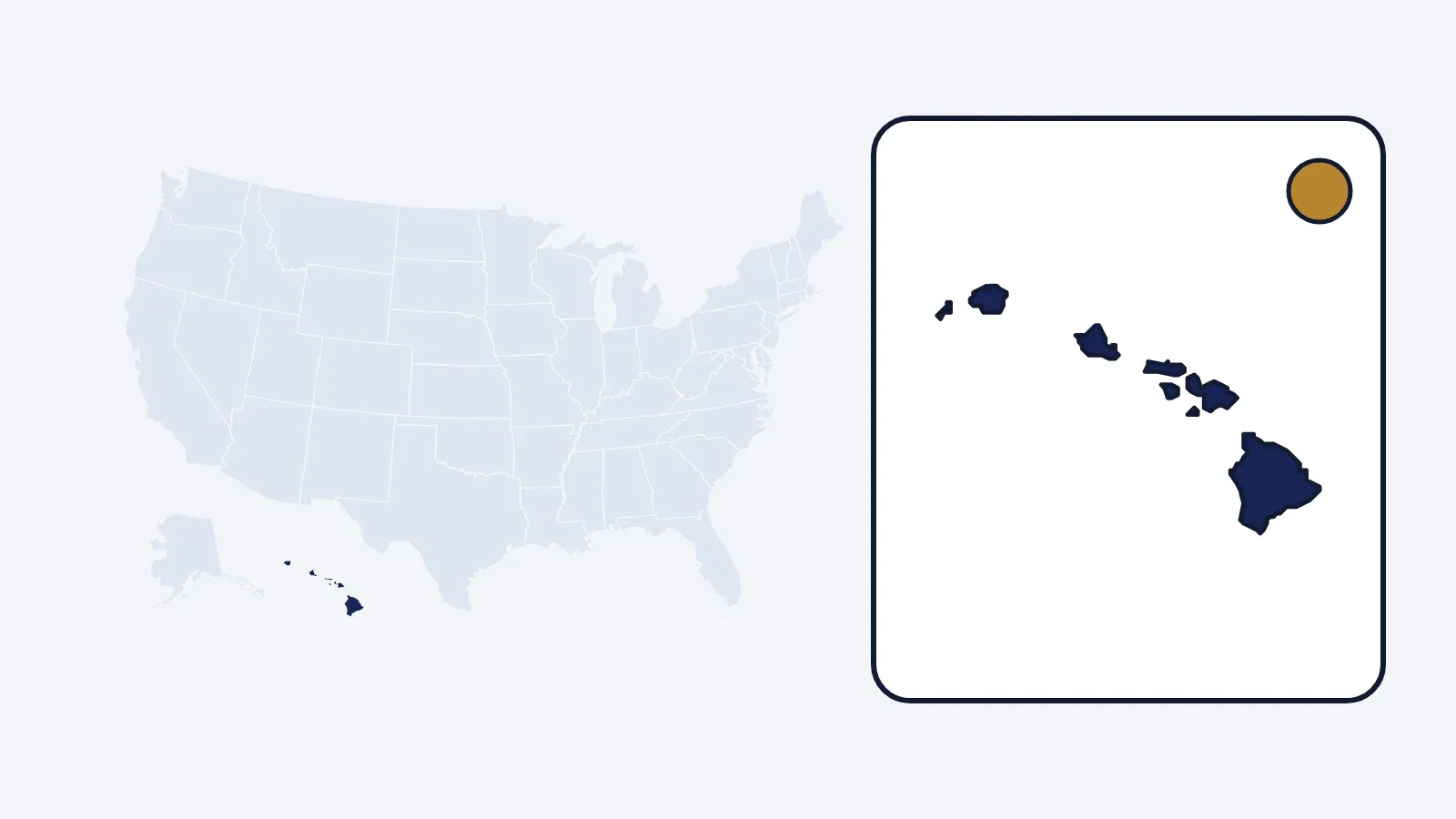
Hawaii claim rules on one sheet
- Total loss rule No percentage in law; insurer's formula HRS §286-48: title, plates and salvage application go to the county within 10 days of a total loss settlement.
- Insurer must acknowledge Within 15 working days of a communication
- Insurer must decide Reasonable time after proof of loss; written reasons if open 30 days Offer payment within 30 days of affirming liability. PIP: pay or deny in writing within 30 days (§431:10C-304).
- Deadline to sue 2 years for injury; 2 years for property damage Injury suits: 2 years from the crash or the last benefit payment, whichever is later (§431:10C-315).
- Fault system No-fault (PIP required); barred if more at fault than the other side Injury suits need death, permanent injury, serious disfigurement or PIP benefits of $5,000 or more (§431:10C-306).
- Police report needed At once for injury, death or apparent damage of $3,000 or more
- State crash report None required from drivers; a responding officer files the report
A summary by Valoroath of the state's statutes and regulations, not an official document. The sources are listed at the end of this page.
The clock on a Hawaii claim
Hawaii puts its claim deadlines in the Insurance Code itself, in the list of unfair claim settlement practices in Section 431:13-103(a)(11) of the Hawaii Revised Statutes.
| Step | Deadline | Item |
|---|---|---|
| Respond to communications from you | Reasonably promptly, never more than 15 working days | (B) |
| Affirm or deny coverage | A reasonable time after proof of loss statements are completed | (E) |
| Offer payment | 30 calendar days after affirming liability | (F) |
| Explain any delay in writing | On every claim unresolved 30 calendar days after it was reported | (G) |
The law sets no fixed number of days to accept or deny a car damage claim, but the written explanation at 30 days gives you something concrete to ask for. Keep dated copies of what you send. Our page on claims that drag on shows how to follow up.
PIP and the no-fault threshold
Section 431:10C-103.5 sets PIP benefits at an aggregate limit of $10,000 per person; insurers may offer more. PIP pays whoever caused the crash. Section 431:10C-304 sets its deadlines.
- 30 days to pay. The insurer must pay PIP benefits within 30 days after it receives reasonable proof of the amount and a demand for payment.
- 30 days to deny in writing. If it denies all or part of a claim, it must tell you in writing, with reasons, within the same 30 days.
- Interest. Late PIP benefits carry interest of 1.5% a month after the 30 days.
Section 431:10C-306 abolishes most lawsuits over injuries from a crash involving an insured car. You can still sue the at-fault driver if the crash caused a death, a significant permanent loss of use of a part or function of the body, a permanent and serious disfigurement that causes mental or emotional suffering, or injuries for which PIP benefits reach $5,000. More on how PIP claims work is in our guide to PIP and MedPay claims.
When a Hawaii car is a total loss
Hawaii law sets no repair percentage that makes a car a total loss. Section 286-48 refers only to a total loss insurance settlement, so the insurer's own comparison of repair cost, salvage value and the car's value decides it.
- Ten days for the paperwork. After the settlement, the insurer forwards the title, registration, license plates and a salvage certificate application to the county director of finance within 10 days.
- Keeping the car. If you keep the salvage after a total loss settlement, the insurer must notify the director of finance within 10 days.
- The payout is the car's value before the crash, less your deductible; what it should include is in our guide to total loss claims.
Reporting a Hawaii crash
Section 291C-16 requires the driver to notify the nearest police officer immediately, by the quickest means, when a crash injures or kills someone or causes total property damage that appears to be $3,000 or more. A responding officer files a written report in the same cases.
Drivers don't file their own report with the state. If you hit an unattended car or other property, Section 291C-15 requires you to stop, find the owner or leave a written note, and notify the nearest police officer without unnecessary delay.
Fault, deadlines to sue and complaints
When a claim goes beyond PIP, or concerns damage to your car, fault decides who pays. Under Section 663-31 you can recover if your negligence was not greater than the other side's, and your award drops by your share. Section 431:10C-315 gives two years to sue in tort over a crash, counted from the crash or from the last payment of motor vehicle insurance benefits, whichever is later. Section 657-7 sets two years for damage to property.
- Ask the insurer in writing for the reason for a denial or a low offer and the policy language it relies on.
- Call the Insurance Division of the Department of Commerce and Consumer Affairs at 1-844-808-3222 to speak with an investigator before filing.
- File a complaint with the online form linked from the division's complaint page; our guide to insurance department complaints shows what to include.
Questions people ask
How long does a Hawaii insurer have to pay a PIP claim?
30 days after it receives reasonable proof of the benefits owed and a demand for payment. A denial must come in writing, with reasons, within the same 30 days, and late benefits carry interest of 1.5% a month.
Can I sue the other driver after a crash in Hawaii?
For injuries, only if the crash caused a death, a significant permanent loss of use of a body part or function, a permanent and serious disfigurement, or injuries with PIP benefits of $5,000 or more. Damage to your car is claimed under fault rules.
What percentage of damage totals a car in Hawaii?
Hawaii law sets no percentage. The insurer decides, usually when repair cost plus salvage value approaches the car's value, and must send the title and plates to the county within 10 days of the settlement.
How long do I have to sue after a car accident in Hawaii?
Generally two years from the crash, or from the last payment of motor vehicle insurance benefits if that is later, under Section 431:10C-315. Property damage claims have two years under Section 657-7.
Sources on record
- Hawaii Revised Statutes §431:13-103 — Unfair claim settlement practices
- HRS §431:10C-103.5 — Personal injury protection benefits
- HRS §431:10C-304 — Payment of PIP benefits
- HRS §431:10C-306 — Abolition of tort liability and exceptions
- HRS §431:10C-315 — Limitation of actions
- HRS §286-48 — Salvage and total loss settlements
- HRS §291C-16 — Duty to give notice of collisions
- HRS §663-31 — Contributory negligence
- HRS §657-7 — Limitation for damage or injury to persons or property
- Hawaii Insurance Division — Filing a complaint
Facts on this page were checked against these sources on November 11, 2026. Your policy can add conditions of its own, such as how soon you must report a claim.
Ask a licensed agent to review your coverage
After a claim, the policy you had is the one you can still change. Describe your situation and Valoroath passes it to licensed insurance agents and insurers who can review your coverage and quote, if you want them to. Valoroath itself does not sell insurance or handle claims.
- 1 Five questions about your car, your record and your policy.
- 2 Who to ask for, and your consent to be contacted.
- 3 A licensed insurance agent or insurer reviews what you have. You change nothing unless you choose to.
Sending this request shares your answers and contact details with the licensed insurance agents and insurers who receive it, which some state privacy laws treat as a sale; see your privacy choices. An agent reviews your coverage; they can't take on your claim or a dispute with your insurer. You pay Valoroath nothing. The licensed insurance agents and insurers who contact you pay Valoroath for requests and set their own prices and terms; your claim stays with your insurer. How we make money.
Next in the file
-

How claims work
PIP and MedPay claims
How your own policy pays medical bills after a crash, how no-fault thresholds work, and the deadlines.
-

Claim dispute
When your claim drags on
The time limits insurers work under, why files stall, and the written steps that move a claim.
-

After a crash
When to call the police
The cases for 911, state damage thresholds from $50 to $4,000, and why a report helps after a small crash.