Lost value
Diminished value claims: when a repaired car is worth less
Why a car with a crash history sells for less, who may owe you the difference, and how to document a claim an adjuster can check.
By Valoroath Editorial Team Updated 7 min read
In plain terms
Diminished value is the drop in a car's market value after it has been in a crash and repaired, because buyers pay less for a car with a damage history. It is generally claimed from the at-fault driver's liability insurer as part of your property damage, since the person who caused the loss owes you for it. Your own collision coverage rarely pays it: standard policy wording is silent on it, and an endorsement exists to exclude it. No formula in law sets the amount in most states. Support your number with the repair invoice and an independent appraisal, and in North Carolina you can demand appraisal if the gap is large enough.
- Usual route
- Third-party claim
- Your own policy
- Rarely pays it
- Deductible
- None on third-party claim
- NC appraisal trigger
- $2,000 or 25% gap
What diminished value means
A repair can restore how a car looks and drives, but not its history. A vehicle history report can show the crash, and many buyers and dealers offer less for a car that has had structural or major body work. The difference between what the car would sell for with no crash and what it sells for after proper repairs is its diminished value.
The claim applies to a car that is repaired. If the insurer totals the car instead, there is nothing left to lose value: the settlement is the car's actual cash value before the crash, covered in our guide to total loss claims. A small repair to a bumper cover or a mirror may also leave little or no measurable loss, so weigh the cost of proving it before you start.
- Inherent diminished value: the loss in value that remains even after a complete, proper repair. This is what most claims are about.
- Repair-related diminished value: extra loss caused by poor work or parts that don't match. The first remedy is to have the repair redone; our page on choosing a repair shop and parts covers your rights.
A paper in the NAIC's Journal of Insurance Regulation found neither consistency nor predictability in how states treat these claims under a driver's own policy, while third-party recovery in tort is widely recognized. That split shapes every step below.
Third-party claims, the usual route
When another driver caused the crash, you can claim from their liability insurer the full harm to your property: the repair, and the loss in value that the repair doesn't fix. You pay no deductible on a claim against another driver's insurer, as the Texas Department of Insurance notes. The insurer pays only up to its driver's property damage limit, which has to cover the repair too.
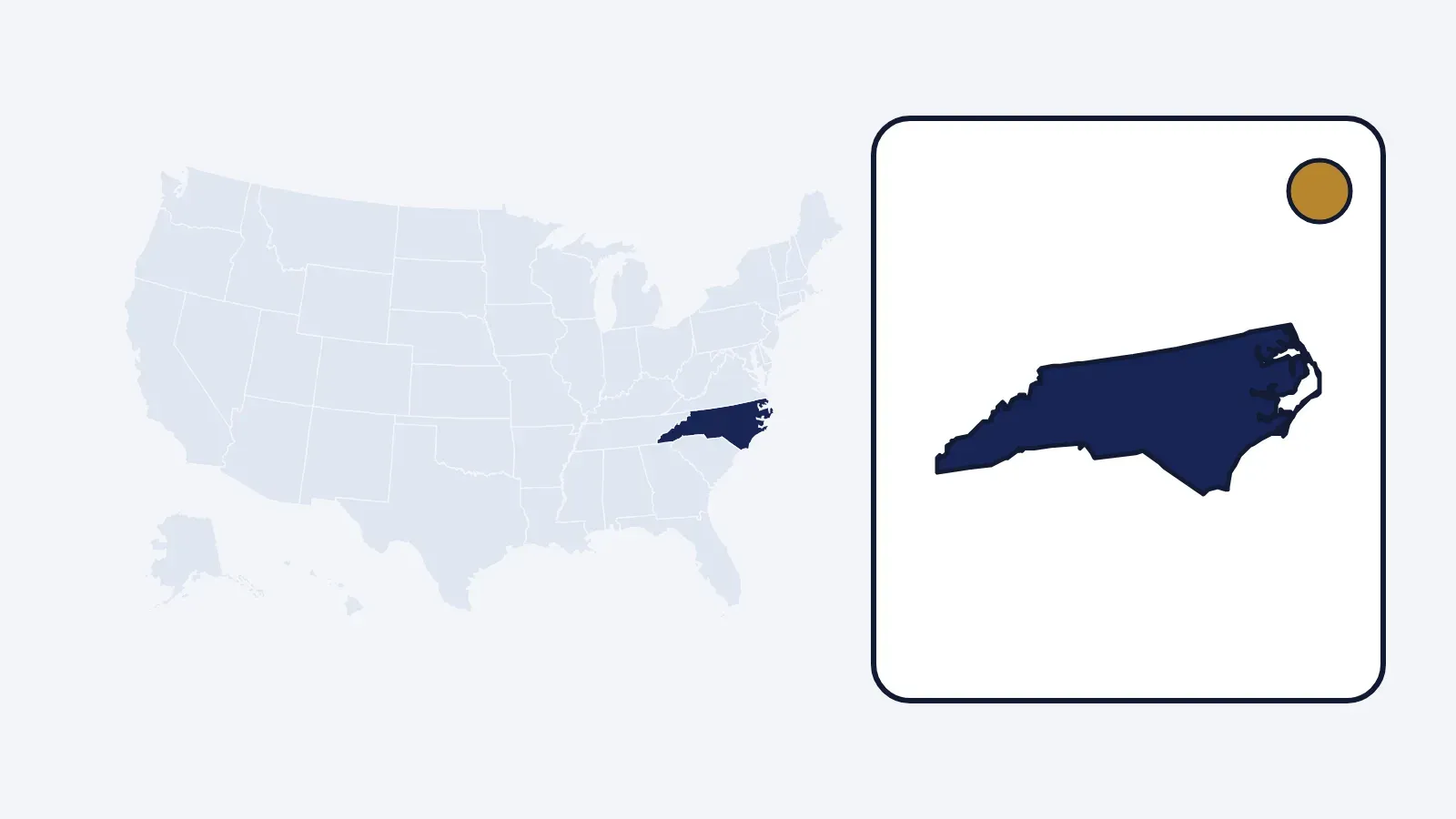
North Carolina writes a process into its liability insurance statute. Under G.S. 20-279.21(d1), when liability isn't contested and your diminished value estimate and the insurer's differ by more than $2,000 or 25% of the car's pre-accident retail value, whichever is less, either side can demand appraisal. Each names a licensed appraiser within 20 days, an umpire settles disagreements, and the result binds both sides unless one rejects the umpire's report within 15 days. Details are on the North Carolina page.
| Your estimate | Insurer's offer | Gap | Appraisal right? |
|---|---|---|---|
| $2,500 | $1,000 | $1,500 | No: below the $2,000 trigger |
| $2,500 | $300 | $2,200 | Yes: above $2,000 |
The trigger is the lesser of $2,000 and 25% of $20,000 ($5,000), so $2,000 applies. On a car worth less than $8,000, 25% of its value would be the smaller number and the trigger would drop below $2,000.
Why your own policy rarely pays it
Collision coverage promises to pay for direct physical loss to your car, usually the lower of the cost to repair it or its actual cash value. The limit of liability wording in the standard personal auto policy doesn't mention diminished value, and an endorsement is available that lets insurers exclude it where the state allows. Courts in different states have read similar wording differently.
So treat a first-party diminished value claim as the exception. Read your policy's limit of liability and any endorsements, and ask your insurer in writing whether it covers diminished value and why, citing the policy language it relies on. If you need the answer for a decision, your state insurance department can tell you whether your state has a rule.
Building a claim an adjuster can check
- Finish the repair first. Value is measured on the repaired car, so you need the final invoice, including any supplements.
- Keep the record of the damage: photos, the estimate and the invoice showing what was replaced or straightened, such as frame or structural parts and airbags.
- Get an independent appraisal from a licensed or credentialed appraiser who inspects the car and compares market data. Pay for it only if the likely gap is worth more than the fee.
- Add market evidence: dealer trade-in offers or listings for the same model with and without accident history.
- Send a written demand to the at-fault driver's insurer with the claim number, the amount and every document. Ask it to explain in writing how it reached any lower number.
If the insurer says no
A third-party insurer owes you no contract duties, but most states' unfair claim practice rules still bar it from refusing to pay without a reasonable investigation. Ask in writing for a supervisor's review first. If the insurer won't answer at all, you can complain to your state insurance department about how the claim is being handled. If it still won't move, a property damage claim of this size often fits small claims court, where you sue the driver, and the insurer usually defends. See small claims court after an accident and, for negotiating a low number, a lowball settlement offer.
Watch the deadline to sue for property damage, which is set by your state and can be shorter than you expect; each state's limit is on its page in claim rules by state. Don't sign a property damage release that covers diminished value before you have decided whether to claim it.
Questions people ask
Can I claim diminished value from my own insurance company?
Rarely. Standard collision wording doesn't mention diminished value, some policies exclude it by endorsement, and states treat these claims inconsistently. Ask your insurer in writing for its position and the policy language behind it.
Who pays diminished value after a crash that wasn't my fault?
The at-fault driver, through their liability insurer, as part of your property damage claim, up to that driver's property damage limit. You pay no deductible on a claim against another driver's insurer.
How is diminished value calculated?
There is usually no formula in law. Insurers use their own methods; you can answer with an independent appraisal and market evidence comparing the car with and without accident history. North Carolina adds an appraisal process for large gaps.
When can I demand appraisal of diminished value in North Carolina?
When liability isn't contested and the two estimates differ by more than $2,000 or 25% of the car's pre-accident retail value, whichever is less, under G.S. 20-279.21(d1).
Sources on record
- North Carolina General Statutes §20-279.21 — Motor vehicle liability policies, subsection (d1)
- NAIC Journal of Insurance Regulation — Automobile diminished value claims (Wells-Dietel, Erkan-Barlow, Walkowiak)
- Texas Department of Insurance — Auto insurance guide (no deductible on claims against another driver)
- NAIC — Unfair Claims Settlement Practices Act (MDL-900)
Facts on this page were checked against these sources on November 11, 2026. Whether a policy covers diminished value depends on its wording and on state law.
Ask a licensed agent to review your coverage
After a claim, the policy you had is the one you can still change. Describe your situation and Valoroath passes it to licensed insurance agents and insurers who can review your coverage and quote, if you want them to. Valoroath itself does not sell insurance or handle claims.
- 1 Five questions about your car, your record and your policy.
- 2 Who to ask for, and your consent to be contacted.
- 3 A licensed insurance agent or insurer reviews what you have. You change nothing unless you choose to.
Sending this request shares your answers and contact details with the licensed insurance agents and insurers who receive it, which some state privacy laws treat as a sale; see your privacy choices. An agent reviews your coverage; they can't take on your claim or a dispute with your insurer. You pay Valoroath nothing. The licensed insurance agents and insurers who contact you pay Valoroath for requests and set their own prices and terms; your claim stays with your insurer. How we make money.
Next in the file
-
How claims work
Liability claims against the other driver
What the at-fault driver's insurer pays, the limit that caps it, and how your share of fault cuts the check.
-
Claim dispute
When the offer is too low
Where a low number comes from, the rules on estimates and shops, and how to answer with a counteroffer.
-
State claim rules
North Carolina
Total loss at 75% of value with sales tax included; pay 10 business days after settling; 3 years to sue.