Total loss at 75%
Car insurance claim rules in North Carolina
What North Carolina requires of an insurer on your claim, when a car is a total loss and what the check must include, the crash reporting rule, and why fault matters so much here.
By Valoroath Editorial Team Updated 7 min read
In plain terms
North Carolina law requires insurers to act reasonably promptly on claims rather than within a set number of days, then to mail or deliver payment within 10 business days after a car claim is settled. A car is a total loss when repairs reach 75% of its pre-accident value, and the cash payment must include sales tax and registration fees unless you keep the car. A third-party claimant can demand an appraisal of the car's diminished value. Call the police at once after a crash with an injury or $1,000 of damage. North Carolina still uses contributory negligence, and you generally have 3 years to sue.
- Total loss rule
- Repairs at 75% of value
- Insurer must decide
- Reasonably promptly
- Deadline to sue
- 3 years
- Fault system
- At-fault
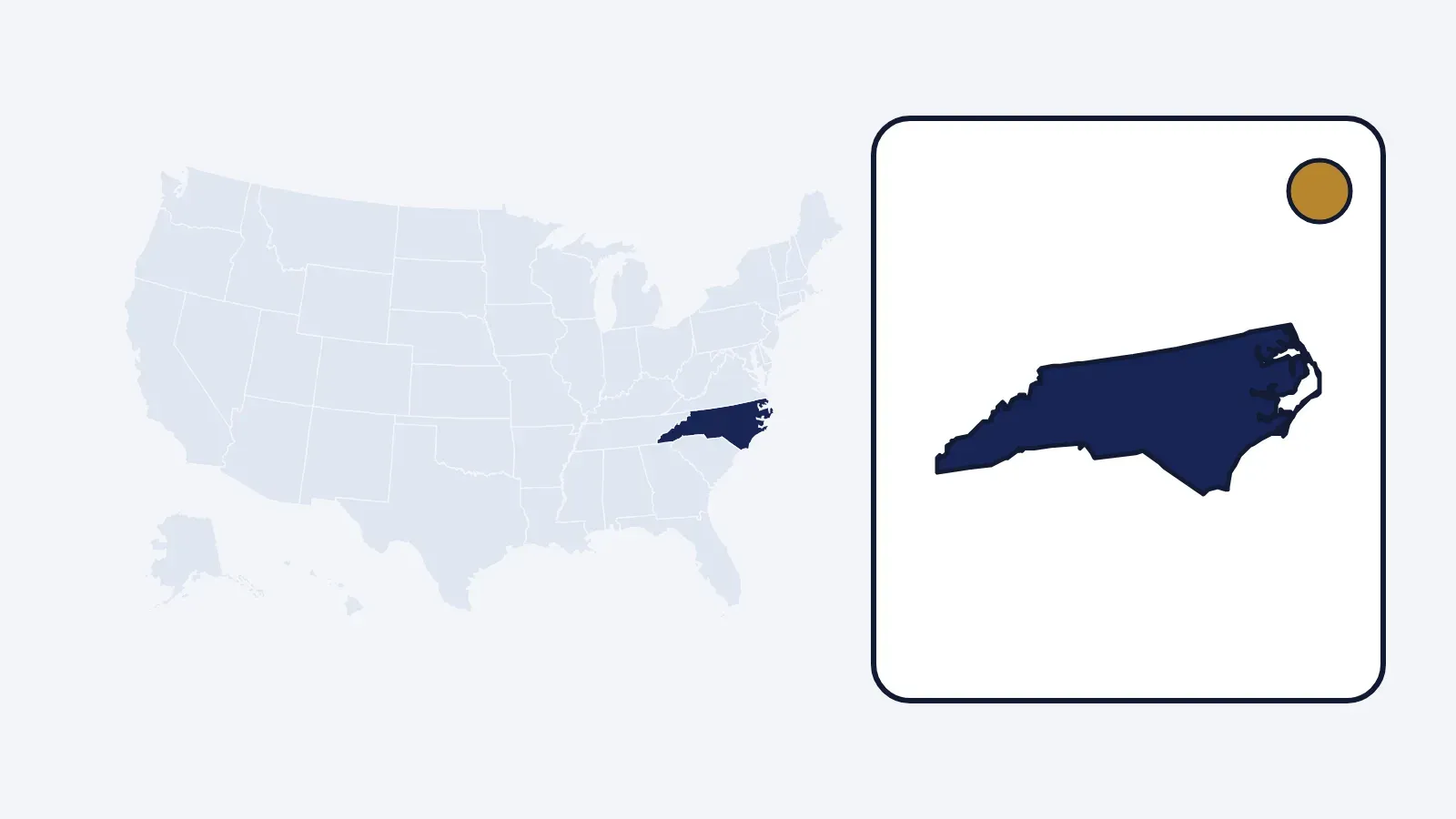
North Carolina claim rules on one sheet
- Total loss rule Repairs at 75% of pre-accident value Title law G.S. 20-4.01(33)d and claim rule 11 NCAC 04 .0418(c). Sales tax and registration fees included.
- Insurer must acknowledge No fixed number; 'reasonably promptly' (statute)
- Insurer must decide No fixed number; pay within 10 business days after settlement 11 NCAC 04 .0421(b)(1) for motor vehicle damage claims.
- Deadline to sue 3 years for injury and for property damage
- Fault system At-fault; contributory negligence (any fault can bar recovery)
- Police report needed At once for death, injury or $1,000+ total property damage
- State crash report None required from drivers; officers report within 24 hours Hitting an unattended parked car: report to its owner within 48 hours (G.S. 20-166.1(c)).
A summary by Valoroath of the state's statutes and regulations, not an official document. The sources are listed at the end of this page.
Claim timing in North Carolina
G.S. 58-63-15(11) lists unfair claim practices, including failing to acknowledge and act reasonably promptly on claim communications and failing to adopt reasonable standards for prompt investigation. The Department of Insurance's rules for car damage claims, in Chapter 4 of Title 11 of the Administrative Code, add more detail. In a 2024 bulletin, the department reminded insurers to handle and settle auto claims reasonably promptly.
| Step | Rule | Source |
|---|---|---|
| Acknowledge and act on claim communications | Reasonably promptly | G.S. 58-63-15(11) |
| Mail or deliver payment | 10 business days after the claim is settled | 11 NCAC 04 .0421(b)(1) |
| Towing and storage the insurer covers | Until 3 days after written notice to you and the yard | 11 NCAC 04 .0418(n) |
A release or payment for repairs doesn't stop a later claim for hidden damage found within the statute of limitations. Ask for every promise of a date in writing; our page on slow claims shows how to keep a stalled file moving.
Total loss and what the check includes
Two rules point to the same line. Title law, G.S. 20-4.01(33)d, makes a car a salvage motor vehicle when repair costs, parts and labor included, exceed 75% of its fair retail market value, whether or not an insurer has declared it a total loss. The department's claim rule, 11 NCAC 04 .0418(c), treats a car as a total loss when repairs equal or exceed 75% of its pre-accident actual cash value.
- How value is set. If you disagree, the offer must rest on published regional average values or on the retail cost of two or more similar cars available in your local market within 90 days of the crash, searched within 100 miles of where the car is kept.
- Sales tax and registration fees must be included in the cash settlement, except when you keep the salvage.
- Documentation. Deductions must be itemized, and the insurer must share the documents behind its settlement.
- Branded title. A car the insurer declared a total loss carries a TOTAL LOSS CLAIM title marking, and a rebuilt car up to six model years old must pass inspections before it is retitled.
Check the numbers in the total loss check and compare the valuation with our guide to total loss claims.
Diminished value appraisal
North Carolina lets a third-party claimant recover the drop in a repaired car's market value from the at-fault driver's insurer. G.S. 20-279.21(d1) builds an appraisal step into liability policies for disputes over that amount when liability isn't contested and the two estimates differ by more than $2,000 or 25% of the car's pre-accident retail value, whichever is less.
- Demand appraisal in writing. Each side then names a licensed motor vehicle damage appraiser within 20 days.
- Umpire if needed. If the appraisers don't agree, they pick an umpire; if they can't within 15 days, either side may ask a magistrate to choose one.
- Result. The decision binds both sides unless one rejects the umpire's report within 15 days. Each pays its own appraiser and half of the other costs.
More on how these claims work is in our page on diminished value claims.
Reporting a North Carolina crash
Under G.S. 20-166.1(a), the driver in a reportable crash must notify the police right away by the quickest means. G.S. 20-4.01(33b) defines a reportable crash as one causing death or injury, or total property damage of $1,000 or more. The officer writes the report within 24 hours; reports reach the Division of Motor Vehicles within 10 days. Drivers don't file a separate state report, except that hitting an unattended parked car requires a report to its owner within 48 hours.
Contributory negligence, deadlines and complaints
North Carolina is an at-fault state that still follows contributory negligence. As the UNC School of Government explains, a claimant who is even slightly at fault can be barred from recovering from the other driver, subject to narrow exceptions such as last clear chance. Your own collision or medical payments coverage pays regardless of fault. Under G.S. 1-52, suits for personal injury or property damage must start within 3 years.
- Ask the insurer in writing for the basis of a denial or offer, including its valuation and appraisal reports.
- Call the Department of Insurance toll free at 855-408-1212.
- File a complaint through the department's assistance page; our guide to insurance department complaints lists what to include.
Questions people ask
When is a car totaled in North Carolina?
When repair costs reach 75% of its pre-accident value. Title law (G.S. 20-4.01) and the department's claim rule (11 NCAC 04 .0418) both use the 75% line.
Does a North Carolina total loss payment include sales tax?
Yes. Under 11 NCAC 04 .0418(f), applicable sales tax and registration fees are part of the actual cash value settlement, unless you keep the salvage.
Can I claim diminished value in North Carolina?
Yes, as a third-party claimant against the at-fault driver's insurer. If your estimates differ by more than $2,000 or 25% of the car's pre-accident retail value, whichever is less, either side can demand appraisal under G.S. 20-279.21(d1).
What happens if I was partly at fault in North Carolina?
Under contributory negligence, even a small share of fault can bar you from recovering from the other driver. Your own collision and medical payments coverage can still pay.
Sources on record
- North Carolina Department of Insurance — Bulletin 24-B-07, claims handling practices
- 11 NCAC 04 .0421 — Handling of loss and claim payments
- 11 NCAC 04 .0418 — Total losses on motor vehicles
- G.S. 20-4.01 — Definitions (salvage motor vehicle; reportable crash)
- G.S. 20-71.3 — Salvage and other vehicles; title branding
- G.S. 20-279.21 — Motor vehicle liability policies, subsection (d1)
- G.S. 20-166.1 — Duty to notify officers; reports
- G.S. 1-52 — Three-year limitations
- UNC School of Government — Fault lines: understanding negligence doctrines (2025)
- North Carolina Department of Insurance
Facts on this page were checked against these sources on November 11, 2026. Contributory negligence in North Carolina comes from court decisions rather than a single statute.
Ask a licensed agent to review your coverage
After a claim, the policy you had is the one you can still change. Describe your situation and Valoroath passes it to licensed insurance agents and insurers who can review your coverage and quote, if you want them to. Valoroath itself does not sell insurance or handle claims.
- 1 Five questions about your car, your record and your policy.
- 2 Who to ask for, and your consent to be contacted.
- 3 A licensed insurance agent or insurer reviews what you have. You change nothing unless you choose to.
Sending this request shares your answers and contact details with the licensed insurance agents and insurers who receive it, which some state privacy laws treat as a sale; see your privacy choices. An agent reviews your coverage; they can't take on your claim or a dispute with your insurer. You pay Valoroath nothing. The licensed insurance agents and insurers who contact you pay Valoroath for requests and set their own prices and terms; your claim stays with your insurer. How we make money.
Next in the file
-
How claims work
Diminished value claims
Why a repaired car is worth less, who owes the difference, and how to support the number.
-

How claims work
Total loss claims
When a car is totaled, what actual cash value should include, and what happens to the loan and the title.
-

Claim dispute
Complaining to your state
When a complaint helps, how to find your insurance department, what to include, and what it can and can't do.