Total loss at 100%
Car insurance claim rules in Texas
The deadlines a Texas insurer has to meet on your claim, when a damaged car counts as a total loss, when to call the police, and how long you have to sue.
By Valoroath Editorial Team Updated 6 min read
In plain terms
Texas puts its claim deadlines in statute. Once your insurer gets notice of a claim it has 15 days to acknowledge it and start investigating, 15 business days to accept or reject it after it has everything it asked for (up to 45 days if it explains why it needs more time), and 5 business days to pay once it says yes. Texas is an at-fault state, so the other driver's insurer pays for damage they cause. A car becomes a salvage vehicle when repairs, not counting repainting, would cost more than its value before the crash. You generally have two years to sue over a crash.
- Total loss rule
- Repairs over 100% of value
- Insurer must decide
- 15 business days
- Deadline to sue
- 2 years
- Fault system
- At-fault
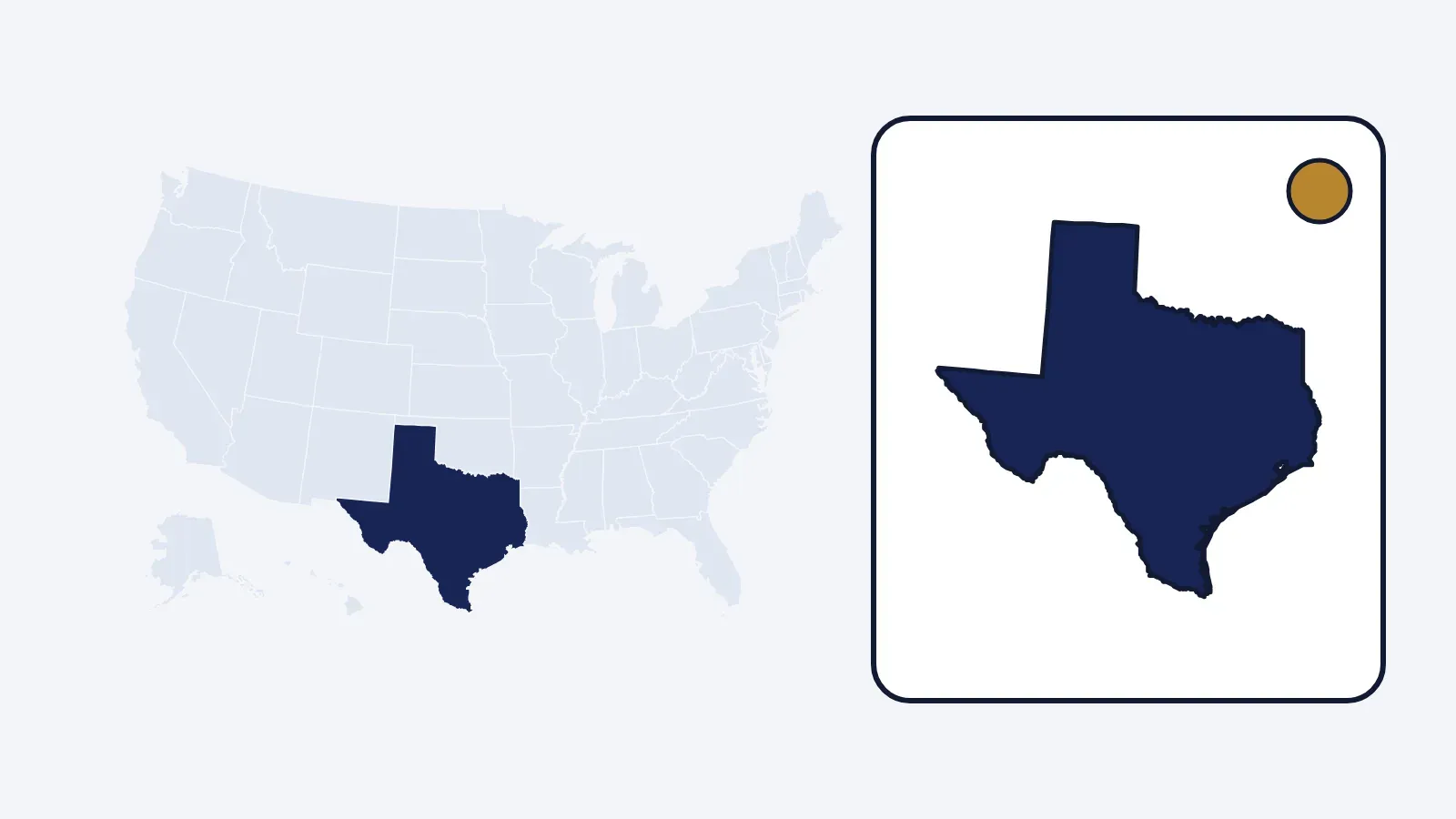
Texas claim rules on one sheet
- Total loss rule Repairs (minus repainting) exceed the car's value: 100% Salvage title threshold; hail damage is excluded. Insurers may total a car sooner.
- Insurer must acknowledge 15 days after notice of the claim
- Insurer must decide 15 business days after receiving all items; up to 45 with notice Then 5 business days to pay. Tex. Ins. Code §§542.056–542.057.
- Deadline to sue 2 years for injury and for property damage
- Fault system At-fault; recovery barred above 50% fault
- Police report needed At once if anyone is hurt or killed, or a car can't be driven safely
- State crash report None from drivers since 2017; officers file a CR-3 within 10 days
A summary by Valoroath of the state's statutes and regulations, not an official document. The sources are listed at the end of this page.
The clock on a Texas claim
Chapter 542 of the Texas Insurance Code, often called the Prompt Payment of Claims Act, sets deadlines for claims you make under your own policy: collision, comprehensive, personal injury protection (PIP) and uninsured motorist coverage. A claim against the other driver's liability insurer is a third-party claim and is not timed by these sections, although the state's unfair claim settlement rules still apply to it.
| Step | Deadline | Section |
|---|---|---|
| Acknowledge the claim, start the investigation, ask for what it needs | 15 days after notice | §542.055 |
| Accept or reject the claim in writing | 15 business days after it has all items it asked for | §542.056 |
| Extra time, if the insurer tells you why it needs it | Up to 45 days | §542.056(d) |
| Pay an accepted claim, or the accepted part | 5 business days after telling you | §542.057 |
The decision clock starts only when the insurer has the statements, forms and documents it requested, so answer requests quickly and keep a dated copy of everything you send. After a weather catastrophe declared by the insurance commissioner, the deadlines can stretch by another 15 days. If an insurer misses them, the statute adds interest and reasonable attorney's fees to what it owes; how that works is covered in our page on claims that drag on.
When a Texas car is a total loss
Texas title law calls a car a salvage motor vehicle when the cost to repair it, including parts and labor but not repainting or sales tax, exceeds its actual cash value right before the damage. The Texas Department of Motor Vehicles describes this as the 100 percent threshold. Hail damage is left out of the calculation for title purposes.
- The insurer may total the car sooner. The 100% line decides the title brand, not the insurer's business choice; many companies total a car when repairs plus its salvage value approach its value.
- A salvage title follows the car. If you keep a totaled car, it carries a salvage title until it is rebuilt and inspected.
- The settlement is the actual cash value. What that should include, and how to test the number, is in our guide to total loss claims.
The total loss check applies the Texas rule to your repair estimate and the value of your car.
Reporting a Texas crash
Section 550.026 of the Texas Transportation Code requires a driver to notify the police right away when a crash injures or kills someone or damages a vehicle so that it can't be driven normally and safely. Call 911 or the local police; on a highway outside a city, the sheriff or the Department of Public Safety may respond.
You no longer file your own report with the state. Since September 1, 2017, TxDOT does not keep the driver's crash report, form CR-2 (the "blue form"). An officer who investigates a crash with an injury, a death or apparent damage of $1,000 or more to one person's property files the Texas Peace Officer's Crash Report (CR-3) with TxDOT within 10 days. You can buy a copy through TxDOT's Crash Report Online Purchase System, and your insurer will usually ask for its number.
Fault, PIP and who pays
Texas is an at-fault state: the driver who caused the crash, through their liability insurance, pays for the other people's injuries and damage. Texas uses modified comparative fault, so you can recover only if you were 50% or less at fault, and your recovery drops by your share of the blame.
- PIP must be offered with every Texas policy at $2,500 or more, and is included unless you turn it down in writing. It pays medical bills and lost income for you and your passengers whoever caused the crash.
- Uninsured/underinsured motorist coverage must also be offered and can be rejected only in writing. It pays when the at-fault driver has no insurance or too little; see uninsured motorist claims.
- Your own collision coverage can fix your car right away when the other insurer is slow to accept fault; your insurer then seeks its money from the other side.
Deadlines to sue and where to complain
Under Section 16.003 of the Civil Practice and Remedies Code, a lawsuit for personal injury or property damage generally has to be filed within two years of the crash. Settlement talks don't stop that clock. Your policy may also set its own time limits for reporting a claim and for disputing a decision, so read the conditions section.
- Ask the insurer in writing for the reason for a denial or a low offer and the policy language it relies on.
- Call the Texas Department of Insurance Help Line at 800-252-3439 for questions about your rights.
- File a complaint with TDI online or by mail if the insurer misses deadlines or won't explain itself; our guide to insurance department complaints shows what to include.
Questions people ask
How long does a Texas insurer have to pay a car insurance claim?
On a claim under your own policy, it must acknowledge the claim within 15 days, accept or reject it within 15 business days after receiving everything it asked for (up to 45 days with an explanation), and pay within 5 business days of accepting it.
What percentage of damage totals a car in Texas?
For title purposes, a car becomes a salvage vehicle when repair costs, not counting repainting, exceed its actual cash value before the damage, which TxDMV calls the 100% threshold. An insurer can still decide to total a car at a lower share.
Do I have to file a CR-2 blue form after a Texas crash?
No. TxDOT stopped keeping driver-filed CR-2 reports on September 1, 2017. You still must call the police right away if anyone is hurt or killed or a car can't be driven safely.
How long do I have to sue after a car accident in Texas?
Generally two years from the crash, for both injury and property damage claims, under Section 16.003 of the Civil Practice and Remedies Code.
Sources on record
- Texas Insurance Code, Chapter 542 — Prompt Payment of Claims
- Supreme Court of Texas — Barbara Technologies v. State Farm Lloyds (2019), summary of the Chapter 542 deadlines
- Texas Department of Motor Vehicles — Voluntary salvage applications (100% actual cash value threshold)
- Texas Transportation Code, Chapter 550 — Accidents and accident reports
- Texas Department of Transportation — Crash reports and records
- Texas Civil Practice and Remedies Code, Chapter 16 — Limitations
- Texas Department of Insurance — Auto insurance guide
- Texas Department of Insurance — Commissioner's Order 2026-10210, auto appraisal rules (28 TAC §§5.9800–5.9806)
Facts on this page were checked against these sources on November 11, 2026. Deadlines in Chapter 542 apply to claims under your own policy; your policy can add conditions of its own.
Ask a licensed agent to review your coverage
After a claim, the policy you had is the one you can still change. Describe your situation and Valoroath passes it to licensed insurance agents and insurers who can review your coverage and quote, if you want them to. Valoroath itself does not sell insurance or handle claims.
- 1 Five questions about your car, your record and your policy.
- 2 Who to ask for, and your consent to be contacted.
- 3 A licensed insurance agent or insurer reviews what you have. You change nothing unless you choose to.
Sending this request shares your answers and contact details with the licensed insurance agents and insurers who receive it, which some state privacy laws treat as a sale; see your privacy choices. An agent reviews your coverage; they can't take on your claim or a dispute with your insurer. You pay Valoroath nothing. The licensed insurance agents and insurers who contact you pay Valoroath for requests and set their own prices and terms; your claim stays with your insurer. How we make money.
Next in the file
-

How claims work
Total loss claims
When a car is totaled, what actual cash value should include, and what happens to the loan and the title.
-

Claim dispute
When your claim drags on
The time limits insurers work under, why files stall, and the written steps that move a claim.
-
After a crash
What to do after a car accident
Safety, the police, the other driver, the record and your insurer, in the order that protects your claim.