Start here
What to do after a car accident
The order that keeps people safe at the roadside and keeps your claim intact afterward: safety, the police, the other driver, the record, then your insurer.
By Valoroath Editorial Team Updated 7 min read
In plain terms
Check for injuries and call 911 if anyone is hurt, then get out of traffic if you can do it safely. Stay at the scene, exchange names, insurance and vehicle details with the other driver, and photograph the cars, the road and the plates before anything moves. Call the police when your state requires it, which in most states means any injury and damage above a dollar threshold. Report the crash to your own insurer promptly even if you don't plan to claim: almost every policy requires it, and a late report can cost you coverage.
- First call if anyone is hurt
- 911
- Tell your insurer
- Promptly, as policy says
- Insurer must acknowledge
- Often within 15 days
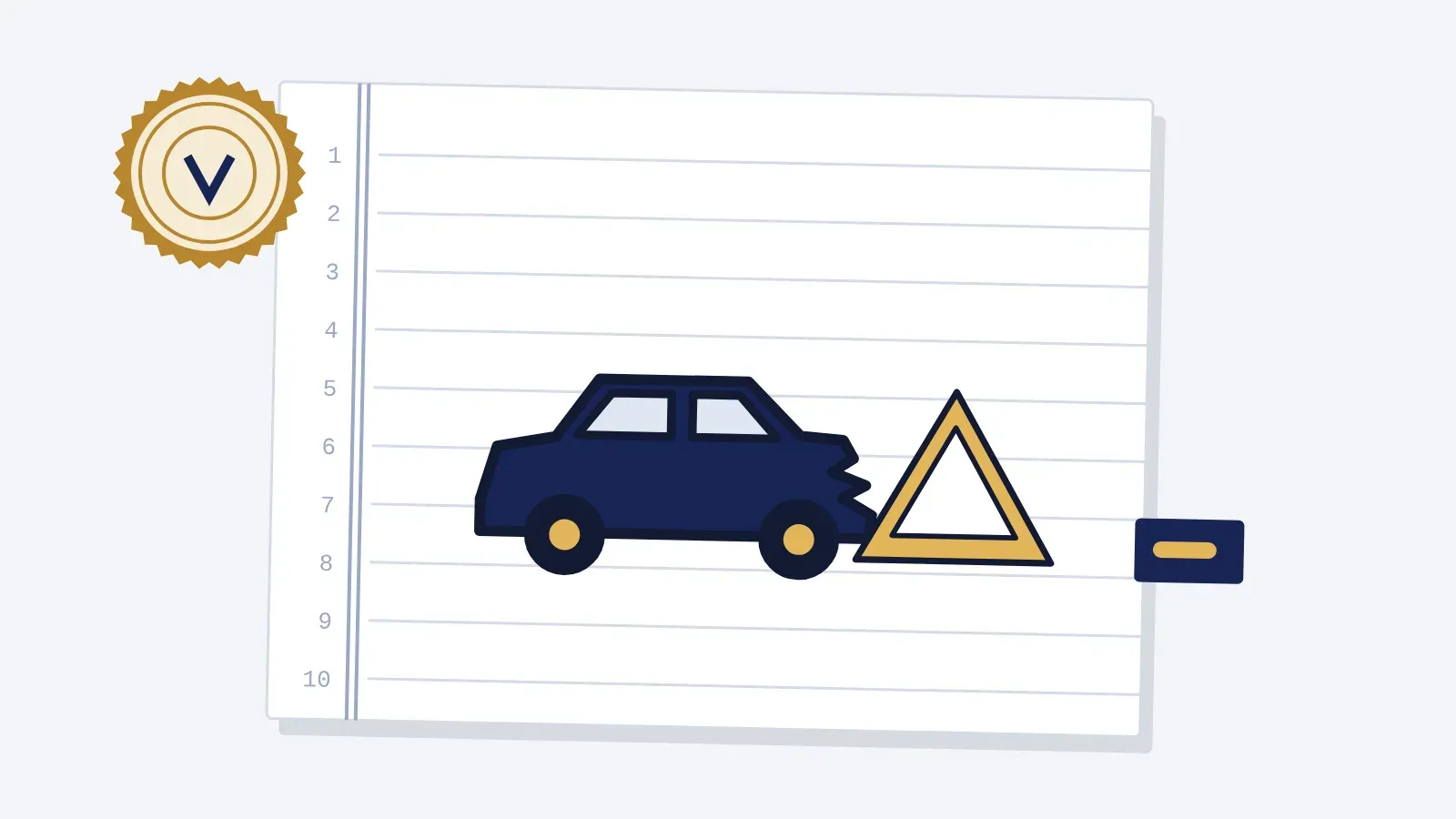
Make the scene safe first
- Stop. Every state requires a driver involved in a crash to stop at the scene. Leaving one where someone is hurt is a crime everywhere, even if the crash was not your fault.
- Check for injuries and call 911 if anyone is hurt, complains of pain, or you are not sure. Tell the dispatcher where you are, how many cars are involved and whether anyone is trapped.
- Get out of the traffic lane if the cars can move. Many states have steer-it-clear-it laws that require moving drivable cars off the road after a minor crash with no injuries. If a car can't move or someone is hurt, leave it, turn on the hazard lights and stay buckled or well away from traffic.
- Warn other drivers with hazard lights, flares or a warning triangle if you carry them.
Don't try to move an injured person unless they are in immediate danger, such as from fire. Paramedics would rather find someone where they fell than deal with a spinal injury made worse.
Call the police when the law requires it
Each state decides when a crash must be reported to the police. A common rule is any crash with an injury or a death, and many states add property damage above a threshold, such as $1,000. In Texas, for example, you must call right away if anyone is hurt or a car can't be driven safely. Your state's rules are on its page in claim rules by state.
Even when a report isn't required, a police report is the most neutral record of a crash an adjuster will see, so it is often worth asking for one. Get the officer's name, the agency and the report number before you leave. Some states also require drivers to file their own report with the motor vehicle department within a few days; that duty is separate from calling the police.
Trade details and keep your words short
Exchange the information an insurer will need to find the right policy: names and phone numbers, insurance companies and policy numbers, driver's license numbers, license plates, and the make, model and color of every car. If the driver doesn't own the car, get the owner's name too. Photograph the other driver's insurance card and registration rather than copying them by hand. The full list is in what to exchange after an accident.
If witnesses stopped, ask for their names and phone numbers before they leave. Witnesses are hard to find a week later and they carry weight when two drivers tell different stories.
Build the record while it's fresh
- Photos: damage to every car from several angles, all four corners of your own car, the license plates, the road, skid marks, debris, traffic signs and signals, the weather and the light.
- Notes: the time, the exact place, your direction and speed, what you saw and heard, and what the other driver said. Write them the same day.
- Receipts: towing, a rental car, a ride home, medical visits. Start a folder or a note on your phone now.
Our guide to documenting the damage covers the photos adjusters ask for most. If the car is towed, find out where it went and ask your insurer before you approve repairs: most policies let the insurer inspect the damage first.
Tell your insurer, then decide about a claim
Your policy's conditions section almost certainly requires you to report an accident promptly, and to cooperate with the investigation. Reporting a crash is not the same as filing a claim, but a late report can give the insurer grounds to refuse coverage, especially if the other driver claims against you later. Reporting an accident to your insurer walks through the call.
Once the insurer has notice, the clock starts on its side too. Most states follow a model regulation from the National Association of Insurance Commissioners (NAIC) that asks insurers to acknowledge a claim within 15 days and to accept or deny it within 21 days after receiving proof of loss, and some states set tighter or looser deadlines in law. Whether to claim a small loss at all is a money question the claim or pay calculator can help with.
Your car is damaged
Claim under your collision coverage, or against the at-fault driver's liability insurance. Which route is faster depends on who accepts fault.
Someone is hurt
Personal injury protection or medical payments coverage may pay first, whoever caused the crash. See PIP and MedPay claims.
The other driver has no insurance
Uninsured motorist coverage is built for this. See crashes with an uninsured driver.
Questions people ask
Should I call the police after a minor car accident?
Call when your state requires it, usually for any injury and for damage above a set amount. For a minor crash with no injuries a report may not be required, but it gives the insurers a neutral record, so it is often worth asking for one.
Do I have to tell my insurance company about an accident that wasn't my fault?
Usually yes. Most policies require you to report any accident promptly, whoever caused it. Reporting is not the same as filing a claim on your own policy, and a not-at-fault report is treated differently from an at-fault claim.
Can I move my car after an accident?
If no one is hurt and the car can be driven, most states expect you to move it out of the traffic lane. Take quick photos first if it is safe, then move. If anyone is injured or a car can't move, leave it and turn on the hazard lights.
What should I not say after a car accident?
Avoid apologizing or guessing about fault at the scene. Give the facts to the police and your insurer, exchange the required details with the other driver, and let the evidence decide fault.
Sources on record
- NAIC — Unfair Property/Casualty Claims Settlement Practices Model Regulation (MDL-902)
- NAIC — Auto insurance consumer guide
- Texas Transportation Code, Chapter 550 — Accidents and accident reports
- Insurance Information Institute — Tips for the scene of an accident and filing a claim
Facts on this page were checked against these sources on November 11, 2026. Reporting duties and claim deadlines differ by state; each state page lists its own with the official source.
Ask a licensed agent to review your coverage
After a claim, the policy you had is the one you can still change. Describe your situation and Valoroath passes it to licensed insurance agents and insurers who can review your coverage and quote, if you want them to. Valoroath itself does not sell insurance or handle claims.
- 1 Five questions about your car, your record and your policy.
- 2 Who to ask for, and your consent to be contacted.
- 3 A licensed insurance agent or insurer reviews what you have. You change nothing unless you choose to.
Sending this request shares your answers and contact details with the licensed insurance agents and insurers who receive it, which some state privacy laws treat as a sale; see your privacy choices. An agent reviews your coverage; they can't take on your claim or a dispute with your insurer. You pay Valoroath nothing. The licensed insurance agents and insurers who contact you pay Valoroath for requests and set their own prices and terms; your claim stays with your insurer. How we make money.
Next in the file
-

After a crash
Information to exchange
What the law makes drivers share, the fuller list a claim needs, and what you can keep to yourself.
-
After a crash
Reporting to your insurer
Your duties under the policy, what to have ready, report vs. claim, and the deadlines the insurer must meet.
-
How claims work
How a car insurance claim works
The six parts of a standard auto policy, your duties after a loss, and the steps and deadlines to payment.