Total loss at 75%
Car insurance claim rules in North Dakota
How North Dakota times an insurer's handling of your claim, when a car gets a salvage title, when you must call the police, and how no-fault affects a lawsuit.
By Valoroath Editorial Team Updated 6 min read
In plain terms
North Dakota law sets no day counts for most claims: insurers must acknowledge claim communications with reasonable promptness and affirm or deny coverage within a reasonable time after proof of loss. No-fault benefits are the exception; they are overdue if not paid within 30 days of reasonable proof, and then earn interest. A car damaged in excess of 75% of its retail value gets a salvage title. Call the police right away after a crash with an injury or at least $4,000 of damage. Injury and property suits generally have 6 years.
- Total loss rule
- Damage over 75% of value
- Insurer must decide
- Reasonable time (statute)
- Deadline to sue
- 6 years
- Fault system
- No-fault (PIP)
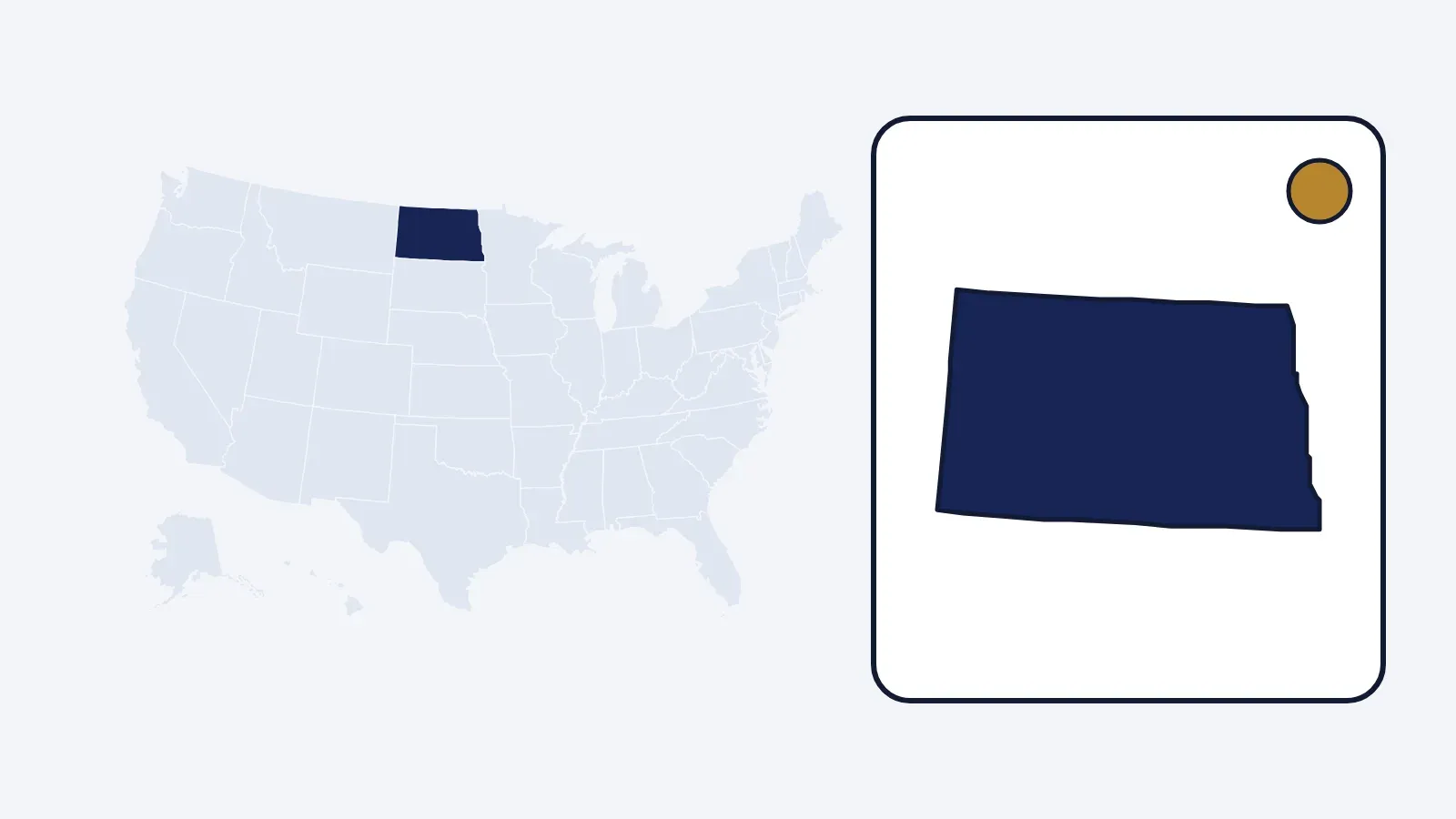
North Dakota claim rules on one sheet
- Total loss rule Damage in excess of 75% of retail value (NADA guide) Title law (N.D.C.C. 39-05-20.2); glass and hail damage excluded. Owner sends title in 10 days.
- Insurer must acknowledge No fixed number; 'reasonable promptness' (statute)
- Insurer must decide No fixed number; reasonable time after proof of loss No-fault benefits are overdue 30 days after reasonable proof and bear interest (26.1-41-09).
- Deadline to sue 6 years for injury and for property damage No-fault benefit claims: 2 years from discovery, 4 years at most. Wrongful death: 2 years.
- Fault system No-fault (PIP); barred if your fault is as great as all others combined
- Police report needed At once for injury, death or apparent damage of $4,000 or more Exempt: a wild animal crash damaging only your own vehicle.
- State crash report None required from drivers; officers report to the state in 10 days Insurance details go to the Driver's License Division in 5 days if not given at the scene.
A summary by Valoroath of the state's statutes and regulations, not an official document. The sources are listed at the end of this page.
What North Dakota requires on timing
Section 26.1-04-03(9) of the North Dakota Century Code lists unfair claim settlement practices. It applies when an insurer acts without just cause and often enough to show a general business practice. The chapter uses standards rather than day counts.
| What the insurer must do | Standard | Source |
|---|---|---|
| Acknowledge claim communications | With reasonable promptness | N.D.C.C. 26.1-04-03(9)(b) |
| Affirm or deny coverage | Reasonable time after proof of loss is complete | N.D.C.C. 26.1-04-03(9)(j) |
| Pay no-fault (PIP) benefits | Overdue if unpaid 30 days after reasonable proof | N.D.C.C. 26.1-41-09(2) |
Overdue no-fault payments bear interest at the state's judgment rate. For property damage there is no fixed number, so put requests and promises in writing and keep a dated log. Our page on claims that drag on explains how to move a quiet file.
When a North Dakota car is a total loss
Under N.D.C.C. 39-05-20.2, the owner of a vehicle damaged in excess of 75 percent of its retail value, as shown in the NADA official used car guide, must send the title to the Department of Transportation within 10 days, and the department issues a salvage title. Glass and hail damage are left out of the 75 percent calculation.
- The insurer can total a car sooner. The 75% line decides the title brand. An insurer may choose to pay a total loss at a lower share of value when repair plus salvage costs more than the car is worth.
- Hail is excluded. A hail-damaged car can pass 75% in repair cost without a salvage brand, which matters for its resale value.
- Check the value. Our guide to total loss claims covers comparable cars, taxes and deductions.
The total loss check applies the North Dakota threshold to your estimate.
Reporting a North Dakota crash
N.D.C.C. 39-08-09 requires the driver to notify the police right away after a crash that injures or kills someone or causes apparent property damage of at least $4,000. Inside a city, call the local police; elsewhere, the county sheriff or the Highway Patrol. Skipping it carries a $50 fine.
- Insurance details. Give the investigating officer your insurer and policy number. If you don't have them at the scene, send them to the Driver's License Division within 5 days.
- No driver report to the state. Officers forward their crash reports to the department within 10 days. Some cities require a driver report by ordinance.
- Deer and other wild animals. If a crash with an undomesticated animal damages only your own vehicle, the notice rule doesn't apply at any dollar amount; see hitting a deer.
No-fault and the right to sue
North Dakota is a no-fault state. Basic no-fault benefits pay up to $30,000 per person for medical costs, lost work (capped at $150 a week) and other economic loss, whoever caused the crash. You can sue the other driver for pain and suffering only for a serious injury, which N.D.C.C. 26.1-41-01 defines to include medical expenses over $2,500 or serious and permanent disfigurement or disability beyond 60 days.
Under N.D.C.C. 32-03.2-02, your own fault reduces your damages and bars recovery only if it is as great as the combined fault of everyone else involved. Damage to your car stays a fault-based claim against the other driver's insurer.
Deadlines to sue and complaints
Under N.D.C.C. 28-01-16, a negligence suit for injury to a person or to property generally has 6 years. A claim for no-fault benefits has a shorter limit: if none have been paid, 2 years from when you knew the loss came from the crash, and no later than 4 years after it (26.1-41-19). A suit for a death has 2 years.
- Write to the insurer and ask for the reason for a delay, denial or offer and the policy wording it relies on.
- Call the North Dakota Insurance Department at (701) 328-2440 or email [email protected] with questions.
- File a complaint with the online Consumer Complaint form or by mail with copies of your documents; our guide to insurance department complaints explains what helps.
Questions people ask
What percentage of damage totals a car in North Dakota?
For title purposes, a vehicle damaged in excess of 75% of its retail value in the NADA used car guide gets a salvage title. Glass and hail damage don't count toward the 75%.
When must I call the police after a crash in North Dakota?
Immediately, if anyone is hurt or killed or property damage appears to be $4,000 or more. A crash with a wild animal that damages only your own vehicle is exempt.
How fast must no-fault benefits be paid in North Dakota?
They are overdue if not paid within 30 days after the insurer receives reasonable proof of the loss, and overdue amounts bear interest at the judgment rate.
How long do I have to sue after a car accident in North Dakota?
Generally 6 years for injury or property damage under N.D.C.C. 28-01-16, but claims for no-fault benefits and wrongful death have shorter limits.
Sources on record
- N.D.C.C. chapter 26.1-04 — Unfair claim settlement practices (26.1-04-03)
- N.D.C.C. chapter 26.1-41 — Auto Accident Reparations Act (no-fault)
- N.D.C.C. chapter 39-05 — Salvage title, section 39-05-20.2
- N.D.C.C. chapter 39-08 — Accident reports, sections 39-08-09 to 39-08-13
- N.D.C.C. chapter 32-03.2 — Modified comparative fault
- N.D.C.C. chapter 28-01 — Limitations of actions
- North Dakota Insurance Department — File a complaint
Facts on this page were checked against these sources on November 11, 2026. North Dakota's claim statute uses standards rather than day counts; your policy may add its own deadlines.
Ask a licensed agent to review your coverage
After a claim, the policy you had is the one you can still change. Describe your situation and Valoroath passes it to licensed insurance agents and insurers who can review your coverage and quote, if you want them to. Valoroath itself does not sell insurance or handle claims.
- 1 Five questions about your car, your record and your policy.
- 2 Who to ask for, and your consent to be contacted.
- 3 A licensed insurance agent or insurer reviews what you have. You change nothing unless you choose to.
Sending this request shares your answers and contact details with the licensed insurance agents and insurers who receive it, which some state privacy laws treat as a sale; see your privacy choices. An agent reviews your coverage; they can't take on your claim or a dispute with your insurer. You pay Valoroath nothing. The licensed insurance agents and insurers who contact you pay Valoroath for requests and set their own prices and terms; your claim stays with your insurer. How we make money.
Next in the file
-
How claims work
PIP and MedPay claims
How your own policy pays medical bills after a crash, how no-fault thresholds work, and the deadlines.
-

How claims work
Total loss claims
When a car is totaled, what actual cash value should include, and what happens to the loan and the title.
-

After a crash
Hitting a deer or other animal
Why hitting an animal is usually comprehensive and swerving is collision, what to do, and the reports to make.