Total loss at 75%
Car insurance claim rules in Maryland
The deadlines a Maryland insurer has to meet on your claim, when a car is a total loss, why fault matters so much here, and how long you have to sue.
By Valoroath Editorial Team Updated 7 min read
In plain terms
Maryland's insurance regulators give insurers 15 working days to acknowledge a claim and 15 working days to affirm or deny coverage after receiving completed claim forms or proof of loss. A damaged car gets a salvage certificate when repairs would cost more than 75% of its fair market value. Maryland still follows contributory negligence, so being even slightly at fault can bar your claim against the other driver. Your own policy includes personal injury protection unless it was waived. If your own insurer handles a claim in bad faith, Maryland has a special complaint route through the Insurance Administration. You have three years to sue.
- Total loss rule
- Repairs over 75% of value
- Insurer must decide
- 15 working days
- Deadline to sue
- 3 years
- Fault system
- At-fault (contributory)
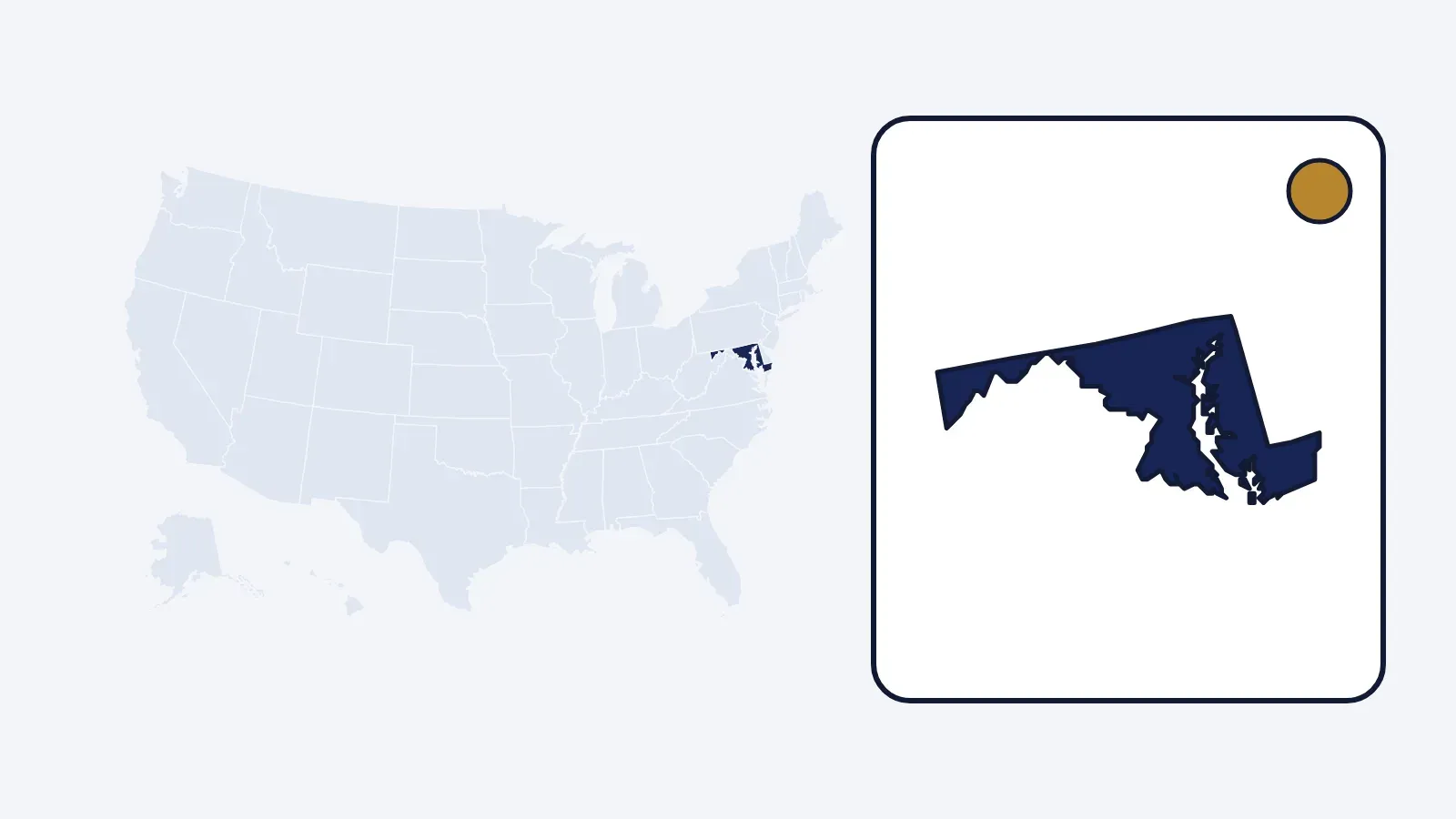
Maryland claim rules on one sheet
- Total loss rule Repairs over 75% of fair market value Salvage certificate rule in Transp. §13-506; towing, storage, rental and cosmetic repairs excluded.
- Insurer must acknowledge 15 working days after notice of the claim
- Insurer must decide 15 working days after completed claim forms or proof of loss No fixed payment deadline; payment must be prompt. COMAR 31.15.07.03B(12).
- Deadline to sue 3 years for injury and for property damage
- Fault system At-fault; contributory negligence (any fault can bar recovery) PIP of at least $2,500 is included unless waived.
- Police report needed Only if no officer is present and no one can take your details; call 911 for injuries
- State crash report To the MVA within 15 days if anyone is hurt or killed, unless police filed one
A summary by Valoroath of the state's statutes and regulations, not an official document. The sources are listed at the end of this page.
The clock on a Maryland claim
The Maryland Insurance Administration sets claim standards in COMAR 31.15.07, its regulation on paying property and casualty claims. The deadlines count working days, so weekends and holidays don't count.
| Step | Deadline | Section |
|---|---|---|
| Acknowledge notice of the claim | 15 working days | .03B(10), .03C |
| Affirm or deny coverage after completed claim forms or proof of loss | 15 working days | .03B(12) |
| Reply to your written communications | 15 working days | .03B(15) |
| Answer an inquiry from the Insurance Administration | 15 working days or the time it sets | .03B(11) |
The regulation sets no fixed number of days to pay; it requires prompt handling and forbids unreasonable delay. Send what the insurer asks for in writing and keep a dated copy. If deadlines slip, our page on claims that drag on shows how to put it in writing.
When a Maryland car is a total loss
Under Transportation Article §13-506, an insurer that acquires a car through a claim settlement must apply for a salvage certificate within 10 days. The certificate shows whether the cost to repair the car for road use is greater than 75% of its fair market value, or 75% or less. Towing, storage, rental and cosmetic repairs are left out of that repair cost.
- The insurer may total the car sooner. The 75% line decides how the title is branded; the insurer can still pay a total loss below it when repairs plus salvage value come close to the car's value.
- The settlement is the actual cash value of the car just before the crash, minus your deductible on your own policy.
- Test the number. Ask for the valuation report and check the comparable cars. Our guide to total loss claims covers what to look for.
Reporting a Maryland crash
Under Transportation Article §20-104, each driver in a crash must give their name, address and registration to the other people involved and to any police officer at the scene. If no officer is there and no one can receive that information, the driver must report the crash right away to the nearest police office. If anyone is hurt, call 911.
Maryland also has a written report duty. Under §20-107, the driver of each car in a crash that injures or kills anyone must report it to the Motor Vehicle Administration within 15 days, with proof of insurance. You don't have to if a police officer investigated and filed a report with the Department of State Police.
Contributory negligence, PIP and who pays
Maryland is an at-fault state that still uses contributory negligence. In 2013, in Coleman v. Soccer Association of Columbia, the state's highest court declined to replace the rule with comparative fault. Under contributory negligence, if you are found even partly at fault, you generally can't recover from the other driver.
- Personal injury protection (PIP) must be included in Maryland policies unless waived or rejected. The minimum benefits are up to $2,500 for medical expenses, 85% of lost income and household help (Insurance Article §19-505).
- Your own collision coverage pays to fix your car under your policy terms, which matters when fault is disputed.
- Uninsured motorist coverage pays when the at-fault driver has no insurance or too little; see uninsured motorist claims.
Deadlines to sue and where to complain
Under Courts and Judicial Proceedings §5-101, a civil action must generally be filed within three years of the crash, for injury and for property damage. Settlement talks don't stop the clock.
- Ask the insurer in writing for the reason for a denial or a low offer and the policy language behind it.
- Call the Maryland Insurance Administration at 1-800-492-6116.
- File a complaint through the Administration's online consumer portal or by mail; our guide to insurance department complaints shows what to include.
Questions people ask
How long does a Maryland insurer have to decide on a car insurance claim?
Under COMAR 31.15.07.03, it must acknowledge your claim within 15 working days and affirm or deny coverage within 15 working days after receiving completed claim forms or proof of loss.
What percentage of damage totals a car in Maryland?
For title purposes the line is 75% of fair market value: the salvage certificate shows whether repair costs are above it. An insurer may still decide to total a car below that.
Can I recover if I was partly at fault in Maryland?
Usually not from the other driver. Maryland keeps contributory negligence, which generally bars recovery if you were at fault at all. Your own PIP and collision coverage still pay under your policy.
How long do I have to sue after a car accident in Maryland?
Generally three years from the crash, under Courts and Judicial Proceedings §5-101.
Sources on record
- COMAR 31.15.07.03 — Unfair claim settlement practices (property and casualty)
- Maryland Code, Transportation §13-506 — Salvage certificates
- Maryland Code, Transportation §20-104 — Duties after an accident
- Maryland Code, Transportation §20-107 — Accident reports to the MVA
- Maryland Code, Insurance §19-505 — Personal injury protection
- Maryland Code, Insurance §27-1001 — First-party claims and good faith
- Maryland Code, Courts and Judicial Proceedings §5-101 — Three-year limit
- Court of Appeals of Maryland — Coleman v. Soccer Association of Columbia (2013)
- Maryland Insurance Administration — File a complaint
Facts on this page were checked against these sources on November 11, 2026. Contributory negligence is a court rule in Maryland, not a statute; the 2013 Coleman decision is the leading case.
Ask a licensed agent to review your coverage
After a claim, the policy you had is the one you can still change. Describe your situation and Valoroath passes it to licensed insurance agents and insurers who can review your coverage and quote, if you want them to. Valoroath itself does not sell insurance or handle claims.
- 1 Five questions about your car, your record and your policy.
- 2 Who to ask for, and your consent to be contacted.
- 3 A licensed insurance agent or insurer reviews what you have. You change nothing unless you choose to.
Sending this request shares your answers and contact details with the licensed insurance agents and insurers who receive it, which some state privacy laws treat as a sale; see your privacy choices. An agent reviews your coverage; they can't take on your claim or a dispute with your insurer. You pay Valoroath nothing. The licensed insurance agents and insurers who contact you pay Valoroath for requests and set their own prices and terms; your claim stays with your insurer. How we make money.
Next in the file
-

How claims work
Total loss claims
When a car is totaled, what actual cash value should include, and what happens to the loan and the title.
-

Claim dispute
Insurance bad faith
What bad faith means on a car claim, first-party vs. third-party, and how state law changes the answer.
-

After a crash
When to call the police
The cases for 911, state damage thresholds from $50 to $4,000, and why a report helps after a small crash.