Total loss by formula
Car insurance claim rules in Arizona
The deadlines an Arizona insurer has to meet on your claim, how a car becomes a total loss, when to call the police, and how long you have to sue.
By Valoroath Editorial Team Updated 6 min read
In plain terms
Arizona's claim deadlines are in a Department of Insurance and Financial Institutions rule. The insurer has 10 working days to acknowledge a claim and, on a claim under your own policy, 15 working days after proof of loss to accept or deny it or explain in writing why it needs more time. A first-party claim not paid within 30 days of an acceptable proof of loss earns interest. Arizona sets no damage percentage for a total loss: a car becomes salvage when its owner or insurer considers it uneconomical to repair. Arizona is an at-fault state with pure comparative fault, and you generally have two years to sue.
- Total loss rule
- Insurer's formula
- Insurer must decide
- 15 working days
- Deadline to sue
- 2 years
- Fault system
- At-fault
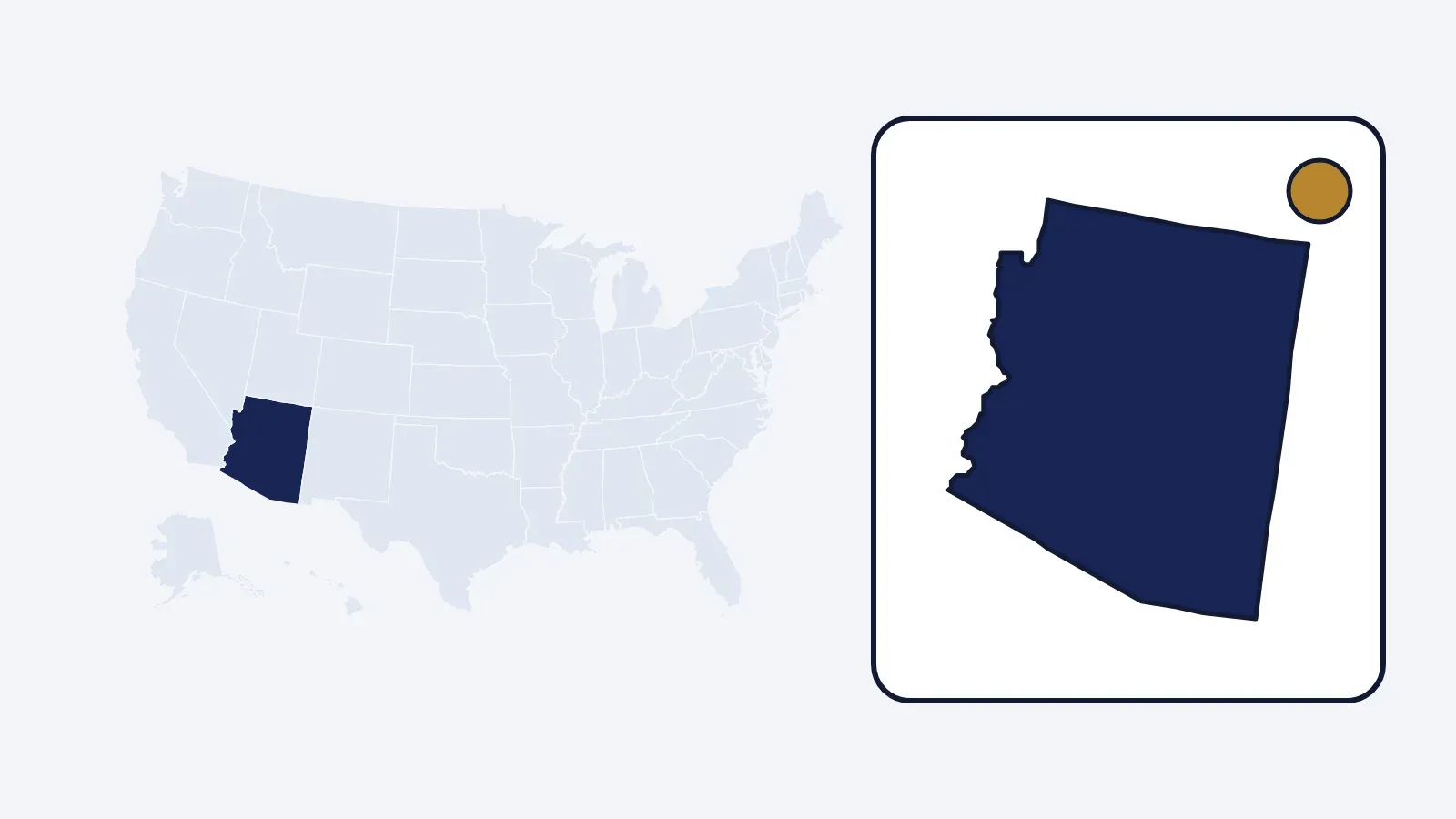
Arizona claim rules on one sheet
- Total loss rule No percentage in law; insurer's formula Salvage title when the owner or insurer considers repair uneconomical (A.R.S. §28-2091).
- Insurer must acknowledge 10 working days after notice of the claim
- Insurer must decide 15 working days after proof of loss; written reasons if longer First-party claims. Interest if not paid within 30 days of an acceptable proof of loss (A.R.S. §20-462).
- Deadline to sue 2 years for injury and for property damage
- Fault system At-fault; pure comparative fault
- Police report needed At once if anyone is hurt or killed
- State crash report None from drivers; officers file within 24 hours of finishing
A summary by Valoroath of the state's statutes and regulations, not an official document. The sources are listed at the end of this page.
The clock on an Arizona claim
Rule R20-6-801 of the Arizona Administrative Code lists unfair claim settlement practices and turns "reasonable" into working days. Some limits protect every claimant, including you when you claim against the other driver's insurer; the decision deadline covers first-party claims under your own policy.
| Step | Deadline | Source |
|---|---|---|
| Acknowledge the claim, unless it is paid sooner | 10 working days after notice | R20-6-801(E) |
| Reply to your communications that call for an answer | 10 working days | R20-6-801(E) |
| Finish the investigation, if it reasonably can | 30 days after notice | R20-6-801(F) |
| Accept or deny a first-party claim, or say why it needs more time | 15 working days after proof of loss | R20-6-801(G) |
| Keep you updated while the investigation stays open | 45 days after the first notice, then every 45 days | R20-6-801(G) |
| Pay a first-party claim or owe interest at the legal rate | 30 days after an acceptable proof of loss | A.R.S. §20-462 |
The interest rule in Section 20-462 runs from the date the insurer received the claim, but only once the proof of loss has all the information needed to decide it, and it does not apply to a claim the insurer denies in good faith within 30 days. Send what the adjuster asks for in writing and keep dated copies. If deadlines pass, our page on claims that drag on covers the next steps.
When an Arizona car is a total loss
Arizona sets no percentage. Under Section 28-2091 of the Arizona Revised Statutes, a salvage vehicle is one damaged to the point that the owner, leasing company, lender or insurer considers it uneconomical to repair. That leaves the decision to the insurer's own formula, usually repair cost plus the car's salvage value compared with its actual cash value. After the owner signs over the title, the insurer has 30 days to apply for a salvage or nonrepairable title.
- Comparable car. For a first-party total loss, the insurer may offer a specific comparable car or pay the actual cost of buying one in your local market, or from quotes by two or more qualified dealers if none is available locally.
- Taxes and fees. Either way, it pays all applicable taxes, license fees and other fees incident to the transfer.
- Deductions. Any deduction, including salvage, must be measurable, discernible, itemized and stated in dollars.
Because there is no fixed line, ask the adjuster for the repair estimate and the valuation side by side. The total loss check shows how the formula works with your numbers, and our guide to total loss claims explains how to test the valuation.
Reporting an Arizona crash
Section 28-666 requires the driver in a crash that injures or kills someone to notify the police at once, by the quickest means: the city or town police inside city limits, otherwise the county sheriff or the nearest highway patrol office. The statute adds no separate duty for damage-only crashes.
Arizona has no report for drivers to file with the state. Officers who investigate a crash complete a written report within 24 hours of finishing the investigation, a full report when there is an injury, a death, a citation or damage over $2,000, and a shorter one for smaller damage-only crashes. The agency sends a copy to the Department of Transportation and must give an unredacted copy to the people involved on request.
Fault, pure comparative fault and who pays
Arizona is an at-fault state: the driver who caused the crash, through their liability insurance, pays for the damage and injuries they caused. Under Section 12-2505, Arizona uses pure comparative fault. Your own share of the blame does not bar your claim; it reduces your damages in proportion.
- Example: if your damages are $10,000 and you were 30% at fault, you can recover $7,000 from the other driver.
- Your own collision coverage can pay for your car while the other insurer argues about fault; your insurer then seeks its money from the other side.
- Uninsured motorist coverage pays when the at-fault driver has no insurance or too little; see uninsured motorist claims.
Deadlines to sue and where to complain
Section 12-542 gives two years from the date the claim arises to sue for an injury to a person or for damage to property. Settlement talks do not stop the clock, and your policy may set its own limits for reporting a claim and for disputes.
- Ask the insurer in writing for the reason for a denial or a low offer and the policy language it relies on.
- Contact the Consumer Services Division of the Arizona Department of Insurance and Financial Institutions at (602) 364-2499 for help or to file a complaint.
- Send your file: the claim number, dates, letters and the deadlines above. Our guide to insurance department complaints shows what to include.
Questions people ask
How long does an Arizona insurer have to settle a car insurance claim?
It must acknowledge the claim within 10 working days. On a claim under your own policy, it must accept or deny within 15 working days after proof of loss or explain why it needs more time, and a first-party claim not paid within 30 days of an acceptable proof of loss earns interest.
What percentage of damage totals a car in Arizona?
Arizona law sets no percentage. A car becomes a salvage vehicle when the owner or insurer considers it uneconomical to repair, which in practice means the insurer's own formula.
Do I have to file an accident report with the state in Arizona?
No. Drivers must call the police right away if anyone is hurt or killed. Officers who investigate file the written report, and you can request a copy.
Can I recover in Arizona if I was partly at fault?
Yes. Arizona uses pure comparative fault, so your damages are reduced by your share of the fault, but your claim is not barred.
Sources on record
- Arizona Administrative Code R20-6-801 — Unfair claims settlement practices
- Arizona Revised Statutes §20-462 — Time of payment of claims; interest
- Arizona Revised Statutes §28-2091 — Salvage and nonrepairable vehicles
- Arizona Revised Statutes §28-666 — Immediate notice of accident
- Arizona Revised Statutes §28-667 — Written accident reports by law enforcement
- Arizona Revised Statutes §12-542 — Two-year limitation
- Arizona Revised Statutes §12-2505 — Comparative negligence
- Arizona Department of Insurance and Financial Institutions — Where to get help or file a complaint
Facts on this page were checked against these sources on November 11, 2026. The decision deadline in R20-6-801(G) applies to claims under your own policy.
Ask a licensed agent to review your coverage
After a claim, the policy you had is the one you can still change. Describe your situation and Valoroath passes it to licensed insurance agents and insurers who can review your coverage and quote, if you want them to. Valoroath itself does not sell insurance or handle claims.
- 1 Five questions about your car, your record and your policy.
- 2 Who to ask for, and your consent to be contacted.
- 3 A licensed insurance agent or insurer reviews what you have. You change nothing unless you choose to.
Sending this request shares your answers and contact details with the licensed insurance agents and insurers who receive it, which some state privacy laws treat as a sale; see your privacy choices. An agent reviews your coverage; they can't take on your claim or a dispute with your insurer. You pay Valoroath nothing. The licensed insurance agents and insurers who contact you pay Valoroath for requests and set their own prices and terms; your claim stays with your insurer. How we make money.
Next in the file
-

How claims work
Total loss claims
When a car is totaled, what actual cash value should include, and what happens to the loan and the title.
-

Claim dispute
When your claim drags on
The time limits insurers work under, why files stall, and the written steps that move a claim.
-

After a crash
What to do after a car accident
Safety, the police, the other driver, the record and your insurer, in the order that protects your claim.