Driver left
After a hit-and-run accident
What to record before the details fade, why the police report can decide your claim, and which part of your own policy pays when the other driver is gone.
By Valoroath Editorial Team Updated 6 min read
In plain terms
When a driver hits you and leaves, your own policy usually pays. Uninsured motorist (UM) coverage generally treats a hit-and-run driver like an uninsured one for injuries, and your collision coverage usually pays to fix your car, minus the deductible. Report the crash to the police right away, even if no one is hurt: UM coverage often depends on it. Texas regulators warn that UM won't pay for a hit-and-run you didn't report to the police, and California requires a police report within 24 hours and physical contact with the other car for a UM injury claim. Write down what you saw, find witnesses and cameras, and tell your insurer promptly.
- Call the police
- Right away
- Injuries usually paid by
- Uninsured motorist (UM)
- Car damage usually paid by
- Your collision coverage
- California UM report
- Police within 24 hours
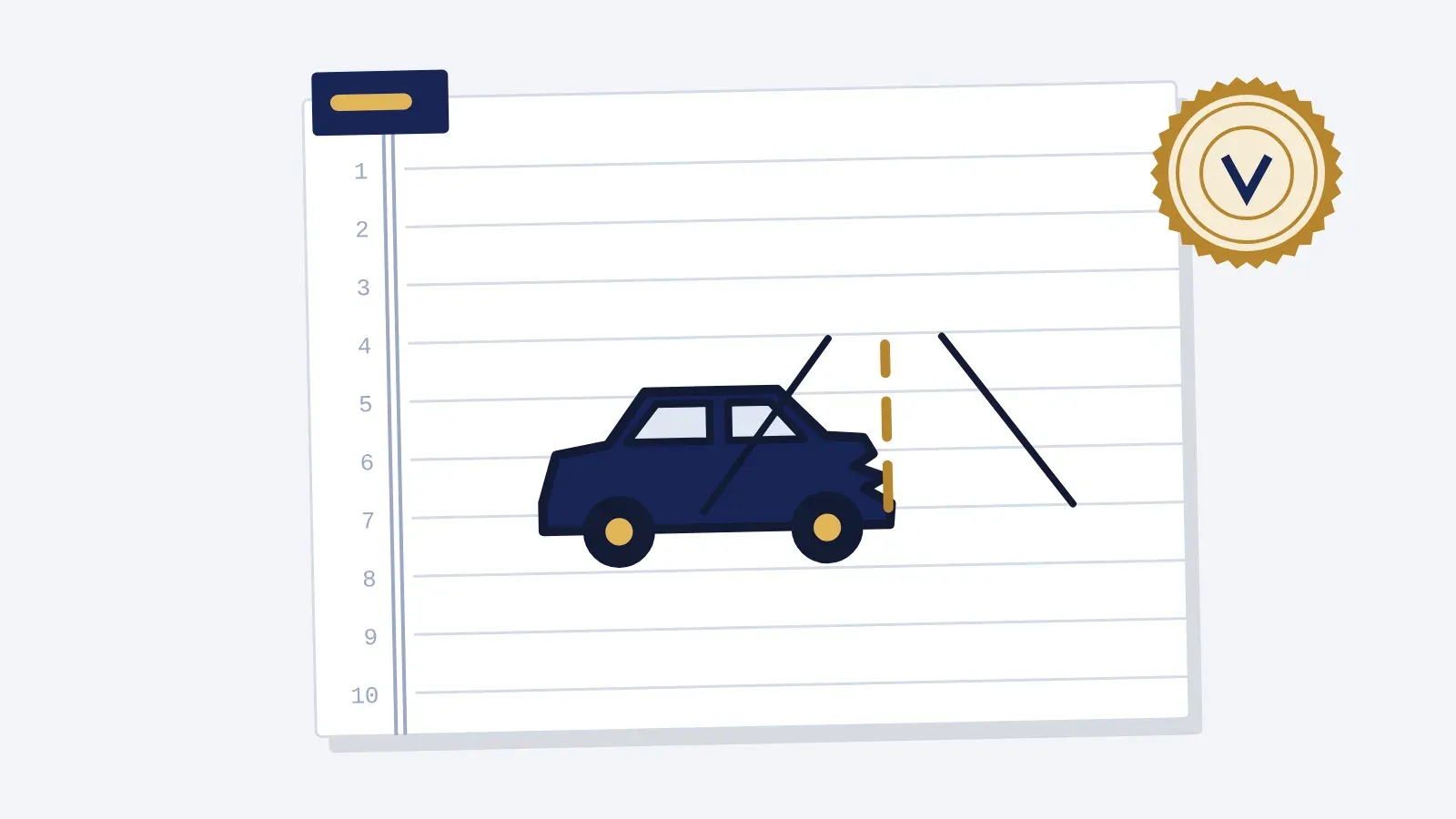
The first hour after a hit-and-run
- Check for injuries and call 911 if anyone is hurt. Your safety and medical care come before any detail about the other car.
- Don't chase the other driver. A pursuit puts you at risk and can turn you into a driver at fault in a second crash.
- Write down what you saw at once: the plate, even a partial one, the make, model and color, any damage on the other car, and the direction it went. Memory fades within minutes.
- Call the police and ask for a report number, even for a scraped bumper in a parking lot. Many uninsured motorist claims turn on that report.
- Look for witnesses and cameras. Ask bystanders for names and phone numbers, and note nearby shops, homes or traffic cameras that may have recorded the crash. Footage is often erased within days.
- Photograph everything before you move the car: the damage, paint transfer, debris, the road and the street signs.
Each of these steps answers a question the adjuster will ask: did another vehicle cause this, when and where did it happen, and could anyone find the driver? Our guide to documenting the damage lists the photos that help most.
Which coverage pays for what
With no driver to claim against, you turn to your own policy. The NAIC describes uninsured motorist coverage as protection that pays if you are injured by a hit-and-run driver or a driver without insurance. Damage to the car usually falls to collision coverage, because uninsured motorist property damage (UMPD), where it is sold, often requires the other car to be identified.
| Loss | Usually paid by | What to know |
|---|---|---|
| Your injuries and your passengers' injuries | Uninsured motorist bodily injury; PIP or MedPay if you carry it | UM may require a police report and, in some states, physical contact |
| Damage to your car, driver never found | Collision coverage | Your collision deductible applies |
| Damage to your car, driver or plate identified | The other driver's liability insurer, or UMPD if they had none | Some states' UMPD requires the car or driver to be identified |
| Your parked car hit while you were away | Collision coverage | Report it to the police and check for cameras |
California shows how tight the property damage rule can be. Its UMPD law pays only when there was direct physical contact with the uninsured car and either the owner or driver is identified or the car is identified by its license plate. You must report the crash to your insurer or agent within 10 business days, and the payment is capped at the car's actual cash value or $3,500, whichever is less. If you have collision coverage too, UMPD pays only the collision deductible, up to $3,500. How collision claims work is in collision claims.
Two gaps catch people out. First, a policy with liability coverage only pays for damage you cause to others, so it does nothing for your own car after a hit-and-run; without collision coverage, the repair is on you unless the driver is found. Second, deductibles can apply to more than collision: the Texas Department of Insurance notes that you pay a deductible on collision, comprehensive and uninsured motorist claims, while a claim against another driver's insurer carries none. Your declarations page lists each deductible. Personal injury protection (PIP) or medical payments coverage, where you carry it, can pay medical bills for you and your passengers while the UM claim is reviewed.
Conditions a UM hit-and-run claim may have to meet
States write their own conditions for hit-and-run UM claims, and your policy may add more. Two are common: proof that another vehicle was involved, and a prompt report to the police.
- Physical contact. California's uninsured motorist law covers bodily injury from an unidentified car only if the injury arose out of physical contact between that car and you or the car you were in.
- A police report within a time limit. California also requires a report to the police within 24 hours and a statement under oath to your insurer within 30 days after that.
- Any police report at all. The Texas Department of Insurance tells drivers that their uninsured motorist coverage won't pay for a hit-and-run accident they didn't report to the police.
If the police find the driver
Leaving the scene of a crash where someone is hurt is a crime in every state. In Missouri, for example, a driver who leaves without giving their name, address, plate and license number commits a crime, and a felony if someone is hurt or the damage exceeds $1,000; see the Missouri claim rules. If the police identify the driver, you can claim against their liability insurer, or your insurer can pay you first and then pursue that insurer for its money and your deductible through subrogation.
Tell your insurer if the driver is found after you have filed. A claim under your own policy and a claim against the other driver can't both pay for the same loss, and your insurer will want to coordinate them.
What the adjuster will ask for
- The police report number and the date and time you made the report.
- Your account: where you were, which way you were going, and what the other car did.
- Proof of contact: photos of the damage, paint transfer and debris.
- Witnesses and video: names, phone numbers and any footage you saved.
- Medical records and bills for an injury claim, and a repair estimate for the car.
Report the crash to your insurer as soon as you can; most policies require prompt notice. A UM claim is a claim under your own policy, so your state's claim deadlines apply to it. More on how these claims are valued is in uninsured motorist claims.
Questions people ask
Does insurance cover a hit-and-run?
Usually, through your own policy. Uninsured motorist coverage generally pays for injuries caused by a hit-and-run driver, and collision coverage pays for damage to your car minus the deductible. Liability-only policies don't pay to fix your own car.
Do I need a police report for a hit-and-run claim?
In practice, yes. Texas regulators say uninsured motorist coverage won't pay for a hit-and-run you didn't report to the police, and California requires a police report within 24 hours for a UM injury claim involving an unidentified car.
What if the hit-and-run car never touched mine?
Some states require physical contact for an uninsured motorist claim against an unidentified driver. California does for bodily injury claims. Check your policy's uninsured motorist section and your state's rules.
Will I pay a deductible after a hit-and-run?
On a collision claim, yes. If the driver is found later, your insurer may recover the deductible from their insurer and return it to you.
Sources on record
- Texas Department of Insurance — Auto insurance guide (hit-and-run and police reports)
- California Insurance Code §11580.2 — Uninsured motorist coverage (2025 edition)
- California Insurance Code §11580.26 — Uninsured motorist property damage (2025 edition)
- NAIC — Auto insurance consumer guide (uninsured motorist coverage)
- Missouri Revised Statutes 577.060 — Leaving the scene of an accident
Facts on this page were checked against these sources on November 11, 2026. Hit-and-run conditions for uninsured motorist claims differ by state and by policy.
Ask a licensed agent to review your coverage
After a claim, the policy you had is the one you can still change. Describe your situation and Valoroath passes it to licensed insurance agents and insurers who can review your coverage and quote, if you want them to. Valoroath itself does not sell insurance or handle claims.
- 1 Five questions about your car, your record and your policy.
- 2 Who to ask for, and your consent to be contacted.
- 3 A licensed insurance agent or insurer reviews what you have. You change nothing unless you choose to.
Sending this request shares your answers and contact details with the licensed insurance agents and insurers who receive it, which some state privacy laws treat as a sale; see your privacy choices. An agent reviews your coverage; they can't take on your claim or a dispute with your insurer. You pay Valoroath nothing. The licensed insurance agents and insurers who contact you pay Valoroath for requests and set their own prices and terms; your claim stays with your insurer. How we make money.
Next in the file
-

How claims work
Uninsured motorist claims
UM and UIM coverage, UMBI vs. UMPD, stacking, arbitration and getting consent before you settle.
-
How claims work
Collision claims
What collision coverage pays for, how the deductible and your car's value set the check, and getting it back.
-
State claim rules
California
15 days to acknowledge, 40 days to decide, 30 to pay; total loss by formula; SR-1 in 10 days; 2-3 years to sue.