Total loss at 80%
Car insurance claim rules in Missouri
The working-day deadlines a Missouri insurer has to meet, when a damaged car becomes salvage, when you must report a crash, and how long you have to sue.
By Valoroath Editorial Team Updated 6 min read
In plain terms
Missouri's claim deadlines are in regulations of the Department of Commerce and Insurance (DCI). An insurer must acknowledge your claim within 10 working days, aim to finish its investigation within 30 days, and accept or deny within 15 working days after you send the forms it requires. If it needs more time, it must write to you within 45 days and every 45 days after. A car up to six years past its model year is a salvage vehicle when repairs would cost more than 80% of its value. Missouri is an at-fault state with pure comparative fault, and you generally have 5 years to sue.
- Total loss rule
- Repairs over 80% of value
- Insurer must decide
- 15 working days
- Deadline to sue
- 5 years
- Fault system
- At-fault
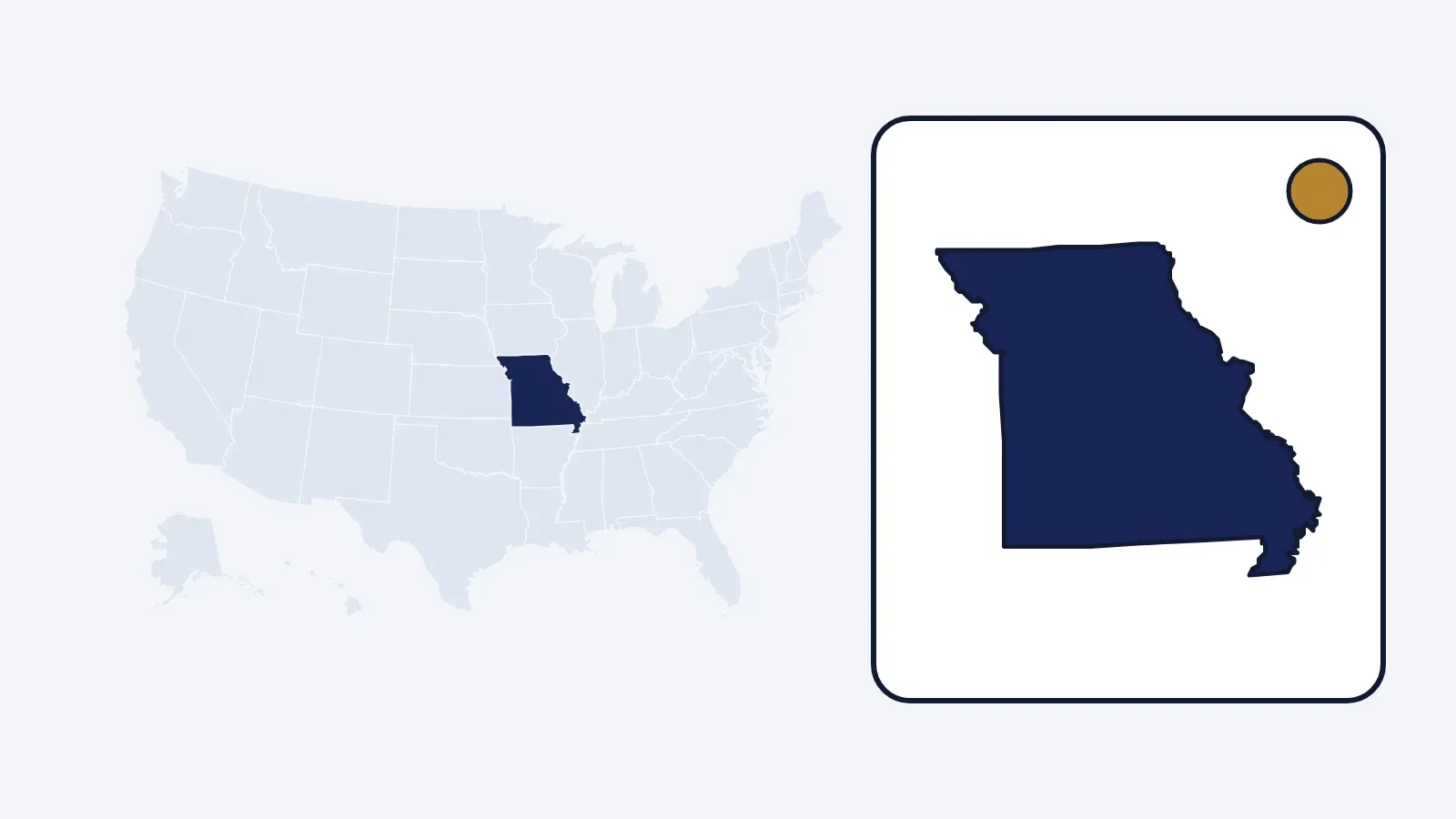
Missouri claim rules on one sheet
- Total loss rule Repairs over 80% of fair market value (cars up to 6 years past model year) Title law, RSMo 301.010. Airbags, tires, sound systems, hail and parts tax are left out. Insurers may declare salvage sooner.
- Insurer must acknowledge 10 working days after notice of the claim
- Insurer must decide 15 working days after you submit the required forms Written status every 45 days if more time is needed. 20 CSR 100-1.050.
- Deadline to sue 5 years for injury and for property damage
- Fault system At-fault; pure comparative fault
- Police report needed Give your details to the other party or police; if no officer, to the nearest agency RSMo 577.060 covers crashes with injury or damage to another's property. Call 911 if anyone is hurt.
- State crash report To the Director of Revenue in 30 days if uninsured driver and injury or over $500 damage Also required of any owner or driver without liability insurance (RSMo 303.040).
A summary by Valoroath of the state's statutes and regulations, not an official document. The sources are listed at the end of this page.
The clock on a Missouri claim
Two rules in Title 20 of the Code of State Regulations, 20 CSR 100-1.030 and 100-1.050, turn Missouri's unfair claims law into deadlines. They count working days for most steps.
| Step | Deadline | Rule |
|---|---|---|
| Acknowledge your claim (or pay it) | 10 working days | 1.030(1)(A) |
| Reply to letters that call for an answer | 10 working days | 1.030(1)(B) |
| Complete the investigation | 30 days after notice, unless it reasonably can't | 1.050(4) |
| Accept or deny the claim | 15 working days after you submit the required forms | 1.050(1)(A) |
| Explain in writing why more time is needed | 45 days after notice, then every 45 days | 1.050(1)(C) |
The decision clock starts when you have sent every form the insurer requires, so ask for a list and send it all at once with a dated cover letter. If a deadline passes, our page on claims that drag on covers the next steps.
Repairs and total losses in Missouri
Section 301.010 of the Missouri statutes defines a salvage vehicle. A car damaged in a year no more than six years after its model year is salvage when the estimated repair cost exceeds 80% of its fair market value just before the damage. Airbags, tires, sound systems, hail damage and sales tax on parts are left out of that repair cost. A car is also salvage when an insurer declares it so after settling a claim, whatever its age.
- Cash instead of repairs: outside total losses, an insurer can't pay you less than the amount the car can be repaired for unless you agree.
- Estimates: the insurer must give you a copy of its estimate, which must be an amount for which the car can be satisfactorily repaired.
- Its own shop: if the insurer chooses to repair the car at a shop it designates, it must restore the car to its condition before the loss at no extra cost to you beyond the policy terms.
- Your deductible: on request, the insurer must include it in its demand against the at-fault driver's insurer and share what it recovers.
How the payout on a totaled car should be calculated is in total loss claims, and the total loss check applies the 80% line to your numbers.
Reporting a Missouri crash
Under section 577.060, a driver in a crash that injures someone or damages another person's property must stop and give their name, address, plate number and driver's license number to the other party or to a police officer, or, if no officer is nearby, to the nearest law enforcement agency. Leaving without doing so is a crime, and a felony if someone is hurt or the damage exceeds $1,000. Call 911 if anyone is hurt.
Section 303.040 adds a written report to the Director of Revenue within 30 days. It applies to a crash with an uninsured motorist in which someone is killed or injured or one person's property damage exceeds $500, and to any owner or driver in a crash who doesn't carry liability insurance. If the other driver had no insurance, see accidents with an uninsured driver.
Fault and who pays
Missouri is an at-fault state: the driver who caused the crash, through their liability insurance, pays for the damage and injuries they caused. The Missouri Supreme Court replaced contributory negligence with comparative fault in Gustafson v. Benda (1983), and Missouri courts describe the system as pure comparative fault. You can recover even if you were mostly to blame, but your damages drop by your share of fault.
If the other driver's insurer is slow to accept fault, your own collision coverage can pay for repairs now, and your insurer then pursues the other side for its money and your deductible.
Deadlines to sue and where to complain
Section 516.120 gives five years to sue for injury to a person or for damage to property such as a car. Your policy may set shorter time limits for reporting a claim or suing your own insurer, so read its conditions.
- Ask the insurer in writing for the reason for a denial or a low offer and the policy language behind it.
- Call DCI toll-free at 800-726-7390, or the main office at 573-751-4126.
- File a complaint against the insurer with DCI's online form; our guide to insurance department complaints shows what to include.
Questions people ask
How long does a Missouri insurer have to decide a car insurance claim?
It must acknowledge the claim within 10 working days and accept or deny it within 15 working days after you submit the forms it requires. If it needs longer, it must write within 45 days of the claim and every 45 days after.
What percentage of damage totals a car in Missouri?
For title purposes, a car up to six years past its model year is a salvage vehicle when repairs would cost more than 80% of its fair market value before the damage. An insurer can also declare a car salvage after settling a claim.
Do I have to report a Missouri crash to the state?
You must file a written report with the Director of Revenue within 30 days if a crash with an uninsured motorist kills or injures someone or causes more than $500 of damage to one person's property, or if you had no liability insurance.
How long do I have to sue after a car accident in Missouri?
Generally five years for injury or property damage, under section 516.120 of the Missouri Revised Statutes.
Sources on record
- Missouri Code of State Regulations, 20 CSR 100-1 — Unfair claims settlement practices (1.030, 1.050)
- Missouri Revised Statutes 301.010 — Definitions (salvage vehicle)
- Missouri Revised Statutes 303.040 — Accident reports to the director
- Missouri Revised Statutes 577.060 — Leaving the scene of an accident
- Missouri Revised Statutes 516.120 — Five-year limitations
- Supreme Court of Missouri — Opinion summary citing Gustafson v. Benda (comparative fault)
- Lippard v. Houdaille Industries (Mo. 1986), describing pure comparative fault (Justia)
- Missouri Department of Commerce and Insurance — Consumer complaints
Facts on this page were checked against these sources on November 11, 2026. Most deadlines in the DCI rules count working days.
Ask a licensed agent to review your coverage
After a claim, the policy you had is the one you can still change. Describe your situation and Valoroath passes it to licensed insurance agents and insurers who can review your coverage and quote, if you want them to. Valoroath itself does not sell insurance or handle claims.
- 1 Five questions about your car, your record and your policy.
- 2 Who to ask for, and your consent to be contacted.
- 3 A licensed insurance agent or insurer reviews what you have. You change nothing unless you choose to.
Sending this request shares your answers and contact details with the licensed insurance agents and insurers who receive it, which some state privacy laws treat as a sale; see your privacy choices. An agent reviews your coverage; they can't take on your claim or a dispute with your insurer. You pay Valoroath nothing. The licensed insurance agents and insurers who contact you pay Valoroath for requests and set their own prices and terms; your claim stays with your insurer. How we make money.
Next in the file
-

How claims work
Total loss claims
When a car is totaled, what actual cash value should include, and what happens to the loan and the title.
-

Claim dispute
When your claim drags on
The time limits insurers work under, why files stall, and the written steps that move a claim.
-

After a crash
Accident with an uninsured driver
What to collect, how UM, UMPD and collision pay, state reports, and Louisiana's no pay, no play rule.