Total loss at 70%
Car insurance claim rules in Wisconsin
When a Wisconsin claim payment becomes overdue and earns interest, when a damaged car is a salvage vehicle, the crash report you may owe the DMV, and how long you have to sue.
By Valoroath Editorial Team Updated 6 min read
In plain terms
Wisconsin times a claim by the payment. Under Wis. Stat. § 628.46, a claim is overdue if not paid within 30 days after the insurer gets written notice of the covered loss and its amount, and overdue payments carry 7.5% simple interest a year. The insurance rules add a duty to affirm or deny coverage within a reasonable time after proof of loss. A car less than seven years old is a salvage vehicle when repairs would cost more than 70% of its fair market value. Injury or $1,000 in damage means you call the police right away, and you may owe the DMV a written report within 10 days. You have three years to sue.
- Total loss rule
- Repairs over 70% of value
- Insurer must decide
- Pay in 30 days or interest
- Deadline to sue
- 3 yrs injury, 3 property
- Fault system
- At-fault
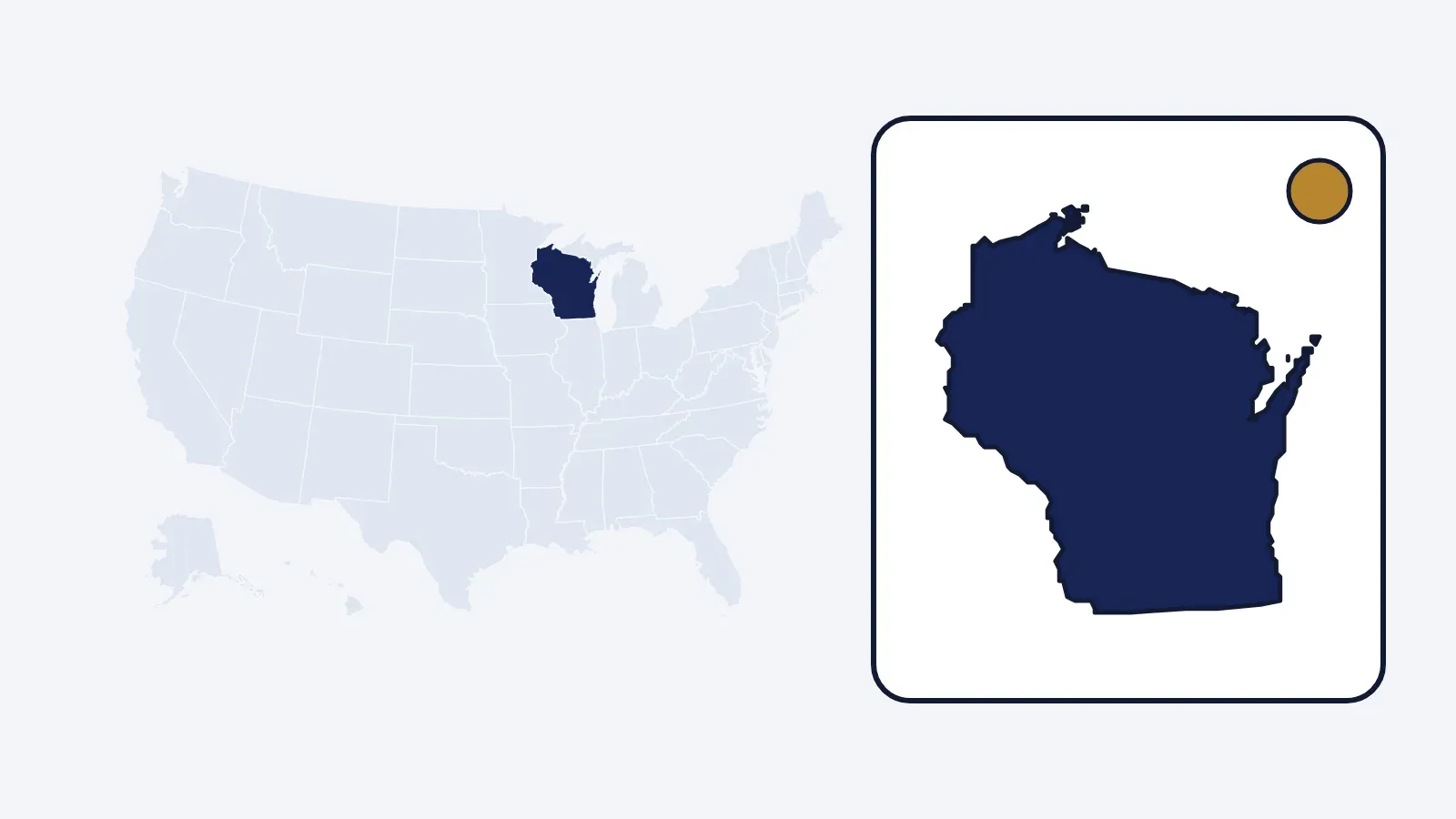
Wisconsin claim rules on one sheet
- Total loss rule Repairs over 70% of fair market value Salvage definition (title law), for cars less than 7 years old; hail damage excluded. Wis. Stat. § 340.01(55g).
- Insurer must acknowledge No fixed day count found in Wisconsin law OCI expects insurers to process claims promptly (bulletin of October 7, 2025).
- Insurer must decide Reasonable time after proof of loss; overdue if unpaid 30 days after notice Wis. Stat. § 628.46: 30 days after written notice of the loss and amount; 7.5% interest. Ins 6.11 on decisions.
- Deadline to sue 3 years for injury; 3 years for crash property damage Wis. Stat. §§ 893.54 and 893.52(2). Other property damage claims get 6 years.
- Fault system At-fault; barred if more at fault than the other party
- Police report needed At once: injury, death, or $1,000+ damage ($200+ to public property) Wis. Stat. § 346.70(1).
- State crash report Driver's report to DOT within 10 days unless police report it Wis. Stat. § 346.70(2).
A summary by Valoroath of the state's statutes and regulations, not an official document. The sources are listed at the end of this page.
The clock on a Wisconsin claim
Wisconsin's main timing rule is in statute. Section 628.46 says a claim is overdue if it isn't paid within 30 days after the insurer is furnished written notice of the fact of a covered loss and of its amount. Every overdue payment bears simple interest at 7.5% a year.
| Rule | What it requires | Source |
|---|---|---|
| Overdue claims | Paid within 30 days after written notice of the covered loss and its amount | Wis. Stat. § 628.46 |
| Interest on late payments | 7.5% simple interest a year | Wis. Stat. § 628.46 |
| Coverage decision | Affirm or deny within a reasonable time after proof of loss | Wis. Admin. Code Ins 6.11 |
In an October 7, 2025 bulletin to property and casualty insurers, the Office of the Commissioner of Insurance (OCI) said it expects all auto and homeowner insurers to process submitted claims promptly. Because the 30-day clock starts with written notice of the loss and the amount, send your claim, estimates and bills in writing and keep the dates. Our page on claims that drag on shows how to follow up.
When a Wisconsin car is a salvage vehicle
The Wisconsin DMV describes a salvage vehicle as one less than seven years old, not junk, damaged by a collision or other occurrence other than hail, where the cost of repair is more than 70% of its fair market value. A car of any age last titled in another state with a salvage brand is also a salvage vehicle.
- The insurer must report it. Under Wis. Stat. § 342.065, an insurer that pays a claim of more than 70% of a car's fair market value without taking the title must notify the DMV within 30 days.
- Rebuilt cars are inspected. A repaired salvage vehicle can't be registered or retitled until an inspector examines it (§ 342.07).
- Older cars and hail: the 70% test doesn't apply to cars seven or more years old or to hail damage, so the insurer's own formula decides those.
Example: a five-year-old car worth $15,000 with a $10,800 repair estimate is at 72%, over the line, so it becomes a salvage vehicle. The total loss check runs the same test, and total loss claims explains what the settlement should include.
Reporting a Wisconsin crash
Under Wis. Stat. § 346.70(1), the driver or an occupant must notify the police department, the sheriff, the county or city traffic department, or a state traffic patrol officer immediately, by the quickest means available, after a crash that causes:
- An injury or a death.
- Total damage of $1,000 or more to property owned by any one person, or to a government-owned vehicle.
- Damage of $200 or more to other government-owned property, such as a sign or a guardrail.
Section 346.70(2) adds a written report: unless a law enforcement agency makes a report, the driver must send a written report of the crash to the Department of Transportation within 10 days.
Fault and who pays
Wisconsin is an at-fault state. Under Wis. Stat. § 895.045, your own negligence does not bar recovery as long as it was not greater than the negligence of the person you are claiming against, and your damages are reduced by your share. If you are found 51% at fault against a driver at 49%, you recover nothing from that driver.
- Interest also runs on third-party claims. The annotations to § 628.46 note that the Wisconsin Supreme Court applied its interest to overdue payments to third-party claimants.
- Uninsured motorist coverage pays when the driver who caused the crash has no insurance; see uninsured motorist claims.
Deadlines to sue and where to complain
Wis. Stat. § 893.54 gives three years to sue for injuries to the person, including injuries from a motor vehicle crash. Property damage claims usually get six years under § 893.52, but a claim for damage to property caused by a motor vehicle accident must be brought within three years.
- Contact the insurer first and ask in writing for a decision, or for the reason payment hasn't been made.
- Gather your papers: contact details, policy and claim numbers, a copy of your insurance card, and copies of letters and estimates.
- File with OCI using its Online Insurance Complaint form, or call 1-800-236-8517 (in Wisconsin) or 1-608-266-0103 (outside Wisconsin) for help; our guide to insurance department complaints shows what to include.
Questions people ask
How long does a Wisconsin insurer have to pay a car insurance claim?
Under Wis. Stat. § 628.46, a claim is overdue if not paid within 30 days after the insurer receives written notice of the covered loss and its amount. Overdue payments bear 7.5% simple interest a year.
What percentage of damage totals a car in Wisconsin?
For a car less than seven years old, repairs costing more than 70% of its fair market value make it a salvage vehicle; hail damage doesn't count toward that test.
Do I have to file a crash report with the Wisconsin DMV?
Only if no law enforcement agency makes a report. Then the driver must send a written report to the Department of Transportation within 10 days of a crash with an injury, a death or damage above the reporting thresholds.
How long do I have to sue after a car accident in Wisconsin?
Three years for injuries and three years for property damage from a motor vehicle accident, under Wis. Stat. §§ 893.54 and 893.52(2).
Sources on record
- Wis. Stat. § 628.46 — Timely payment of claims (Justia, 2025 Wisconsin Statutes)
- Wisconsin OCI — Bulletin, October 7, 2025, Claim processing timelines
- Wisconsin DMV — Flood damaged vehicles and other title brands
- Wis. Stat. §§ 342.065 and 342.07 — Salvage and repaired salvage vehicle titles
- Wis. Stat. § 346.70 — Duty to report accident
- Wis. Stat. § 895.045 — Contributory negligence
- Wis. Stat. § 893.54 — Injury to the person (Justia, 2025 Wisconsin Statutes)
- Wis. Stat. § 893.52 — Damage to property (Justia, 2025 Wisconsin Statutes)
- Wisconsin OCI — Filing a complaint
Facts on this page were checked against these sources on November 11, 2026. Some statutes were read on Justia's copy of the 2025 Wisconsin Statutes because the Legislature's site blocked automated reading.
Ask a licensed agent to review your coverage
After a claim, the policy you had is the one you can still change. Describe your situation and Valoroath passes it to licensed insurance agents and insurers who can review your coverage and quote, if you want them to. Valoroath itself does not sell insurance or handle claims.
- 1 Five questions about your car, your record and your policy.
- 2 Who to ask for, and your consent to be contacted.
- 3 A licensed insurance agent or insurer reviews what you have. You change nothing unless you choose to.
Sending this request shares your answers and contact details with the licensed insurance agents and insurers who receive it, which some state privacy laws treat as a sale; see your privacy choices. An agent reviews your coverage; they can't take on your claim or a dispute with your insurer. You pay Valoroath nothing. The licensed insurance agents and insurers who contact you pay Valoroath for requests and set their own prices and terms; your claim stays with your insurer. How we make money.
Next in the file
-
How claims work
Total loss claims
When a car is totaled, what actual cash value should include, and what happens to the loan and the title.
-
Claim dispute
When your claim drags on
The time limits insurers work under, why files stall, and the written steps that move a claim.
-
After a crash
Reporting to your insurer
Your duties under the policy, what to have ready, report vs. claim, and the deadlines the insurer must meet.