Total loss by formula
Car insurance claim rules in Washington
The deadlines a Washington insurer has had to meet since October 18, 2026, how a totaled car must be paid, when you file a crash report, and how long you have to sue.
By Valoroath Editorial Team Updated 6 min read
In plain terms
Washington's Insurance Commissioner rewrote the claim deadlines in WAC chapter 284-30, effective October 18, 2026. An insurer must acknowledge your claim within 10 business days and tell a first-party claimant whether the claim is accepted or denied within 30 calendar days after notice of the claim, or give every reason it needs more time and update you every 30 days. No percentage decides a total loss: a car is salvage when repair cost plus salvage value makes it uneconomical to fix. Fault is pure comparative, so you can recover even if you were mostly at fault, reduced by your share. You have three years to sue.
- Total loss rule
- Insurer's formula
- Insurer must decide
- 30 days after notice
- Deadline to sue
- 3 yrs injury, 3 property
- Fault system
- At-fault, pure comparative
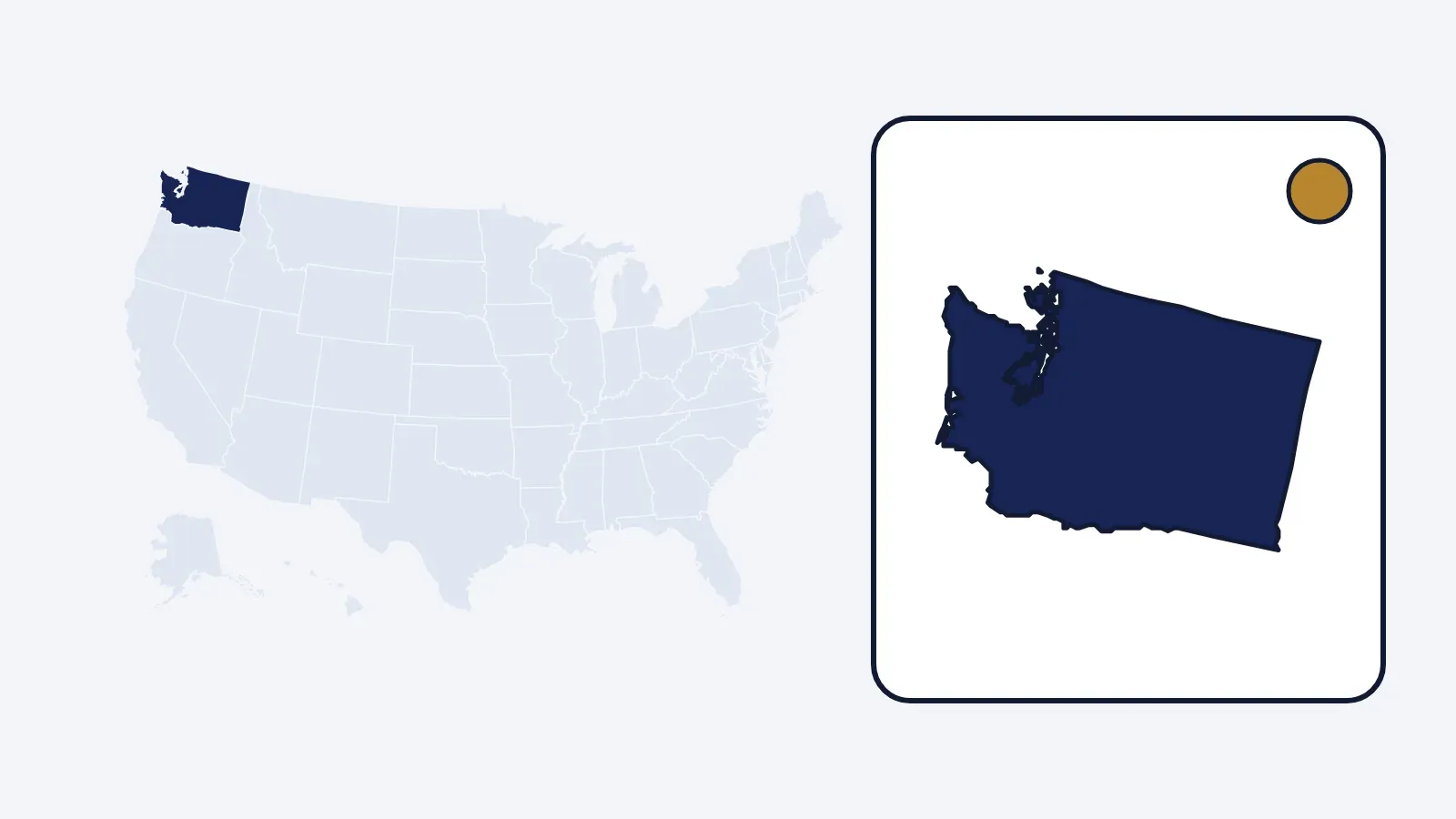
Washington claim rules on one sheet
- Total loss rule No percentage in law; insurer's formula RCW 46.04.514: salvage when parts and labor plus salvage value make repair uneconomical.
- Insurer must acknowledge 10 business days after notification of the claim
- Insurer must decide 30 calendar days after notice of claim; reasons and updates every 30 days WAC 284-30-380, effective Oct. 18, 2026 (WSR 26-17-089). Pay within 15 business days of signed releases, WAC 284-30-330(16).
- Deadline to sue 3 years for injury; 3 years for property damage
- Fault system At-fault; pure comparative fault
- Police report needed Injury or death: report to police if no officer is present RCW 46.52.020. A written report is also due in 4 days for $1,000+ damage unless an officer reports.
- State crash report Driver's report within 4 days: injury, death or $1,000+ damage RCW 46.52.030 and WAC 446-85-010. Filed with city police, sheriff or State Patrol; not due if an officer reports.
A summary by Valoroath of the state's statutes and regulations, not an official document. The sources are listed at the end of this page.
The clock on a Washington claim
The Office of the Insurance Commissioner (OIC) adopted new claim-handling timelines in rule-making R 2025-05 (WSR 26-17-089), filed August 18, 2026 and in force from October 18, 2026. Claims reported before that date may have been timed under the older wording, which counted the decision from proof of loss.
| Step | Deadline | Section |
|---|---|---|
| Acknowledge the notification of claim | 10 business days | WAC 284-30-360 |
| Reply to your communications | 10 business days | WAC 284-30-360 |
| Complete the investigation, or write with the reasons it can't | 30 calendar days after notice | WAC 284-30-370 |
| Tell a first-party claimant whether the claim is accepted or denied | 30 calendar days after notice | WAC 284-30-380 |
| Explain why the claim is still unresolved | Every 30 days after that | WAC 284-30-380 |
A denial must be in writing and must name the policy provision, condition or exclusion it rests on. The insurer also can't hold up a first-party claim by arguing that someone else should pay. If dates pass, the steps in claims that drag on apply.
When a Washington car is a total loss
RCW 46.04.514 defines a salvage vehicle as one declared a total loss, or damaged so that the owner or an insurer has determined that the cost of parts and labor plus the salvage value makes it uneconomical to repair. There is no percentage. Older vehicles are generally left out of the definition unless they were worth more than a market value threshold before the damage.
WAC 284-30-391 sets how the insurer pays a total loss. It can replace the car or pay cash, and since January 1, 2026 every Washington auto policy issued or renewed with physical damage coverage must include an appraisal clause you can invoke over the amount (RCW 48.18.620, from SB 5721). A cash settlement is the actual cash value of a comparable vehicle, less your deductible.
- Taxes and fees are owed. The settlement must include all applicable government taxes and fees you would have paid to buy the car just before the loss, whether or not you keep the car.
- Comparables come from your area first. When there aren't enough nearby, the search can widen in 25-mile steps, up to 150 miles, until two or more comparable vehicles are found.
- Every addition or deduction must be itemized with dollar amounts and explained, and you can ask for a copy of the valuation report.
- A 35-day reopener. If, within 35 calendar days after final payment, you can't buy a comparable car for the agreed amount, the insurer must reopen the claim, unless it gave you written notice of a specific comparable car you didn't buy within five business days.
Our pages on disputing a total loss valuation and the total loss check help you test an offer.
Reporting a Washington crash
Under RCW 46.52.020, a driver in a crash that injures or kills someone must stop, help and exchange information, and must report the crash to the nearest police office when no officer is present and no one at the scene is able to receive the information.
RCW 46.52.030 adds a written report. The driver of a car in a crash with an injury, a death or property damage at the state reporting threshold must file a report within four days with the city police, or outside a city with the county sheriff or the State Patrol. The State Patrol set the threshold at $1,000 from January 1, 2015 (WAC 446-85-010). No driver report is due if a law enforcement officer must make one.
Fault, IFCA and who pays
Washington is an at-fault state with pure comparative fault. Under RCW 4.22.005, your own share of fault reduces your damages in proportion but does not bar recovery. At 70% at fault, for example, you can still recover 30% of your damages from the other driver.
Washington also has the Insurance Fair Conduct Act (IFCA), RCW 48.30.015. A first-party claimant who is unreasonably denied coverage or payment of benefits can sue in superior court for actual damages. The court may raise the award to as much as three times actual damages and must award reasonable attorney's fees and litigation costs when it finds the denial unreasonable. Twenty days before filing, you must send written notice of the claim to both the insurer and the OIC.
IFCA is a legal claim with its own rules, so talk to a licensed Washington attorney before relying on it; our page on insurance bad faith explains the general idea.
Deadlines to sue and where to complain
Under RCW 4.16.080(2), a lawsuit for injuring personal property or for any other injury to the person must be filed within three years. The clock doesn't stop while you negotiate.
- Ask in writing for the reasons behind a denial or an offer, and for the valuation report on a total loss.
- Call OIC Consumer Advocacy at 800-562-6900, 8:30 a.m. to 4:30 p.m. Monday through Friday.
- File a complaint with the OIC online; our guide to insurance department complaints shows what to include.
Questions people ask
How long does a Washington insurer have to decide a car insurance claim?
Since October 18, 2026, WAC 284-30-380 requires an insurer to tell a first-party claimant whether the claim is accepted or denied within 30 calendar days after notice of the claim, or give all the reasons it needs more time and update every 30 days.
What percentage of damage totals a car in Washington?
None is set in law. A car is salvage when the owner or insurer decides that repair cost plus salvage value makes it uneconomical to repair.
Do I have to file a collision report in Washington?
Yes, within four days, if the crash caused an injury, a death or property damage of $1,000 or more and no officer is required to report it. The report goes to the city police, or outside a city to the sheriff or the State Patrol.
What is IFCA?
The Insurance Fair Conduct Act, RCW 48.30.015. It lets a first-party claimant who was unreasonably denied coverage or benefits sue for damages, up to three times actual damages, plus attorney's fees, after 20 days' written notice to the insurer and the insurance commissioner.
Sources on record
- RCW 48.18.620 — Appraisal provisions in motor vehicle policies
- WAC 284-30-360 — Standards for the insurer to acknowledge pertinent communications
- WAC 284-30-370 — Standards for prompt investigation of a claim
- WAC 284-30-380 — Settlement standards applicable to all insurers
- Washington State Register WSR 26-17-089 — OIC rule-making R 2025-05 (filed August 18, 2026)
- WAC 284-30-391 — Methods and standards of practice for settlement of total loss vehicle claims
- RCW 46.04.514 — Salvage vehicle
- RCW 46.52.030 — Accident reports
- WAC 446-85-010 — Accident-reporting threshold
- RCW 4.16.080 — Actions limited to three years
- RCW 4.22.005 — Effect of contributory fault
- RCW 48.30.015 — Insurance Fair Conduct Act
- Washington Office of the Insurance Commissioner — Contact us
Facts on this page were checked against these sources on November 11, 2026. The WAC 284-30 deadlines shown took effect October 18, 2026 (WSR 26-17-089).
Ask a licensed agent to review your coverage
After a claim, the policy you had is the one you can still change. Describe your situation and Valoroath passes it to licensed insurance agents and insurers who can review your coverage and quote, if you want them to. Valoroath itself does not sell insurance or handle claims.
- 1 Five questions about your car, your record and your policy.
- 2 Who to ask for, and your consent to be contacted.
- 3 A licensed insurance agent or insurer reviews what you have. You change nothing unless you choose to.
Sending this request shares your answers and contact details with the licensed insurance agents and insurers who receive it, which some state privacy laws treat as a sale; see your privacy choices. An agent reviews your coverage; they can't take on your claim or a dispute with your insurer. You pay Valoroath nothing. The licensed insurance agents and insurers who contact you pay Valoroath for requests and set their own prices and terms; your claim stays with your insurer. How we make money.
Next in the file
-

Claim dispute
Disputing a total loss value
How to check the valuation report, the comparable car rules, the 35-day reopener, and what comes next.
-

Claim dispute
Insurance bad faith
What bad faith means on a car claim, first-party vs. third-party, and how state law changes the answer.
-

After a crash
Documenting the damage
The photos adjusters ask for, saving video and car data, protecting the car, and the records behind the numbers.