Total loss at 100%
Car insurance claim rules in Utah
The deadlines a Utah insurer has to meet, when a damaged car is a salvage vehicle, how the no-fault PIP rules work, when to call the police, and how long you have to sue.
By Valoroath Editorial Team Updated 6 min read
In plain terms
Utah sets its claim deadlines in an insurance department rule, R590-190. An insurer must acknowledge your claim within 15 days and accept or deny it within 30 days after it gets a complete proof of loss, or tell you in writing why it needs more time and update you every 45 days. A car is a salvage vehicle when the cost to repair it for safe operation exceeds its fair market value, or when an insurer declares it salvage. Utah is a no-fault state: your own personal injury protection (PIP) pays at least $3,000 in medical costs whoever caused the crash. Most crash lawsuits must be filed within four years.
- Total loss rule
- Repairs over 100% of value
- Insurer must decide
- 30 days after proof
- Deadline to sue
- 4 yrs injury, 4 property
- Fault system
- No-fault (PIP $3,000)
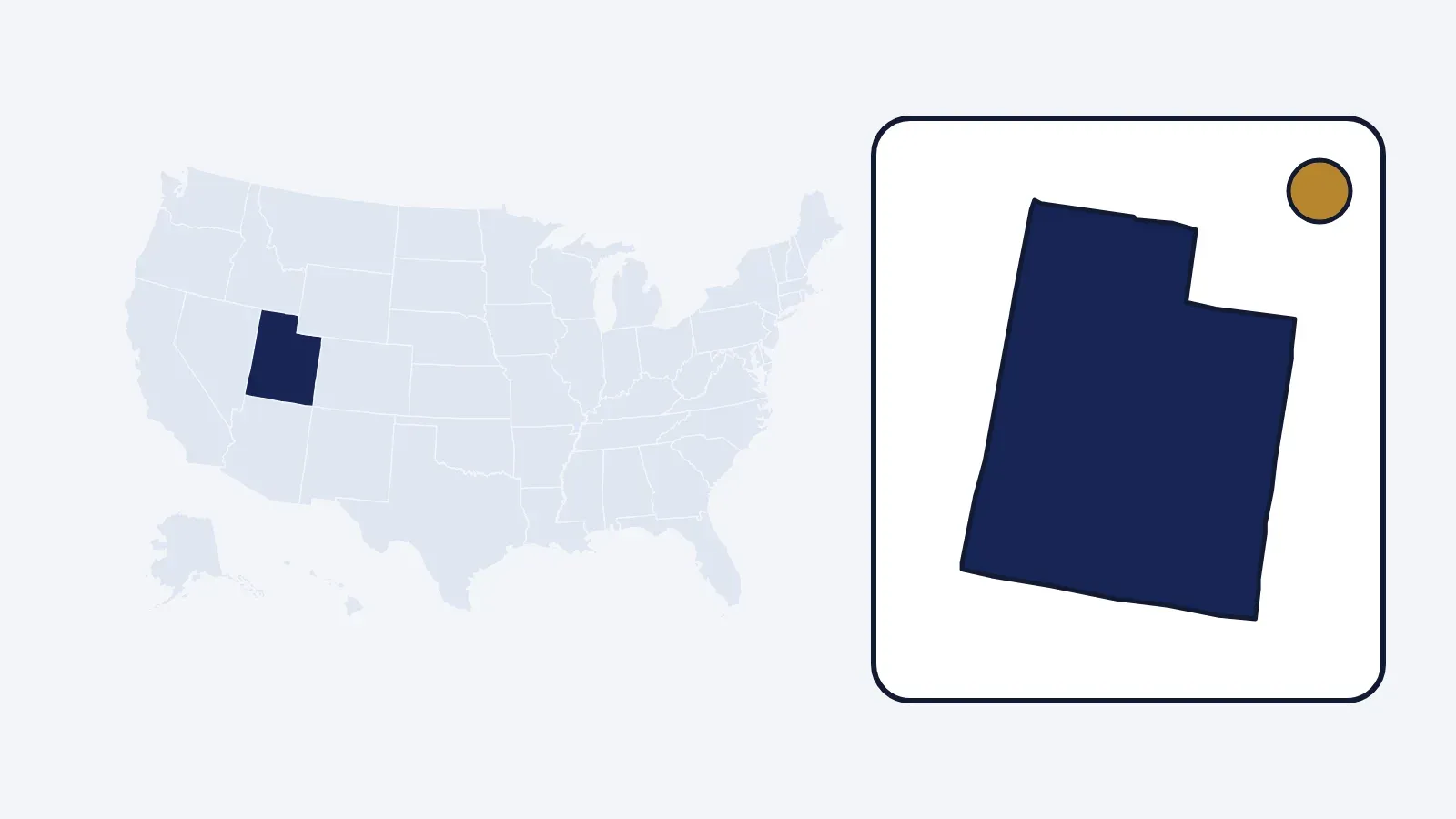
Utah claim rules on one sheet
- Total loss rule Repairs for safe operation exceed fair market value: 100% Salvage definition in title law (Utah Code 41-1a-1001); a car an insurer declares salvage is branded too.
- Insurer must acknowledge 15 days after receiving notice of loss
- Insurer must decide 30 days after a complete proof of loss; written reasons if longer Then a letter every 45 days while the investigation stays open. Utah Admin. Code R590-190-10.
- Deadline to sue 4 years for injury; 4 years for vehicle damage Utah Code 78B-2-307(3) for vehicle damage; injury claims fall under the 4-year catch-all in 78B-2-307(4).
- Fault system No-fault (PIP $3,000 required); recovery barred at 50% fault
- Police report needed At once if anyone is injured or damage appears to be $2,500 or more
- State crash report Only if the state requests one; then within 10 days Utah Code 41-6a-402: applies to crashes with injury, death or $2,500 or more in damage.
A summary by Valoroath of the state's statutes and regulations, not an official document. The sources are listed at the end of this page.
The clock on a Utah claim
Utah's Unfair Property, Casualty, and Title Claims Settlement Practices Rule (Utah Admin. Code R590-190) turns the general duty to act promptly into day counts. The rule was readopted effective January 24, 2024, and its automobile section was amended effective June 7, 2024.
| Step | Deadline | Section |
|---|---|---|
| Acknowledge a notice of loss | 15 days after receipt | R590-190-6 |
| Give claim forms, instructions and help to a first-party claimant | 15 days | R590-190-6 |
| Accept or deny the claim of a first-party claimant | 30 days after a complete proof of loss | R590-190-10 |
| If more time is needed, explain why in writing | Within those 30 days, then every 45 days | R590-190-10 |
The 45-day status letters are not required once you have a lawyer or a public adjuster. If you are talking to the insurer on your own, it must tell you the date your statute of limitations or other time limit runs out, at least 60 days before that date. If a decision is overdue, the steps in our page on claims that drag on apply in Utah too.
When a Utah car is a total loss
Utah's title law (Utah Code 41-1a-1001) defines a salvage vehicle in two ways: a vehicle damaged by collision, flood or another occurrence so badly that the cost of repairing it for safe operation exceeds its fair market value, or a vehicle an insurer or another state has declared salvage. Either way, the title is branded, and the Utah DMV says a brand can't be removed once it is on the title.
Section R590-190-11 sets how a first-party total loss is paid. The insurer can offer a comparable replacement car with taxes, license and transfer fees paid, less your deductible, or cash based on the actual cost of a comparable car, including those taxes and fees. Value comes from two comparable cars in your local market within the last 90 days, dealer quotes, or a valuation source that meets the rule's standards.
- Deductions must be itemized. Any deduction, including salvage value if you keep the car, must be measurable, itemized by dollar amount, reasonable and explained to you.
- There is a 30-day reopener. If you can't buy a comparable car at the market value within 30 days of getting a cash settlement, the insurer must reopen the file, unless it named a specific comparable car available at that price when it settled.
- Loss of use runs until a fair offer. When the policy covers it, rental payments on a total loss continue until the insurer makes a reasonable settlement offer. See rental reimbursement.
The total loss check compares a repair estimate with your car's value under the Utah rule.
Reporting a Utah crash
Under Utah Code 41-6a-401 and 41-6a-401.7, the driver must notify the nearest law enforcement office immediately, by the quickest means available, when a crash injures someone or causes property damage to an apparent extent of $2,500 or more. If nobody is hurt and the car can move, you may first move it out of the travel lanes.
Utah does not ask every driver to file a written report. Under Section 41-6a-402, the state may require one after a crash with an injury, a death or $2,500 or more in damage, and you then have 10 days from the request to file it.
No-fault PIP and who pays
Every Utah auto policy carries PIP. Under Utah Code 31A-22-307 it pays at least $3,000 per person for reasonable medical, hospital, rehabilitation and ambulance costs, whoever caused the crash. Claims for damage to cars are not part of no-fault: the at-fault driver's liability insurance pays for those.
- The threshold to sue for pain and suffering: Utah Code 31A-22-309 lets a person with PIP sue for general damages only after death, dismemberment, a bone fracture, permanent disfigurement, a permanent disability or impairment based on objective findings, or medical expenses over $3,000.
- Comparative fault: under Utah Code 78B-5-818 you can recover from others only if their combined fault exceeds yours, so at 50% fault you recover nothing, and below that your damages shrink by your share.
How to file under PIP and what it covers is in our guide to PIP and MedPay claims.
Deadlines to sue and where to complain
Utah Code 78B-2-307 gives four years for a claim for damage to your motor vehicle or other personal property in a crash, and four years for relief not otherwise provided for by law, which is the period generally applied to injury claims from negligence. A claim for a death caused by someone's negligence has two years under Section 78B-2-304. Talking with an adjuster does not pause these clocks.
- Ask the insurer in writing for the reason for a denial or a low offer, and the policy language it relies on.
- Call the Utah Insurance Department at (801) 957-9200 or (800) 439-3805 for questions about a claim.
- File a complaint through the department's website if the insurer misses deadlines or won't explain itself; our guide to insurance department complaints shows what to include.
Questions people ask
How long does a Utah insurer have to decide a car insurance claim?
Under R590-190-10, an insurer must accept or deny a first-party claim within 30 days after it receives a complete proof of loss. If it needs longer, it must tell you why in writing within those 30 days and every 45 days after that.
What percentage of damage totals a car in Utah?
Utah's salvage definition uses repair cost for safe operation that exceeds the car's fair market value, which is 100%. A car an insurer declares salvage is also branded, so an insurer can total a car below that line.
Can I sue the other driver for pain and suffering in Utah?
Only above the no-fault threshold in Utah Code 31A-22-309: death, dismemberment, a fracture, permanent disfigurement, permanent disability or impairment, or medical expenses over $3,000. Claims for damage to your car are not limited by that threshold.
Do I have to report a minor crash to the police in Utah?
You must notify the police immediately if anyone is injured or the property damage appears to be $2,500 or more. Below that, no report is required by statute, but notes and photos still help your claim.
Sources on record
- Utah Admin. Code R590-190-6 — Failure to acknowledge communication (Cornell LII)
- Utah Admin. Code R590-190-10 — Minimum standards for prompt, fair, and equitable settlement (Cornell LII)
- Utah Admin. Code R590-190-11 — Settlement standards for automobile insurance (Cornell LII)
- Utah Division of Motor Vehicles — Salvage vehicles and branded titles
- Utah Code Title 41, Chapter 6a, Part 4 — Accident responsibilities
- Utah Code Title 31A, Chapter 22, Part 3 — Motor vehicle insurance (PIP and tort threshold)
- Utah Code Title 78B, Chapter 2, Part 3 — Statutes of limitations
- Utah Code Title 78B, Chapter 5, Part 8 — Comparative negligence
- Utah Insurance Department — Auto claims information
Facts on this page were checked against these sources on November 11, 2026. The R590-190 deadlines apply to claims under your own policy unless a row says otherwise; your policy can add conditions of its own.
Ask a licensed agent to review your coverage
After a claim, the policy you had is the one you can still change. Describe your situation and Valoroath passes it to licensed insurance agents and insurers who can review your coverage and quote, if you want them to. Valoroath itself does not sell insurance or handle claims.
- 1 Five questions about your car, your record and your policy.
- 2 Who to ask for, and your consent to be contacted.
- 3 A licensed insurance agent or insurer reviews what you have. You change nothing unless you choose to.
Sending this request shares your answers and contact details with the licensed insurance agents and insurers who receive it, which some state privacy laws treat as a sale; see your privacy choices. An agent reviews your coverage; they can't take on your claim or a dispute with your insurer. You pay Valoroath nothing. The licensed insurance agents and insurers who contact you pay Valoroath for requests and set their own prices and terms; your claim stays with your insurer. How we make money.
Next in the file
-

How claims work
PIP and MedPay claims
How your own policy pays medical bills after a crash, how no-fault thresholds work, and the deadlines.
-

Claim dispute
Complaining to your state
When a complaint helps, how to find your insurance department, what to include, and what it can and can't do.
-

After a crash
When to call the police
The cases for 911, state damage thresholds from $50 to $4,000, and why a report helps after a small crash.