Total loss by formula
Car insurance claim rules in Oregon
The deadlines an Oregon insurer has to meet, how a car becomes totaled, the 72-hour DMV report, PIP, and how long you have to sue.
By Valoroath Editorial Team Updated 6 min read
In plain terms
Oregon's insurance rules give an insurer 30 days to acknowledge a claim and 30 days after proof of loss to accept or deny a claim under your own policy, with a written reason and an update every 45 days if it needs longer. State law sets no repair percentage for an insured car: it is totaled when the insurer declares it a total loss. Every Oregon auto policy includes personal injury protection (PIP), and a driver must file a DMV crash report within 72 hours in many crashes, even when police wrote one. You have two years to sue over injuries and six years over damage to your car.
- Total loss rule
- Insurer's formula
- Insurer must decide
- 30 days after proof
- Deadline to sue
- 2 yrs injury, 6 property
- Fault system
- At-fault, PIP required
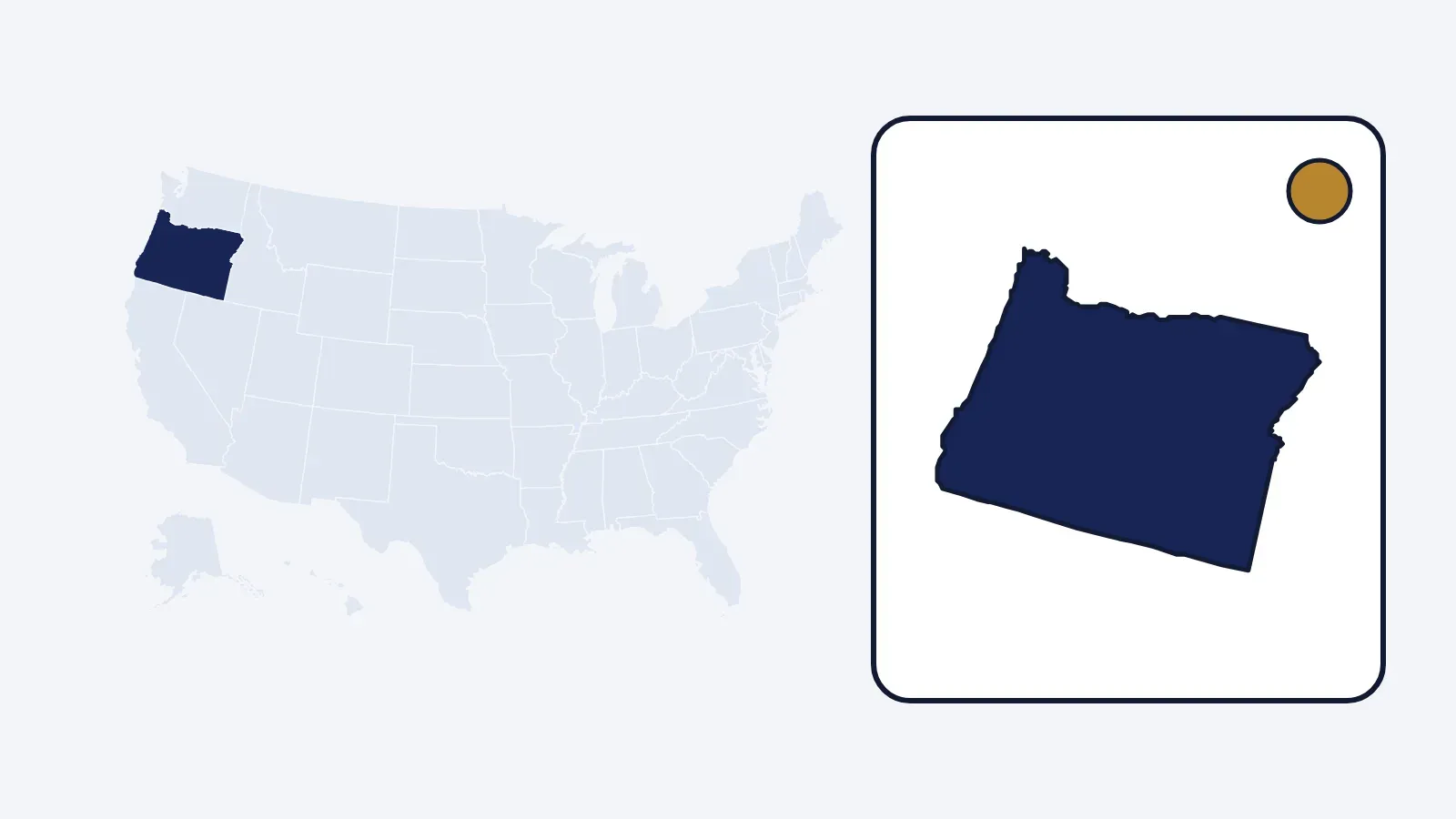
Oregon claim rules on one sheet
- Total loss rule No percentage for insured cars; totaled when the insurer declares it ORS 801.527. The 80%-of-retail-value test applies only to damage no insurer covers.
- Insurer must acknowledge 30 days after notice of the claim
- Insurer must decide 30 days after proof of loss; written reasons, then every 45 days OAR 836-080-0235. No separate payment deadline in this rule.
- Deadline to sue 2 years for injury; 6 years for property damage
- Fault system At-fault with required PIP; barred if your fault is greater (51%) PIP pays medical expenses up to $15,000 per person (ORS 742.524).
- Police report needed Immediately for injury, death, damage over $2,500 or a tow ORS 811.745 and 811.748.
- State crash report DMV report within 72 hours for injury, damage over $2,500 or a tow Required even if police wrote a report; missing it leads to a suspension notice. ORS 811.720–811.725.
A summary by Valoroath of the state's statutes and regulations, not an official document. The sources are listed at the end of this page.
The clock on an Oregon claim
Oregon's claim deadlines are in the Division of Financial Regulation's rules on unfair claim settlement practices, Chapter 836, Division 80 of the Oregon Administrative Rules. They follow the shape of the national model rule but give the insurer 30 days at each step rather than 15 or 21.
| Step | Deadline | Rule |
|---|---|---|
| Acknowledge your notice of claim | 30 days after receiving it | 836-080-0225(1) |
| Reply to your letters that call for an answer | 30 days after receiving them | 836-080-0225(3) |
| Accept or deny a claim under your own policy | 30 days after proof of loss | 836-080-0235(1) |
| If it needs more time, tell you why | 30 days after proof of loss | 836-080-0235(4) |
| Written update on why it still needs time | 45 days later, then every 45 days | 836-080-0235(4) |
The decision clock runs from a properly executed proof of loss, so return the insurer's forms complete and keep a dated copy. If the updates stop arriving or the reason never changes, our page on claims that drag on shows how to ask for a decision in writing.
When an Oregon car is totaled
Oregon's vehicle code defines a totaled vehicle in ORS 801.527. For a car with insurance coverage, the test is simple: the car is totaled when the insurer obligated to cover the loss declares it a total loss, or takes possession of it or its title. The statute sets no repair-cost percentage for those cars, so the insurer's own comparison of repair cost and salvage value with the car's value decides.
- The 80% figure applies only to uninsured damage. A car whose damage no insurer covers is totaled when the estimated repair cost is at least 80% of its retail market value before the damage.
- Unrecovered theft: a stolen car not recovered within 30 days is also treated as totaled when no insurer covers the loss.
- The settlement is the actual cash value. How to check it, including taxes and fees, is in our guide to total loss claims.
Because the decision rests with the insurer, ask for its repair estimate, the car's valuation and the salvage value it used. The total loss check shows how those three numbers interact.
Reporting an Oregon crash
Oregon asks two separate things of a driver. First, under ORS 811.748, notify a police officer or law enforcement agency right away by the quickest means for a collision that must be reported under ORS 811.745, which covers crashes with injury or death and crashes with damage over $2,500 or a car that has to be towed. Second, file your own report with the DMV.
- Who files: any driver in a crash with an injury or death, damage over $2,500 to your car, damage over $2,500 to any car plus a tow from the scene, or damage over $2,500 to property other than a car.
- When: within 72 hours, on the Oregon Traffic Collision and Insurance Report. If you miss that window, file as soon as you can.
- Police report or not: DMV says you still have to file even if officers wrote their own report. If no report is filed, Oregon law requires DMV to issue a suspension notice.
ORS 811.720 lets the state raise the $2,500 figure every five years based on inflation, so check the DMV page before you file.
PIP, fault and who pays
Oregon is an at-fault state with required no-fault benefits. The driver who caused the crash pays, through their liability insurance, for other people's injuries and damage. Under ORS 31.600 you can recover as long as your fault is not greater than the combined fault of the others, and your damages drop by your share.
- PIP is part of every policy. ORS 742.520 requires every private passenger auto policy to include it. Under ORS 742.524 it pays medical and hospital expenses incurred within two years of the injury, up to $15,000 per person.
- Lost income: PIP pays 70% of lost work income, up to $3,000 a month for up to 52 weeks, once a disability has lasted at least 14 days.
- PIP doesn't decide fault. A claim for pain and suffering or car damage still goes against the at-fault driver; see PIP and MedPay claims.
Deadlines to sue and where to complain
ORS 12.110 gives you two years to sue for an injury to the person. ORS 12.080 gives six years for an action for injuring personal property, which covers damage to your car. Settlement talks don't pause either clock, and your policy may set its own time limits for reporting a claim.
- Ask the insurer in writing for the reason for a denial, a delay or a low offer and the policy language it relies on.
- Call the Division of Financial Regulation consumer advocates at 888-877-4894, or email [email protected].
- File a complaint online, by mail or by fax if the insurer misses the deadlines. Our guide to insurance department complaints shows what to include.
Questions people ask
How long does an Oregon insurer have to decide on my claim?
On a claim under your own policy, 30 days after it receives a properly executed proof of loss. If it needs more time, it must tell you why within those 30 days and then write every 45 days while the investigation stays open.
What percentage of damage totals a car in Oregon?
For an insured car there is no percentage in state law: the car is totaled when the insurer declares it a total loss. The 80% of retail value test in ORS 801.527 applies only to damage that no insurer covers.
Do I need to file a DMV report if the police already wrote one?
Yes. Oregon DMV says a driver must file the Oregon Traffic Collision and Insurance Report within 72 hours when the crash meets the reporting thresholds, even if law enforcement filed a report.
How long do I have to sue after a car accident in Oregon?
Two years for an injury claim under ORS 12.110, and six years for damage to your car or other personal property under ORS 12.080.
Sources on record
- OAR 836-080-0225 — Required claim communication practices
- OAR 836-080-0235 — Standards for prompt and fair settlements
- Oregon Revised Statutes, Chapter 801 — Definitions, including ORS 801.527 (totaled vehicle)
- Oregon Revised Statutes, Chapter 811 — Collision reporting (ORS 811.720 to 811.748)
- Oregon DMV — Accident reporting and responsibilities
- Oregon Revised Statutes, Chapter 742 — Personal injury protection (ORS 742.520 to 742.524)
- Oregon Revised Statutes, Chapter 12 — Limitations of actions
- Oregon Revised Statutes, Chapter 31 — Comparative negligence (ORS 31.600)
- Oregon Division of Financial Regulation — File an insurance complaint
Facts on this page were checked against these sources on November 11, 2026. The Legislature notes that some sections of ORS chapter 811 were amended in the 2026 session; check the DMV page for the current reporting threshold.
Ask a licensed agent to review your coverage
After a claim, the policy you had is the one you can still change. Describe your situation and Valoroath passes it to licensed insurance agents and insurers who can review your coverage and quote, if you want them to. Valoroath itself does not sell insurance or handle claims.
- 1 Five questions about your car, your record and your policy.
- 2 Who to ask for, and your consent to be contacted.
- 3 A licensed insurance agent or insurer reviews what you have. You change nothing unless you choose to.
Sending this request shares your answers and contact details with the licensed insurance agents and insurers who receive it, which some state privacy laws treat as a sale; see your privacy choices. An agent reviews your coverage; they can't take on your claim or a dispute with your insurer. You pay Valoroath nothing. The licensed insurance agents and insurers who contact you pay Valoroath for requests and set their own prices and terms; your claim stays with your insurer. How we make money.
Next in the file
-

How claims work
PIP and MedPay claims
How your own policy pays medical bills after a crash, how no-fault thresholds work, and the deadlines.
-

Claim dispute
When your claim drags on
The time limits insurers work under, why files stall, and the written steps that move a claim.
-

After a crash
When to call the police
The cases for 911, state damage thresholds from $50 to $4,000, and why a report helps after a small crash.