Total loss by formula
Car insurance claim rules in Ohio
The deadlines in Ohio's claim settlement rule, how a totaled car is valued and when sales tax is paid back, what to do at the scene, and how long you have to sue.
By Valoroath Editorial Team Updated 6 min read
In plain terms
Ohio's Department of Insurance rule on claim settlement, Ohio Adm. Code 3901-1-54, gives insurers 15 days to acknowledge a claim, 21 days to accept or deny it after proof of loss, and 10 days to pay you once they accept a claim under your own policy. Ohio has no damage percentage for totaling a car; the insurer decides when repair is economically impractical. If you buy a replacement within 30 days of a total loss payment, the insurer reimburses the sales tax, up to a limit. You generally have 2 years to sue for injury or property damage.
- Total loss rule
- Insurer's formula, no %
- Insurer must decide
- 21 days after proof
- Deadline to sue
- 2 years
- Fault system
- At-fault
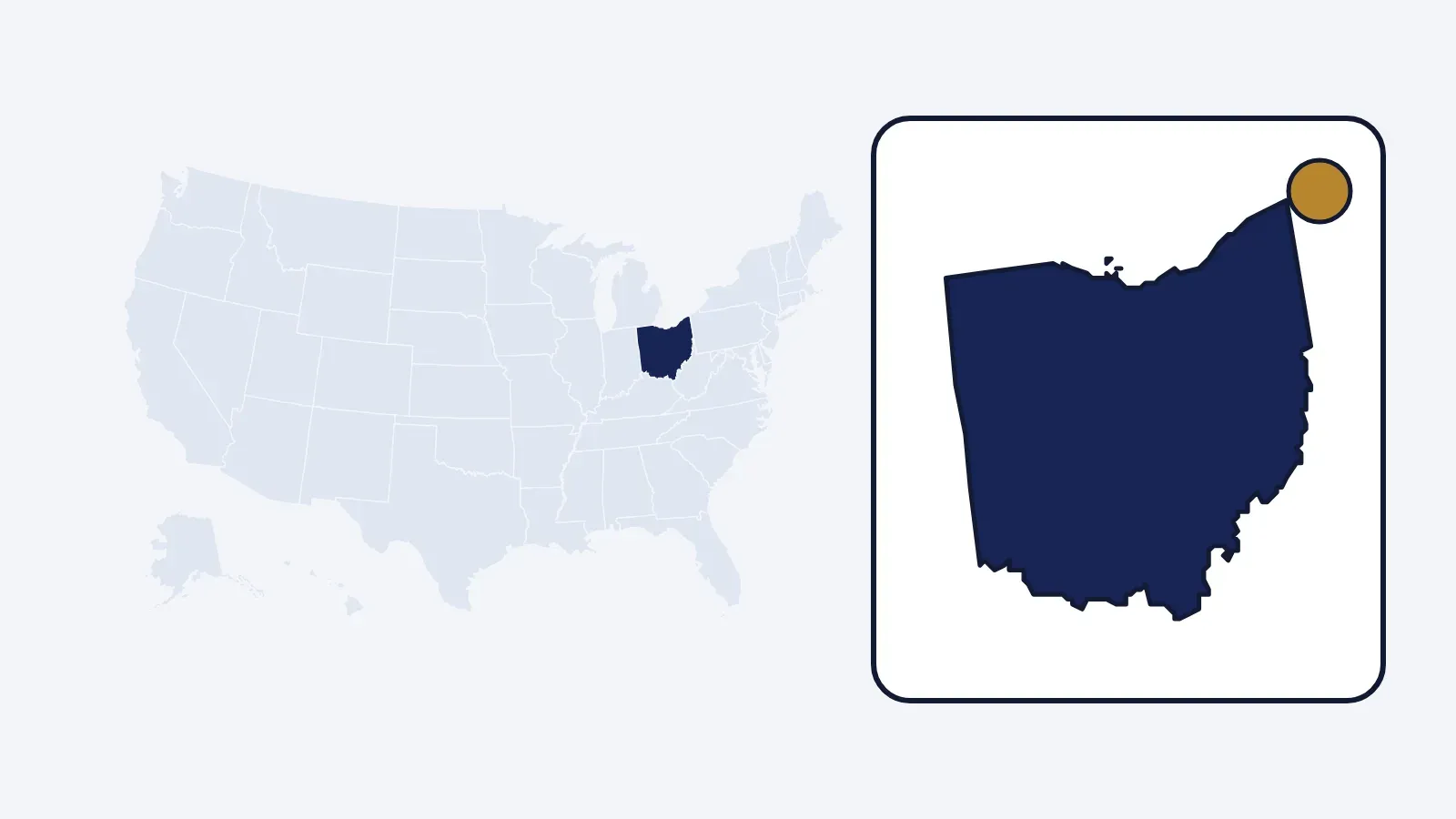
Ohio claim rules on one sheet
- Total loss rule No percentage in law; insurer's formula Title law (R.C. 4505.11): salvage when the insurer declares repair 'economically impractical'.
- Insurer must acknowledge 15 days after notice of the claim
- Insurer must decide 21 days after proof of loss; written updates every 45 days if longer Then 10 days to pay a first-party claim (Ohio Adm. Code 3901-1-54(G)).
- Deadline to sue 2 years for injury and for property damage
- Fault system At-fault; barred if your fault is greater than all others combined
- Police report needed Only if an injured person can't take your details; give them to any officer at the scene
- State crash report None required from drivers; police file within 5 days Officers report crashes with death, injury or over $1,000 damage. Optional BMV uninsured-driver report: 6 months.
A summary by Valoroath of the state's statutes and regulations, not an official document. The sources are listed at the end of this page.
The deadlines in Ohio's claim rule
Rule 3901-1-54 follows the NAIC model closely. Days are calendar days, but a deadline that lands on a weekend or holiday moves to the next business day.
| Step | Deadline | Paragraph |
|---|---|---|
| Acknowledge the claim | 15 days after notice | (F)(2) |
| Respond to your communications | 15 days | (F)(3) |
| Accept or deny the claim | 21 days after proof of loss | (G)(1) |
| If more time is needed: tell you why, then update in writing | Within 21 days, then at least every 45 days | (G)(1) |
| Pay a first-party claim it accepted | 10 days after acceptance | (G)(6) |
When the insurer settles a repair on its own written estimate, it must give you a copy. It may not make you travel an unreasonable distance to get an estimate or have the car fixed at a specific shop. Our page on choosing a repair shop covers estimates and supplements.
Total loss and the sales tax refund
Ohio's title law, R.C. 4505.11, has no repair percentage. A car becomes salvage when the insurer declares it economically impractical to repair, and the insurer then has 30 business days to turn in the title so a salvage title can be issued. If you keep the car, the insurer may not pay the settlement until you get a salvage title.
- Comparable cars. A cash settlement can be based on the average cost of two or more comparable cars available in your local market in the last 90 days, or in the nearest major metropolitan areas if there are none locally.
- Fees. The insurer must pay applicable taxes, license fees and other fees for transferring ownership when it provides a replacement car.
- Sales tax on a cash settlement. Buy a replacement within 30 days of receiving the payment and send proof within 33 days, and the insurer reimburses the sales tax, up to the tax on a car worth the settlement amount. It may instead pay the tax up front.
- Renegotiation. The insurer must tell you of your right to renegotiate if no comparable car is available to buy within 35 days of the settlement, and must give you its valuation documents on request.
The total loss check shows how a formula decision is reached, and our guide to disputing a total loss valuation explains how to answer a low offer.
At the scene of an Ohio crash
R.C. 4549.02 requires every driver in a crash on a public road to stop and give their name, address and registration number to anyone injured, to the other driver or owner, and to any officer at the scene. If an injured person can't understand and record that information, you must notify the nearest police authority and stay until an officer arrives, unless an ambulance takes you away.
Ohio drivers don't file a routine crash report with the state. A local police agency that investigates a crash with a death, an injury or property damage over $1,000 must send its report to the Department of Public Safety within 5 days under R.C. 5502.11.
Fault, deadlines and complaints
Ohio is an at-fault state. Under R.C. 2315.33, you can recover if your share of fault is not greater than the combined fault of everyone else, and your damages are reduced by your percentage. R.C. 2305.10 sets 2 years to sue for bodily injury or damage to personal property, such as your car.
- Ask the insurer in writing for the reason for a denial or offer and the policy provision it relies on.
- Call the Ohio Department of Insurance Consumer Services line at 800-686-1526.
- File an insurance complaint online with the department; our guide to insurance department complaints lists what to include.
Questions people ask
How long does an Ohio insurer have to pay a car insurance claim?
Under Ohio Adm. Code 3901-1-54, it must acknowledge the claim within 15 days, accept or deny it within 21 days after proof of loss, and pay a first-party claim within 10 days after accepting it.
What percentage of damage totals a car in Ohio?
None is set in law. Ohio treats a car as salvage when the insurer declares it economically impractical to repair.
Does an Ohio insurer pay sales tax on a totaled car?
Yes, under conditions. If you buy a replacement within 30 days of the cash settlement and document it within 33 days, the insurer reimburses the sales tax, up to the tax on a car worth the settlement amount. It may pay the tax directly instead.
How long do I have to sue after a car accident in Ohio?
Generally 2 years for bodily injury and for damage to personal property under R.C. 2305.10.
Sources on record
- Ohio Adm. Code 3901-1-54 — Unfair property/casualty claims settlement practices
- Ohio Revised Code 4505.11 — Salvage certificates of title
- Ohio Revised Code 4549.02 — Stopping after an accident
- Ohio Revised Code 5502.11 — Law enforcement accident reports
- Ohio Revised Code 4509.06 — Report of an uninsured driver
- Ohio Revised Code 2315.33 — Comparative fault
- Ohio Revised Code 2305.10 — Bodily injury or injury to personal property
- Ohio Department of Insurance
Facts on this page were checked against these sources on November 11, 2026. Rule 3901-1-54 has been in its current form since February 14, 2022.
Ask a licensed agent to review your coverage
After a claim, the policy you had is the one you can still change. Describe your situation and Valoroath passes it to licensed insurance agents and insurers who can review your coverage and quote, if you want them to. Valoroath itself does not sell insurance or handle claims.
- 1 Five questions about your car, your record and your policy.
- 2 Who to ask for, and your consent to be contacted.
- 3 A licensed insurance agent or insurer reviews what you have. You change nothing unless you choose to.
Sending this request shares your answers and contact details with the licensed insurance agents and insurers who receive it, which some state privacy laws treat as a sale; see your privacy choices. An agent reviews your coverage; they can't take on your claim or a dispute with your insurer. You pay Valoroath nothing. The licensed insurance agents and insurers who contact you pay Valoroath for requests and set their own prices and terms; your claim stays with your insurer. How we make money.
Next in the file
-

How claims work
Total loss claims
When a car is totaled, what actual cash value should include, and what happens to the loan and the title.
-

Claim dispute
When your claim drags on
The time limits insurers work under, why files stall, and the written steps that move a claim.
-

After a crash
Accident with an uninsured driver
What to collect, how UM, UMPD and collision pay, state reports, and Louisiana's no pay, no play rule.