Total loss at 80%
Car insurance claim rules in Minnesota
The business-day deadlines a Minnesota insurer works under, how a totaled car must be valued, who pays in a no-fault state, and how long you have to sue.
By Valoroath Editorial Team Updated 6 min read
In plain terms
Minnesota writes its claim deadlines into the unfair claims practices statute, section 72A.201. An insurer must acknowledge a claim within 10 business days and finish its investigation and tell you whether it accepts or denies the claim within 30 business days of notice, or explain in writing why it needs longer. An agreed settlement must be paid within 5 business days. A car whose repairs would cost more than 80% of its value counts as a salvage vehicle, and a total loss settlement must include taxes and fees on a comparable car. Minnesota is a no-fault state, you choose your repair shop, and most suits over a crash have a 6-year deadline.
- Total loss rule
- Repairs over 80% of value
- Insurer must decide
- 30 business days
- Deadline to sue
- 6 years
- Fault system
- No-fault (PIP)
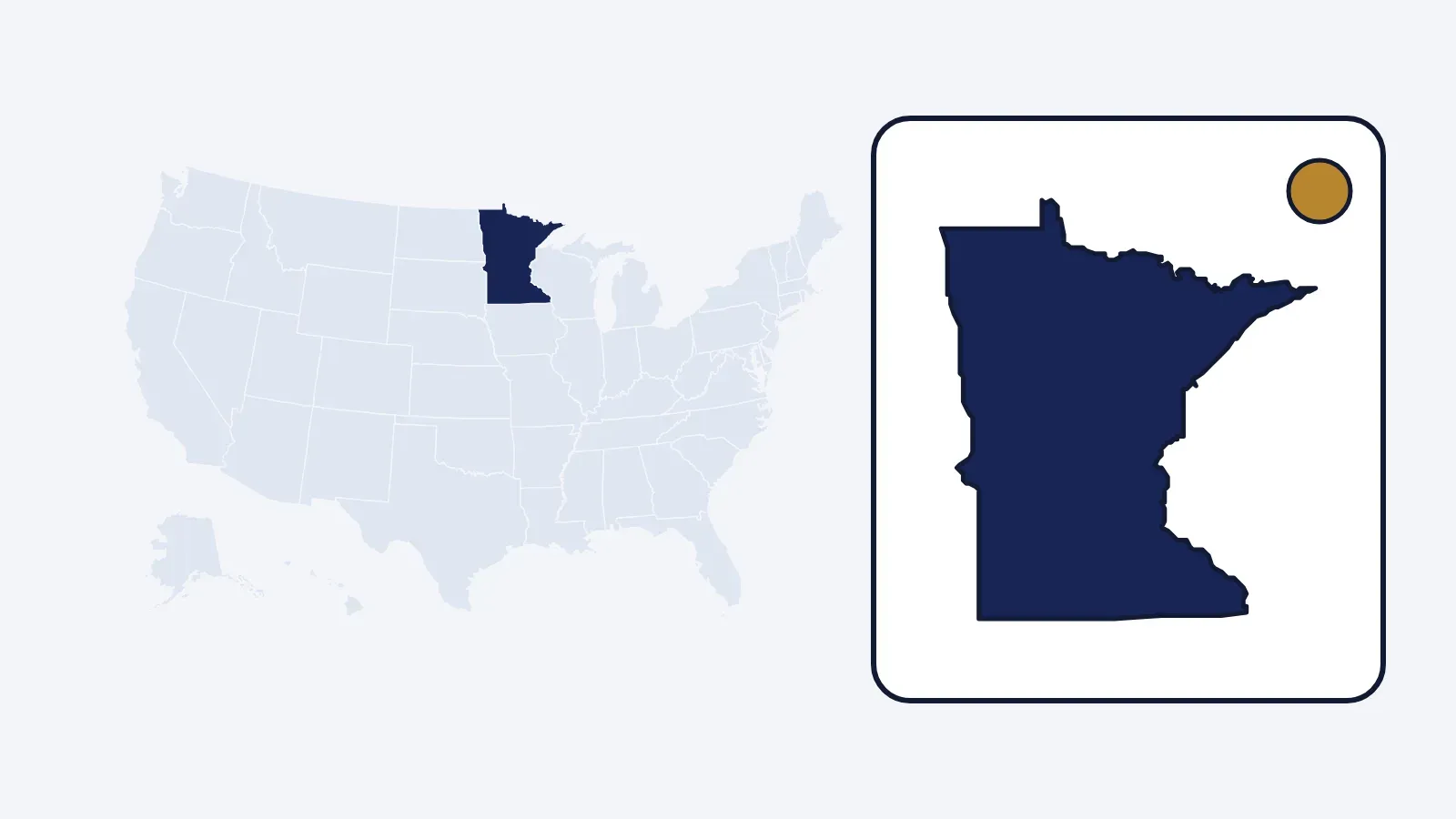
Minnesota claim rules on one sheet
- Total loss rule Repairs over 80% of value, or any insurer total loss: salvage vehicle Title law, Minn. Stat. 168A.01 subd. 17b. 'Salvage' brand for late-model or over-$9,000 cars; others get 'prior salvage.'
- Insurer must acknowledge 10 business days after notice of the claim
- Insurer must decide 30 business days after notice; written reasons and expected date if longer 60 business days after a signed proof of loss; agreed settlements paid in 5 business days. Minn. Stat. 72A.201.
- Deadline to sue 6 years for injury and for property damage
- Fault system No-fault (PIP required); barred if more at fault than the person sued
- Police report needed By the quickest means if anyone is hurt or killed
- State crash report None from drivers since 2021; officers file within 10 days
A summary by Valoroath of the state's statutes and regulations, not an official document. The sources are listed at the end of this page.
The clock on a Minnesota claim
Section 72A.201 of the Minnesota Statutes lists claim practices that are unfair and sets standards in days. It counts business days, not calendar days, so weekends and holidays don't use up the insurer's time.
| Step | Deadline | Where |
|---|---|---|
| Acknowledge your notice of claim | 10 business days | Subd. 4(1) |
| Finish the investigation and accept or deny | 30 business days after notice of the claim | Subd. 4(3) |
| If it needs longer: reasons and an expected completion date | Within the same 30 business days | Subd. 4(3) |
| Accept or deny after a signed proof of loss | 60 business days | Subd. 4(11) |
| Pay an agreed settlement | 5 business days after the insurer gets the agreement | Subd. 5(5) |
Keep a dated record of when you reported the claim and of every document you send. If the 30 business days pass without a decision or a written reason, our page on claims that drag on covers the next steps.
Total loss and how the car is valued
Minnesota's title law defines a salvage vehicle as one an insurer has declared a total loss or paid a total loss claim on, or one whose repairs would cost more than 80% of its value right before the damage. When an insurer takes ownership after paying a claim, it must apply for a title branded "salvage" if the car is late-model (a model year no earlier than the fifth calendar year before the current one) or was worth more than $9,000; other cars get a "prior salvage" brand.
Section 72A.201, subdivision 6, then sets how a total loss under your own policy is settled. The insurer must offer one of two things:
- A comparable replacement car that is available to you, with all applicable taxes, license fees (at least pro rata for the unexpired term) and transfer fees paid, at no cost to you beyond the deductible.
- A cash settlement based on what a comparable car actually costs in your local market, adjusted for mileage, condition and options, plus the same taxes and fees, minus the deductible.
- No local comparable? The insurer must get two or more quotes from qualified sources in your area and share them with you before it settles.
- Any deviation from that cost must be documented, justified and explained to you.
If the number looks low, see disputing a total loss valuation, and run the figures through the total loss check.
Reporting a Minnesota crash
Under section 169.09, subdivision 6, a driver in a crash that injures or kills someone must notify the police by the quickest means: the local police in a city, a State Patrol officer on a trunk highway, or otherwise the county sheriff. In every crash with another car, you must stop and exchange names, addresses, license and insurance information.
Drivers no longer file their own written report. The subdivision that required one was repealed in 2021. A peace officer who investigates a reportable crash files the report with the commissioner of public safety within 10 days.
No-fault benefits and your repair shop
Minnesota is a no-fault state. Every policy carries basic economic loss benefits (PIP) of at least $40,000 per person: $20,000 for medical expenses and $20,000 for income loss, replacement services and funeral costs. Your own insurer pays them whoever caused the crash; see PIP and MedPay claims.
- Suing for pain and suffering is allowed only if medical expenses exceed $4,000, or the injury causes permanent disfigurement, permanent injury, death or disability of 60 days or more.
- Comparative fault: you can recover if your fault was not greater than that of the person you sue, and your award drops by your share.
- Damage to cars stays fault-based: the at-fault driver's liability insurer pays, or your collision coverage pays and seeks the money back.
- Your choice of shop: when you report a claim, the insurer must tell you that you have the legal right to choose a repair shop, and it can't make payment depend on using a particular shop or non-original parts (glass excepted).
Deadlines to sue and where to complain
Section 541.05 gives six years to sue for injury to a person or for damage to personal property, such as your car. Your policy may set shorter deadlines for reporting a claim or disputing a decision, so check its conditions.
- Ask the insurer in writing for its decision, the reasons, and the policy language it relies on.
- Call the Minnesota Department of Commerce complaint line at 651-539-1600, or 800-657-3602 from Greater Minnesota.
- File a complaint with Commerce online; our guide to insurance department complaints shows what to include.
Questions people ask
How long does a Minnesota insurer have to decide a car insurance claim?
It must acknowledge the claim within 10 business days and accept or deny it within 30 business days of notice, unless it tells you why it needs more time and when it expects to finish. An agreed settlement must be paid within 5 business days.
What percentage of damage totals a car in Minnesota?
Minnesota's title law treats a car as a salvage vehicle when repairs would cost more than 80% of its value before the damage, or when an insurer declares it a total loss or pays a total loss claim.
Does a Minnesota total loss settlement include sales tax?
Yes. Under section 72A.201, a cash settlement on your own policy must include applicable taxes, license fees and transfer fees on a comparable car, minus your deductible.
Do I have to file a crash report myself in Minnesota?
No. The rule requiring drivers to file a written report was repealed in 2021. You must notify police right away if anyone is hurt or killed; officers who investigate file the report.
Sources on record
- Minnesota Statutes 72A.201 — Regulation of claims practices
- Minnesota Statutes 168A.01 — Definitions (salvage, late-model, high-value vehicle)
- Minnesota Statutes 168A.151 — Salvage titles
- Minnesota Statutes 169.09 — Accidents
- Minnesota Statutes 65B.44 — Basic economic loss benefits
- Minnesota Statutes 65B.51 — Limits on tort recovery
- Minnesota Statutes 604.01 — Comparative fault
- Minnesota Statutes 541.05 — Six-year limitations
- Minnesota Department of Commerce — Contact and complaints
Facts on this page were checked against these sources on November 11, 2026. The deadlines in section 72A.201 count business days.
Ask a licensed agent to review your coverage
After a claim, the policy you had is the one you can still change. Describe your situation and Valoroath passes it to licensed insurance agents and insurers who can review your coverage and quote, if you want them to. Valoroath itself does not sell insurance or handle claims.
- 1 Five questions about your car, your record and your policy.
- 2 Who to ask for, and your consent to be contacted.
- 3 A licensed insurance agent or insurer reviews what you have. You change nothing unless you choose to.
Sending this request shares your answers and contact details with the licensed insurance agents and insurers who receive it, which some state privacy laws treat as a sale; see your privacy choices. An agent reviews your coverage; they can't take on your claim or a dispute with your insurer. You pay Valoroath nothing. The licensed insurance agents and insurers who contact you pay Valoroath for requests and set their own prices and terms; your claim stays with your insurer. How we make money.
Next in the file
-

How claims work
PIP and MedPay claims
How your own policy pays medical bills after a crash, how no-fault thresholds work, and the deadlines.
-

Claim dispute
Disputing a total loss value
How to check the valuation report, the comparable car rules, the 35-day reopener, and what comes next.
-

After a crash
When to call the police
The cases for 911, state damage thresholds from $50 to $4,000, and why a report helps after a small crash.