Total loss at 75%
Car insurance claim rules in Kentucky
The deadlines a Kentucky insurer has to meet on your claim, how the choice no-fault system works, when a car is a total loss, and how long you have to sue.
By Valoroath Editorial Team Updated 7 min read
In plain terms
Kentucky's claim rules are in a Department of Insurance regulation. Your insurer must acknowledge a claim within 15 days and offer any payment due within 30 calendar days after it receives proof of loss, or tell you in writing why it needs more time. A car is a salvage vehicle when repairs would cost more than 75% of its retail value, and a total loss settlement includes the applicable taxes and license fees. Kentucky is a choice no-fault state: your own coverage pays injury benefits first, and you can keep your full right to sue by rejecting the limits in writing. Most crash lawsuits must be filed within two years.
- Total loss rule
- Repairs over 75% of value
- Insurer must decide
- 30 days after proof
- Deadline to sue
- 2 years
- Fault system
- Choice no-fault
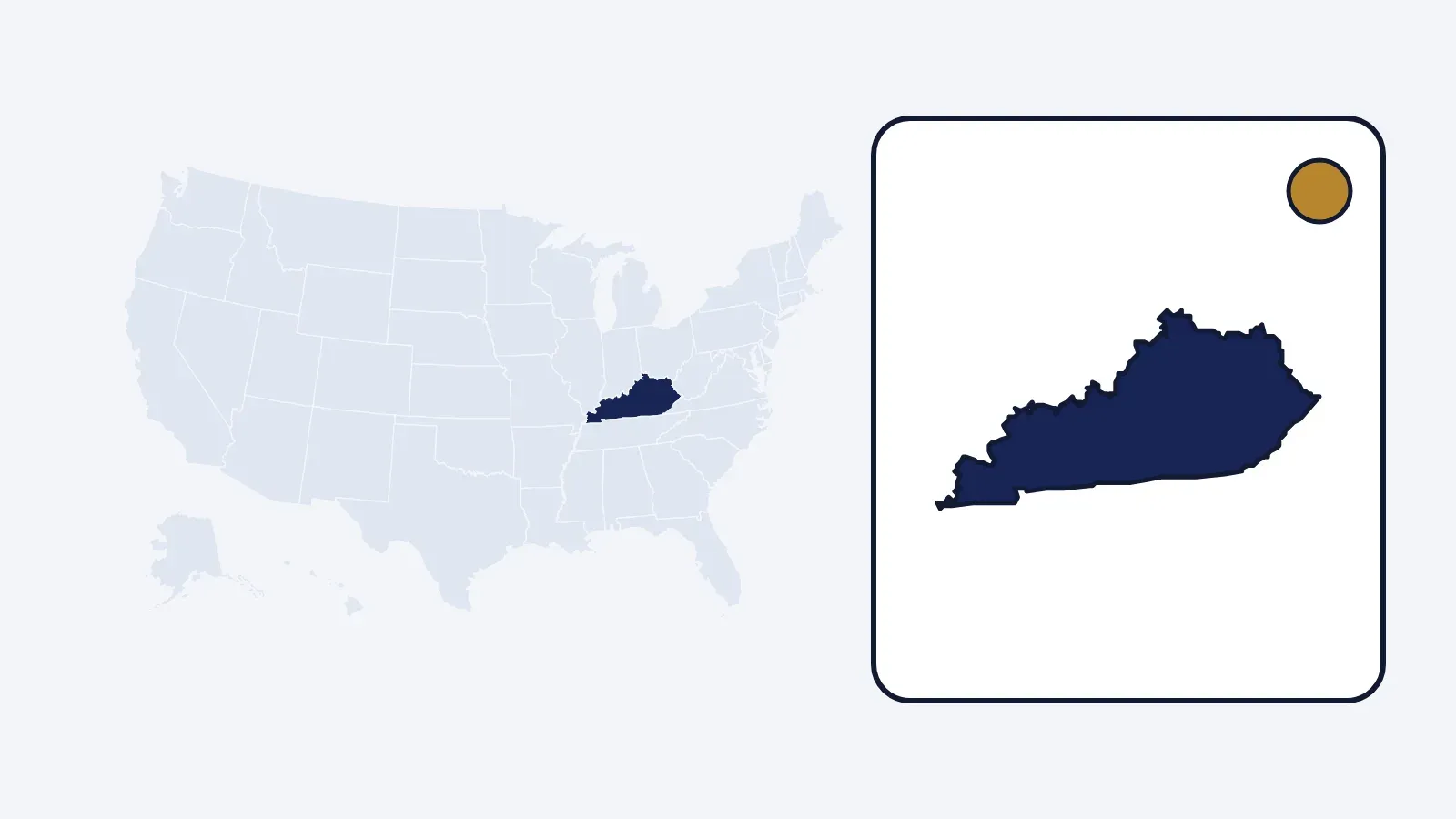
Kentucky claim rules on one sheet
- Total loss rule Repairs over 75% of retail value Salvage title rule in KRS 186A.520; airbag reinstallation is left out of the test. Insurers may total a car sooner.
- Insurer must acknowledge 15 days after notice of the claim 806 KAR 12:095 §5(1); the regulation defines days as weekdays other than holidays.
- Insurer must decide 30 calendar days after proof of loss; written reasons if longer Status letters every 45 calendar days while open. 806 KAR 12:095 §6(1).
- Deadline to sue 2 years for injury (or from last PIP payment); 2 years for property
- Fault system Choice no-fault; pure comparative fault Pain-and-suffering suits need over $1,000 in medical expenses or a serious injury, unless you rejected the limits.
- Police report needed At once if anyone is killed or visibly hurt, or a car can't be driven
- State crash report To State Police in 10 days if injury or $500+ damage and no officer investigated
A summary by Valoroath of the state's statutes and regulations, not an official document. The sources are listed at the end of this page.
The clock on a Kentucky claim
The Kentucky Department of Insurance sets claim deadlines in 806 KAR 12:095, its regulation on unfair claims settlement practices for property and casualty insurance. Where the regulation says "days" without "calendar," its definitions count weekdays other than holidays.
| Step | Deadline | Section |
|---|---|---|
| Acknowledge the claim, unless it is paid sooner | 15 days after notice | §5(1) |
| Reply to your letters when a reply is expected | 15 days | §5(3) |
| Offer any payment due on a first-party claim | 30 calendar days after proof of loss | §6(1)(a) |
| If it needs more time: tell you why, then write again | 30 calendar days, then every 45 | §6(1)(c)–(d) |
| Pay an amount that is settled and not disputed | 30 days after accepting liability | §6(5) |
On claims under your own policy, the insurer must also warn you in writing at least 30 calendar days before a policy time limit runs out if you have no lawyer. Keep a dated copy of everything you send. If deadlines slip, our page on claims that drag on shows how to put it in writing.
When a Kentucky car is a total loss
KRS 186A.520 makes a car a salvage vehicle when the estimated or actual cost of parts and labor to restore it exceeds 75% of its retail value, as set by a nationally accepted used car valuation guide. The cost of reinstalling a deployed airbag is left out of that test, though the insurer still includes it in the damage estimate it pays under your policy. The section was last amended effective July 15, 2026.
- Taxes and fees are part of the payment. A cash settlement covers the cost of a comparable car including all applicable taxes and license fees, less your deductible, unless the Transportation Cabinet would refund the fees (806 KAR 12:095, Section 7).
- Local cars first. The value is the cost of a comparable car in your local market area, or one of two or more dealer quotes if none is available.
- You can reopen it. If you tell the insurer within 35 days of receiving the check that you can't buy a comparable car for that amount, it must reopen the file.
For more on testing a valuation, see total loss claims.
Reporting a Kentucky crash
Under KRS 189.580, a driver who is physically able must notify the police or 911 immediately after a crash on a Kentucky highway that kills anyone, causes a known or visible injury, or leaves a car unable to be driven. If the driver can't, the duty passes to the owner or an occupant.
When no officer investigates a crash that causes an injury, a death or property damage of $500 or more, the driver must file a written report with the Kentucky State Police within 10 days. When an officer does investigate, the agency files the report with the State Police within 10 days.
Choice no-fault and who pays
Under the Motor Vehicle Reparations Act, your own policy's basic reparation benefits, often called PIP, pay injury losses first, whoever caused the crash. In exchange, your right to sue for pain and suffering is limited unless the injury passes a threshold.
- The threshold: medical expense benefits over $1,000, or an injury that includes permanent disfigurement, a fracture, loss of a body member, permanent injury, permanent loss of a bodily function, or death (KRS 304.39-060).
- The choice: any person may reject the limits on their tort rights, in writing or electronically on the department's form, and keep the full right to sue and be sued.
- Comparative fault: under KRS 411.182, a court sets each party's share of fault and your award drops by yours; the statute sets no percentage that bars recovery.
- Car damage is not part of no-fault. You claim it from the at-fault driver's insurer or under your own collision coverage. See PIP and MedPay claims for the injury side.
Deadlines to sue and where to complain
A Kentucky crash lawsuit for injury must generally be filed within two years after the injury or the last basic or added reparation payment, whichever is later (KRS 304.39-230). A claim for damage to your car or other personal property must be filed within two years (KRS 413.125).
- Ask the insurer in writing for the reason for a denial or a low offer and the policy language behind it.
- Call the Kentucky Department of Insurance toll-free at 800-595-6053.
- File a complaint through the department's online complaint page if deadlines pass or the insurer won't explain itself; our guide to insurance department complaints shows what to include.
Questions people ask
How long does a Kentucky insurer have to pay a car insurance claim?
On a claim under your own policy, it must offer any payment due within 30 calendar days after receiving proof of loss, or tell you in writing why it needs more time and update you every 45 calendar days.
What percentage of damage totals a car in Kentucky?
Under KRS 186A.520, a car is a salvage vehicle when repair costs exceed 75% of its retail value, not counting airbag reinstallation. An insurer can still total a car at a lower share.
Can I sue the other driver after a Kentucky crash?
For pain and suffering, only if your medical expenses exceed $1,000 or the injury is serious, unless you rejected the no-fault limits in writing. Claims for car damage are not limited.
Do I have to file a crash report in Kentucky?
If no officer investigated and the crash caused an injury, a death or $500 or more in property damage, you must file a written report with the Kentucky State Police within 10 days.
Sources on record
- 806 KAR 12:095 — Unfair claims settlement practices for property and casualty insurance
- KRS 186A.520 — Salvage titles (effective July 15, 2026)
- Kentucky Revised Statutes (2025 edition), KRS 304.39-060 — Tort exemption and rejection
- Kentucky Revised Statutes (2025 edition), KRS 304.39-230 — Time limits
- Kentucky Revised Statutes (2025 edition), KRS 413.125 — Actions for injury to personal property
- Kentucky Revised Statutes (2025 edition), KRS 189.580 — Duties after an accident
- Kentucky Revised Statutes (2025 edition), KRS 411.182 — Allocation of fault
- Kentucky Department of Insurance
Facts on this page were checked against these sources on November 11, 2026. KRS 186A.520 was amended by 2026 Ky. Acts ch. 100, effective July 15, 2026.
Ask a licensed agent to review your coverage
After a claim, the policy you had is the one you can still change. Describe your situation and Valoroath passes it to licensed insurance agents and insurers who can review your coverage and quote, if you want them to. Valoroath itself does not sell insurance or handle claims.
- 1 Five questions about your car, your record and your policy.
- 2 Who to ask for, and your consent to be contacted.
- 3 A licensed insurance agent or insurer reviews what you have. You change nothing unless you choose to.
Sending this request shares your answers and contact details with the licensed insurance agents and insurers who receive it, which some state privacy laws treat as a sale; see your privacy choices. An agent reviews your coverage; they can't take on your claim or a dispute with your insurer. You pay Valoroath nothing. The licensed insurance agents and insurers who contact you pay Valoroath for requests and set their own prices and terms; your claim stays with your insurer. How we make money.
Next in the file
-

How claims work
PIP and MedPay claims
How your own policy pays medical bills after a crash, how no-fault thresholds work, and the deadlines.
-

Claim dispute
Complaining to your state
When a complaint helps, how to find your insurance department, what to include, and what it can and can't do.
-

After a crash
When to call the police
The cases for 911, state damage thresholds from $50 to $4,000, and why a report helps after a small crash.