Dropped
Cancellation or nonrenewal after a claim
Why an insurer can rarely end a policy midterm, when it can decline to renew, how much notice the law requires, and how to avoid a gap in coverage.
By Valoroath Editorial Team Updated 7 min read
In plain terms
A cancellation ends your policy before its term is over; a nonrenewal means the insurer won't offer a new term when this one ends. Many states let an insurer cancel an established policy only for a short list of reasons, such as nonpayment, fraud or misrepresentation, or a suspended license, and a claim is not on those lists. Nonrenewal is allowed for more reasons, but it needs advance written notice. In Florida that is 45 days for either, or 10 days for nonpayment; Ohio requires 30 days. Read the notice for the reason and the date, ask for a review if it looks wrong, and line up new coverage before the end date.
- Cancellation
- Ends a policy midterm
- Nonrenewal
- Ends it at term's end
- Florida notice
- 45 days; 10 for nonpayment
- Ohio notice
- 30 days; 10 for nonpayment
Cancellation and nonrenewal are different
Cancellation
The insurer ends coverage during the policy term. State laws limit it heavily once a policy has been in force for a short starting period, and the notice must give a reason.
Nonrenewal
The insurer lets the policy run to the end of its term and declines to offer another. States give insurers more room here, but require written notice ahead of the end date.
In the first weeks of a new policy, the insurer is still checking your application. In Florida and Ohio, the limits on cancellation don't apply yet during that window, so the insurer has more room to cancel. After it, the rules tighten. The window and the list of reasons are set by each state, so two neighbors with the same claim can have different rights.
Neither one takes away coverage for a crash that happened while the policy was in force. That claim is still handled under the policy's terms, even if the policy ends before the claim is paid. Keep sending the adjuster what it asks for, and keep your own copies.
When an insurer may cancel midterm
Two examples show how the rule is built. In both, an accident or a claim is not on the list of reasons for cancelling an established policy.
| Rule | Florida (Fla. Stat. §627.728) | Ohio (R.C. 3937.31–3937.32) |
|---|---|---|
| Starting window | Policy in effect less than 60 days, unless it is a renewal | Policy in effect less than 90 days, unless it is a renewal |
| Reasons allowed after that | Nonpayment; material misrepresentation or fraud; suspension or revocation of a license or registration, among the listed grounds | Fraud or misrepresentation; loss of driving privileges; nonpayment; a move to a state where the insurer can't write coverage |
| Notice | At least 45 days; 10 days for nonpayment | At least 30 days; 10 days for nonpayment |
| Reason | Must come with the notice | In the notice, or in writing within 5 days of your written request |
Ohio adds a longer term too: an auto policy must be issued for at least one year. Its cancellation notice must also tell you that you can ask the superintendent of insurance to review the cancellation if it may rest on wrong information or break the law or the policy, and you must ask by the date the cancellation takes effect.
- The policy number and the date of the notice, which Ohio requires on every cancellation notice.
- The date coverage ends, which can't be earlier than the notice period allows.
- The reason, or a statement that you can get it in writing on request.
- Your review right, where your state gives one, and the deadline to use it.
Nonrenewal after a claim
An insurer that no longer wants the risk usually waits for the end of the term. Notice rules still apply. Florida requires at least 45 days' notice of nonrenewal with the reasons, unless you didn't pay or the insurer offered to renew. Ohio requires notice at least 30 days before the policy expires, with the reason and the information behind it, or an explanation within 5 days of your written request.
Some states also limit nonrenewal for accidents. Florida bars nonrenewal solely because you were in an accident unless the insurer's file shows in good faith that you were substantially at fault, and it may not refuse to renew if you have had only one at-fault accident in the current 3-year period. That protection doesn't cover three or more accidents, regardless of fault, in the most recent 3 years, and the insurer can still nonrenew for other lawful reasons. See Florida claim rules.
A nonrenewal notice leaves you the rest of the term to find new coverage, which is time a midterm cancellation may not give you. Use it. Ask the insurer whether it would renew if something changed, such as removing a listed driver whose record drove the decision, and get any answer in writing. If the reason is one you think the law doesn't allow, say so in your reply and cite the section.
What to do when the notice arrives
- Find the two key facts: the date coverage ends and the reason. If there is no reason, ask for it in writing; Florida and Ohio both require the insurer to give one.
- Check the reason. A missed payment that was actually made, a license suspension that has ended or a claim that isn't yours can often be fixed with documents.
- Pay what's owed before the date on a nonpayment notice, and ask the insurer to confirm in writing that the policy stays in force.
- Ask for a review. Write to the insurer first, then contact your state insurance department if the reason looks wrong or the notice was late; see filing a complaint.
- Arrange new coverage before the end date, even while you dispute. If an application asks about past cancellations or nonrenewals, answer accurately.
New insurers will see your claims through reports such as the CLUE database. Check yours for errors before you apply; see your CLUE report.
Why a gap matters
A gap can cost more than the policy you lost, because a crash during a gap can bring a license suspension and a filing requirement. In Missouri, for example, a driver suspended after an accident while uninsured must keep an SR-22 proof of insurance for three years from the date they are eligible to reinstate. Our page on SR-22 after an accident explains those filings.
If your car is financed or leased, read the insurance clause in the loan or lease contract and send the lender proof of the new policy as soon as it starts.
Questions people ask
Can my insurance company cancel my policy because I filed a claim?
In many states, not midterm once the policy is established. Florida and Ohio, for example, list the reasons for cancelling, such as nonpayment, fraud or a suspended license, and a claim isn't one of them. An insurer may be able to decline to renew instead, with notice.
What is the difference between cancellation and nonrenewal?
Cancellation ends a policy before its term is over and is limited to specific reasons in many states. Nonrenewal ends it at the end of the term and is allowed for more reasons, with advance written notice.
How much notice does an insurer have to give before canceling car insurance?
It depends on the state. Florida requires at least 45 days, or 10 days for nonpayment. Ohio requires at least 30 days, or 10 days for nonpayment.
Can an insurer refuse to renew after one accident?
It depends on the state. Florida bars nonrenewal if you have had only one at-fault accident in the current 3-year period, though the insurer can still nonrenew for other lawful reasons.
Sources on record
- Florida Statutes (2026) §627.728 — Cancellations; nonrenewals
- Florida Statutes (2026) §626.9541(1)(o) — Surcharges and nonrenewal after accidents
- Ohio Revised Code 3937.31 — Policy period; grounds for cancellation
- Ohio Revised Code 3937.32 — Notice of cancellation
- Ohio Revised Code 3937.34 — Notice of nonrenewal
- Missouri Department of Revenue — Insurance information (SR-22 after an uninsured accident)
Facts on this page were checked against these sources on November 11, 2026. Cancellation windows, reasons and notice periods differ by state; check your own state's insurance code or insurance department.
Ask a licensed agent to review your coverage
After a claim, the policy you had is the one you can still change. Describe your situation and Valoroath passes it to licensed insurance agents and insurers who can review your coverage and quote, if you want them to. Valoroath itself does not sell insurance or handle claims.
- 1 Five questions about your car, your record and your policy.
- 2 Who to ask for, and your consent to be contacted.
- 3 A licensed insurance agent or insurer reviews what you have. You change nothing unless you choose to.
Sending this request shares your answers and contact details with the licensed insurance agents and insurers who receive it, which some state privacy laws treat as a sale; see your privacy choices. An agent reviews your coverage; they can't take on your claim or a dispute with your insurer. You pay Valoroath nothing. The licensed insurance agents and insurers who contact you pay Valoroath for requests and set their own prices and terms; your claim stays with your insurer. How we make money.
Next in the file
-

Claim dispute
Your CLUE report and claims history
What insurers see in your claims history, how to get your free LexisNexis report, and how to dispute errors.
-
Claim dispute
SR-22 after an accident
What the filing is, when states require one after a crash or DUI, how long it lasts, and FR-44 rules.
-
State claim rules
Florida
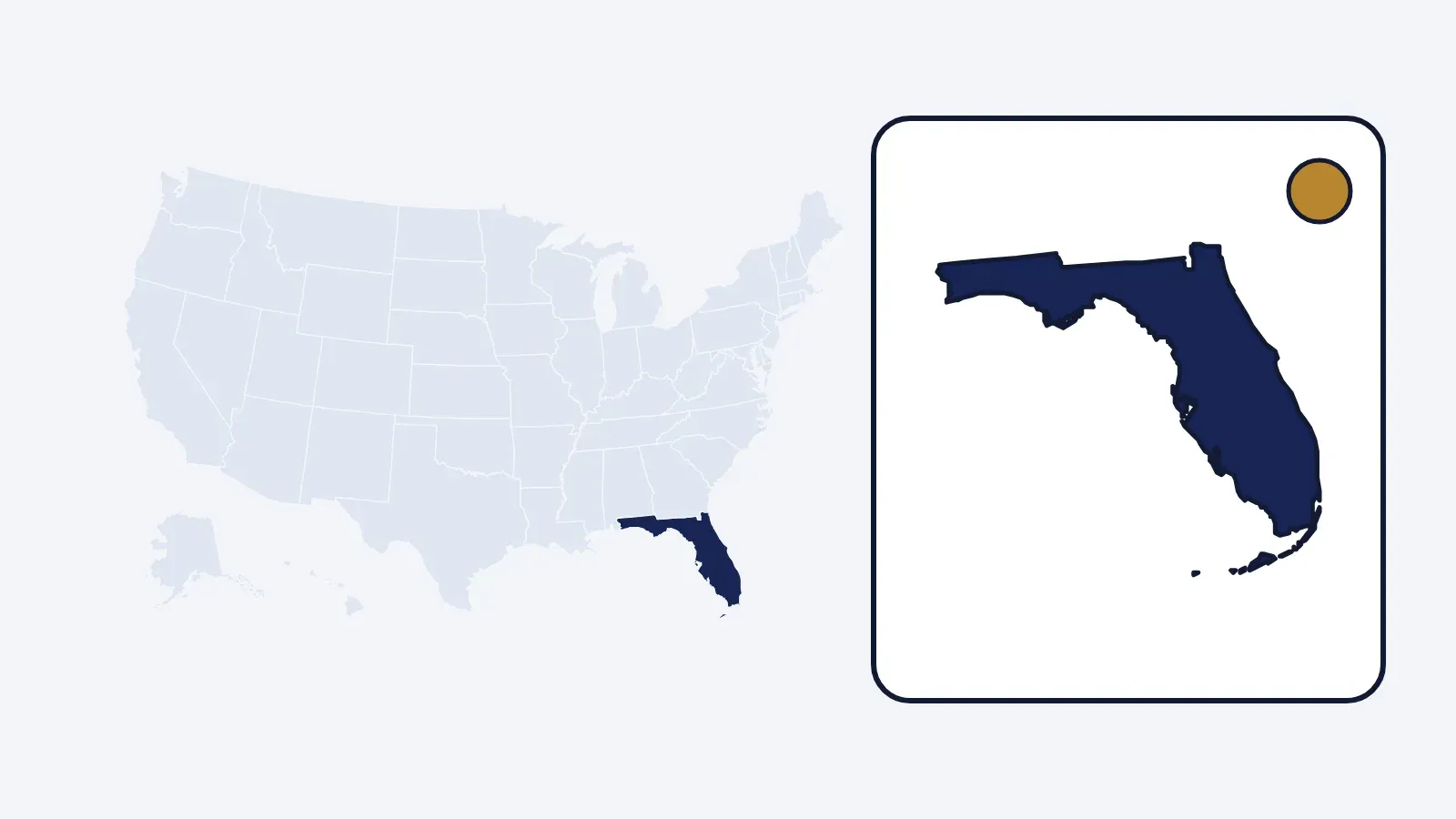
No-fault PIP up to $10,000, paid in 30 days; 14 days to acknowledge; 80% test only for uninsured cars; 2 years to sue.