Total loss by formula
Car insurance claim rules in South Dakota
How a South Dakota insurer has to handle your claim, who decides a car is totaled, the state's slight-negligence rule, when to call the police, and how long you have to sue.
By Valoroath Editorial Team Updated 6 min read
In plain terms
South Dakota sets claim standards rather than a day count: an insurer must acknowledge claim communications with reasonable promptness and affirm or deny coverage within a reasonable time after investigating, and the Division of Insurance says companies must respond to claim communications within 30 days. There is no repair percentage in state law; a car is salvage when the insurer declares it a total loss. Fault rules are strict: you can recover only if your negligence was slight compared with the other driver's. You have three years to sue over injuries and six years over car damage.
- Total loss rule
- Insurer's formula
- Insurer must decide
- Reasonable time
- Deadline to sue
- 3 yrs injury, 6 property
- Fault system
- At-fault; slight fault
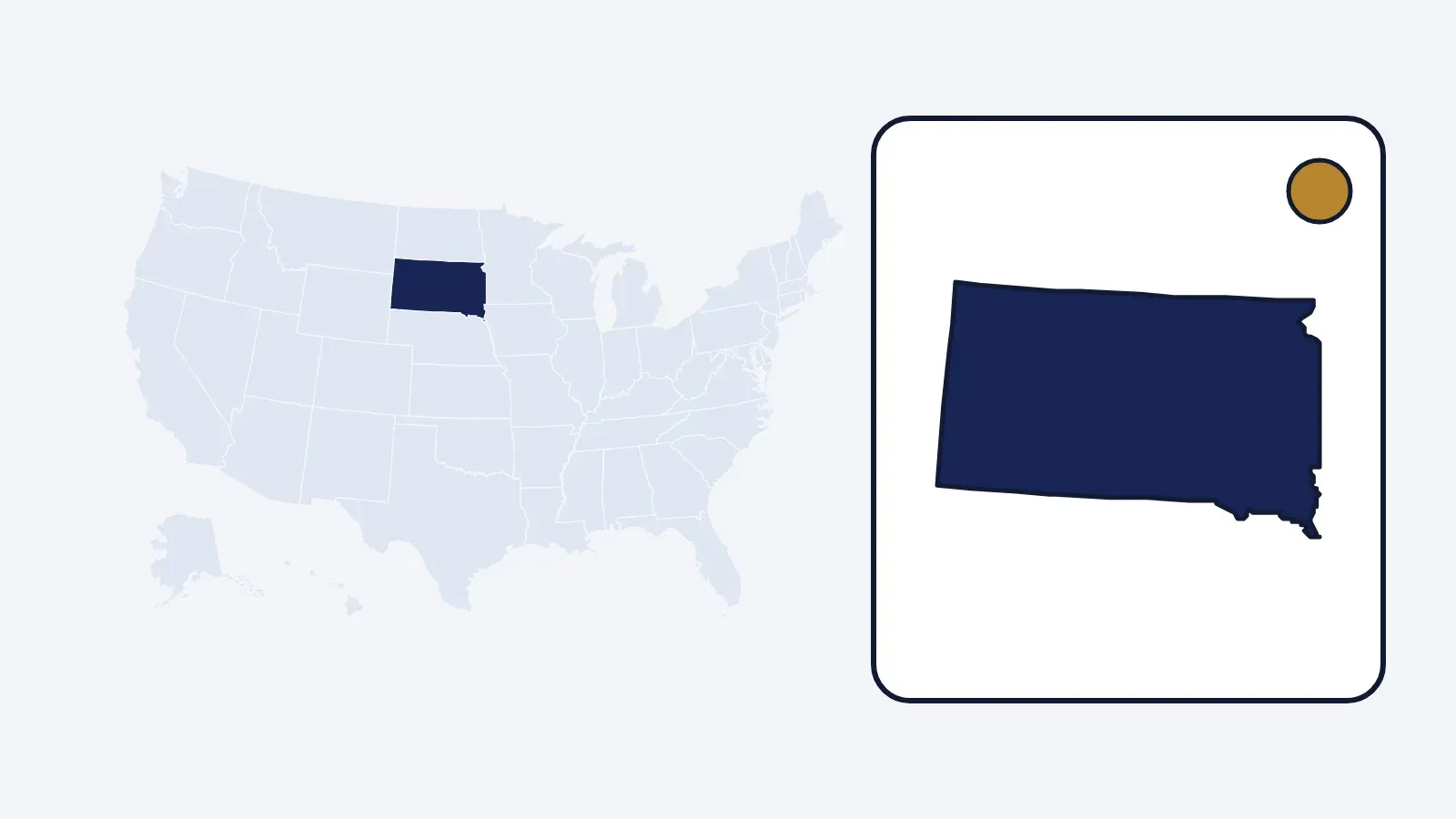
South Dakota claim rules on one sheet
- Total loss rule No percentage in law; insurer's formula SDCL 32-3-51.19: salvage once the insurer declares a total loss; cars up to 10 model years old.
- Insurer must acknowledge Reply to claim communications within 30 days Division of Insurance guidance; SDCL 58-12-34 requires 'reasonable promptness.'
- Insurer must decide No fixed number; within a reasonable time after investigation SDCL 58-12-34(7). Claim forms within 15 days of a request.
- Deadline to sue 3 years for injury; 6 years for property damage
- Fault system At-fault; recovery only if your fault is slight by comparison SDCL 20-9-2. Damages are reduced by your share.
- Police report needed Immediately for injury, death, $1,000 to one owner or $2,000 total
- State crash report Officers report to the Department of Public Safety within 3 days SDCL 32-34-10. No written driver report appears in SDCL chapter 32-34.
A summary by Valoroath of the state's statutes and regulations, not an official document. The sources are listed at the end of this page.
How a South Dakota insurer must handle a claim
South Dakota's unfair claims practices law, SDCL 58-12-34, lists what an insurer may not do. Most items are standards rather than deadlines, so the questions to ask are whether the insurer answered promptly and whether its investigation was reasonable.
| The insurer may not | Item |
|---|---|
| Fail to acknowledge claim communications with reasonable promptness | (2) |
| Fail to adopt reasonable standards to promptly complete investigations | (3) |
| Refuse to pay a claim without a reasonable investigation | (6) |
| Fail to affirm or deny coverage within a reasonable time after investigating | (7) |
| Fail to provide claim forms within 15 days of your request | (13) |
The Division of Insurance's own guidance on the claims process says companies are required to respond to all claim communications within 30 days. It adds that most claims are paid within 30 days, but that is not a payment deadline. If your claim stalls, write to the adjuster, ask what is missing and keep copies; our page on claims that drag on covers the next steps.
When a South Dakota car is a total loss
South Dakota's title law sets no percentage. Under SDCL 32-3-51.19, a salvage vehicle is any car that an insurer determines to be a total loss because of theft, fire, vandalism, collision, weather, submersion or flood. The insurer's own comparison of repair cost and salvage value with the car's value decides.
- Age limit: the salvage rules don't apply to vehicles more than 10 model years old or heavier than 16,000 pounds gross vehicle weight.
- If you keep the car: when the insurer declares a total loss but doesn't take ownership, you must get a salvage title before you sell or transfer it, and the insurer must tell you so in writing (SDCL 32-3-51.21).
- The settlement is the actual cash value. How to test the number is in our guide to total loss claims.
Because the insurer decides, ask for its repair estimate, its valuation report and the salvage value it used. The total loss check shows how the three fit together.
Reporting a South Dakota crash
Under SDCL 32-34-7, a driver must immediately, by the quickest means, notify the nearest available law enforcement officer with jurisdiction after a crash that causes injury or death, or apparent property damage of $1,000 or more to any one person's property or $2,000 for the whole crash. Failing to do so is a Class 2 misdemeanor.
The officer investigates and sends the report to the Department of Public Safety within three days of finishing the investigation (SDCL 32-34-10). Ask the officer for the report number before you leave the scene; both insurers will want it.
The slight-negligence rule
South Dakota is an at-fault state: the driver who caused the crash pays, through their liability insurance, for the other people's injuries and damage. SDCL 20-9-2 then sets a strict test. Your own negligence doesn't bar a claim only when it was slight in comparison with the other driver's. If it was, your damages are reduced in proportion to your share.
- No fixed percentage. The statute says slight, not a number, so whether your share qualifies is decided case by case.
- Evidence matters early. Photos, witness names and the police report all bear on how your share of fault is judged.
- Your own collision coverage pays for your car under your policy whatever the fault split, minus your deductible.
Deadlines to sue and where to complain
SDCL 15-2-14 gives you three years to sue for personal injury. SDCL 15-2-13 gives six years for an action for injuring goods or chattels, which covers damage to your car. Settlement talks don't stop either clock.
- Ask the insurer in writing for the reason for a denial or a low offer and the policy language it relies on.
- Call the South Dakota Division of Insurance at 605-773-3563 (TTY 711), or email [email protected].
- File a complaint with the division online or by mail if the insurer won't explain itself. Our guide to insurance department complaints shows what to include.
Questions people ask
How long does a South Dakota insurer have to respond to my claim?
The statute requires reasonable promptness rather than a set number of days, and the Division of Insurance says companies must respond to claim communications within 30 days. Claim forms are due within 15 days of your request.
What percentage of damage totals a car in South Dakota?
None is set in law. A car is a salvage vehicle when the insurer determines it is a total loss, so the insurer's own formula decides.
Can I recover if I was partly at fault in South Dakota?
Only if your negligence was slight compared with the other driver's. Then your damages are reduced by your share of fault.
How long do I have to sue after a car accident in South Dakota?
Three years for personal injury under SDCL 15-2-14, and six years for damage to your car under SDCL 15-2-13.
Sources on record
- SDCL 58-12-34 — Acts constituting unfair claims practices
- South Dakota Division of Insurance — The claims process
- SDCL 32-3-51.19 — Salvage vehicle defined
- SDCL 32-3-51.21 — Owner to obtain salvage title after a total loss
- SDCL 32-34-7 — Immediate notice of accident to law enforcement
- SDCL 32-34-10 — Officer's report to the Department of Public Safety
- SDCL 20-9-2 — Comparative negligence
- SDCL 15-2-14 and 15-2-13 — Limitations of actions
Facts on this page were checked against these sources on November 11, 2026. The 30-day response figure comes from the Division of Insurance's consumer guidance.
Ask a licensed agent to review your coverage
After a claim, the policy you had is the one you can still change. Describe your situation and Valoroath passes it to licensed insurance agents and insurers who can review your coverage and quote, if you want them to. Valoroath itself does not sell insurance or handle claims.
- 1 Five questions about your car, your record and your policy.
- 2 Who to ask for, and your consent to be contacted.
- 3 A licensed insurance agent or insurer reviews what you have. You change nothing unless you choose to.
Sending this request shares your answers and contact details with the licensed insurance agents and insurers who receive it, which some state privacy laws treat as a sale; see your privacy choices. An agent reviews your coverage; they can't take on your claim or a dispute with your insurer. You pay Valoroath nothing. The licensed insurance agents and insurers who contact you pay Valoroath for requests and set their own prices and terms; your claim stays with your insurer. How we make money.
Next in the file
-

How claims work
Total loss claims
When a car is totaled, what actual cash value should include, and what happens to the loan and the title.
-

Claim dispute
Complaining to your state
When a complaint helps, how to find your insurance department, what to include, and what it can and can't do.
-

After a crash
When to call the police
The cases for 911, state damage thresholds from $50 to $4,000, and why a report helps after a small crash.