Total loss at 75%
Car insurance claim rules in Louisiana
The deadlines a Louisiana insurer has to meet on your claim, the penalties when it doesn't, the new fault rule, and how long you have to sue.
By Valoroath Editorial Team Updated 7 min read
In plain terms
Louisiana puts its claim deadlines in statute. An insurer must start adjusting a property damage claim within 14 days of notice and pay, or make a written offer, within 30 days after it receives satisfactory proof of loss. If it misses those deadlines arbitrarily, it can owe a penalty of 50% of the amount due, plus attorney's fees. Two recent laws changed crash cases: since January 1, 2026 a person 51% or more at fault can't recover damages, and crashes after July 1, 2024 have a two-year deadline to sue. Under the title law, a car is a total loss when its damage equals 75% or more of its market value. A crash with an injury or more than $500 in damage must be reported to the police.
- Total loss rule
- Damage at 75% of value
- Insurer must decide
- 30 days after proof
- Deadline to sue
- 2 yrs (after 7/1/2024)
- Fault system
- At-fault; barred at 51%
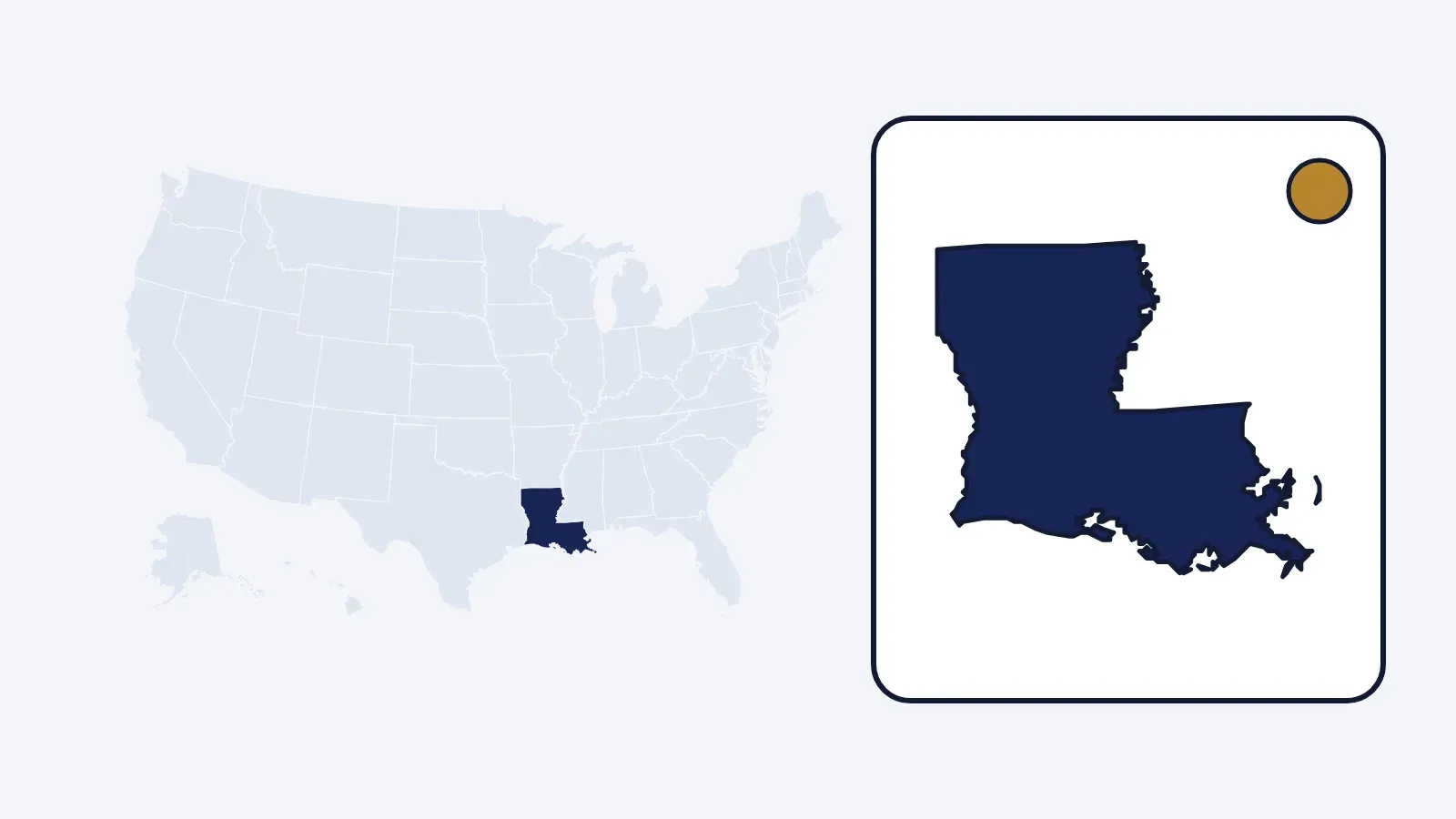
Louisiana claim rules on one sheet
- Total loss rule Damage at 75% or more of market value (title law) R.S. 32:702(14), NADA value; cosmetic hail damage excluded. Salvage title applied for within 30 days (R.S. 32:707).
- Insurer must acknowledge Start adjusting within 14 days after notice of the loss
- Insurer must decide Pay or make a written offer within 30 days after proof of loss Arbitrary delay: penalty of 50% of the amount due or $1,000, plus attorney's fees. R.S. 22:1892.
- Deadline to sue 2 years for injury and property damage (claims after July 1, 2024) Act 423 of 2024; older crashes keep the earlier, shorter period.
- Fault system At-fault; barred at 51% fault since January 1, 2026 Act 15 of 2025 replaced pure comparative fault (Civil Code Art. 2323).
- Police report needed Immediately if injury, death or over $500 in property damage
- State crash report None required from drivers; police send reports to DOTD within 48 hours
A summary by Valoroath of the state's statutes and regulations, not an official document. The sources are listed at the end of this page.
The clock on a Louisiana claim
Louisiana Revised Statutes 22:1892 sets the timing for property and casualty claims, including claims against another driver's insurer for damage to your car. It was most recently amended in 2025.
| Step | Deadline | Subsection |
|---|---|---|
| Start adjusting a property damage claim | 14 days after notice of the loss | A(3) |
| Pay a claim owed to an insured | 30 days after satisfactory proof of loss | A(1) |
| Make a written offer on a property damage claim, including a third-party claim | 30 days after satisfactory proof of loss | A(4), B(1) |
| Give you the field adjuster's report on request | 15 days after the request | A(5) |
If an insurer fails to pay or make a written offer within 30 days and the failure is arbitrary, capricious or without probable cause, it can owe a penalty of 50% of the amount found due, or $1,000 if that is more, plus proven economic damages and reasonable attorney's fees. Keep a dated record of when you gave proof of loss. Our page on claims that drag on shows how to put a delay in writing.
Rental cars and loss of use
- Claim against the other driver's insurer: if you lose the use of your personal car for more than five business days, the insurer responsible must pay reasonable costs of other transportation, with a penalty if its refusal is arbitrary, capricious or without probable cause (B(4)(a)).
- Claim under your own rental coverage: if your policy includes rental coverage, the insurer faces a penalty if it arbitrarily or without probable cause fails to provide it within three business days of your written request (B(4)(b)).
Ask for rental coverage in writing so the three-day clock is easy to prove. The rental coverage calculator helps you check whether your policy's daily and total limits will last through the repair.
When a Louisiana car is a total loss
Louisiana's title law, R.S. 32:702(14), defines a total loss as a car with damage equal to 75% or more of its market value, as set by the most current National Automobile Dealers Association handbook. Cosmetic hail damage, such as glass, doesn't count toward that line; those cars get a branded hail-damage title instead of a salvage title.
- How the value is set: when an insurer pays cash for a total loss, the value must come from a method listed in R.S. 22:1892(B)(5), such as a survey of qualified dealers in your local market, a recognized used-vehicle industry source, or an appraiser both sides agree on.
- The title: within 30 days after the claim is settled, the title goes to the Office of Motor Vehicles with an application for a salvage title (R.S. 32:707).
- If you keep the car: the insurer must notify the Office of Motor Vehicles within 30 days of the settlement.
What the settlement should include, and how to test the number, is in our guide to total loss claims.
Reporting a Louisiana crash
Under R.S. 32:398, the driver in a crash that injures or kills anyone, or causes more than $500 in property damage, must immediately notify the local police department if it happens in a city or town, or the nearest sheriff's office or State Police station outside one. In an area under an evacuation order or a declared emergency, the driver has 72 hours.
Drivers don't file a separate written report with the state. The agency that investigates sends its crash report to the Department of Transportation and Development within 48 hours of finishing the investigation. Involved parties and their insurers can get a copy.
Fault, the new rule and the deadline to sue
Louisiana is an at-fault state: the driver who caused the crash, through their liability insurance, pays for the damage. Act 15 of 2025 amended Civil Code Article 2323 to replace pure comparative fault with modified comparative fault, effective January 1, 2026. Under the new rule, if you are 51% or more at fault you can't recover damages; below that, your award drops by your share. Which rule applies to a crash before 2026 is a legal question for a licensed Louisiana attorney.
Act 423 of 2024 set a two-year period to sue for delictual actions, which include crash claims for injury and property damage. It applies only to claims arising after July 1, 2024; older crashes fall under the earlier, shorter period.
- Ask the insurer in writing for the reason for a denial or a low offer and the policy language behind it.
- File a complaint with the Louisiana Department of Insurance if the insurer misses its deadlines or won't explain itself; our guide to insurance department complaints shows what to include.
Questions people ask
How long does a Louisiana insurer have to pay a car insurance claim?
It must start adjusting a property damage claim within 14 days of notice and pay, or make a written offer, within 30 days after receiving satisfactory proof of loss under R.S. 22:1892.
What happens if a Louisiana insurer pays late?
If the delay is arbitrary, capricious or without probable cause, the insurer can owe a penalty of 50% of the amount due, or $1,000 if more, plus proven economic damages and reasonable attorney's fees.
How long do I have to sue after a car accident in Louisiana?
For crashes after July 1, 2024, two years under Act 423 of 2024. Older crashes fall under the earlier, shorter period.
Can I recover if I was partly at fault in Louisiana?
Since January 1, 2026, Civil Code Article 2323 bars recovery if you are 51% or more at fault. Below that, your damages are reduced by your share of fault.
Sources on record
- Louisiana Revised Statutes 22:1892 — Payment and adjustment of claims
- Louisiana Legislature — HB 431 (2025), Act 15: comparative fault, effective January 1, 2026
- Louisiana Legislature — HB 431 (2025), enrolled text amending Civil Code Article 2323
- Louisiana Legislature — Act 423 of 2024 (HB 315): two-year prescription for delictual actions
- Louisiana Revised Statutes (2025 edition), R.S. 32:398 — Crash reports
- Louisiana Revised Statutes 32:702 — Definitions (total loss at 75% of market value)
- Louisiana Revised Statutes (2025 edition), R.S. 32:707 — Certificates of title, salvage titles
- Louisiana Department of Insurance
Facts on this page were checked against these sources on November 11, 2026. The comparative fault change took effect January 1, 2026, and the two-year deadline applies to claims arising after July 1, 2024.
Ask a licensed agent to review your coverage
After a claim, the policy you had is the one you can still change. Describe your situation and Valoroath passes it to licensed insurance agents and insurers who can review your coverage and quote, if you want them to. Valoroath itself does not sell insurance or handle claims.
- 1 Five questions about your car, your record and your policy.
- 2 Who to ask for, and your consent to be contacted.
- 3 A licensed insurance agent or insurer reviews what you have. You change nothing unless you choose to.
Sending this request shares your answers and contact details with the licensed insurance agents and insurers who receive it, which some state privacy laws treat as a sale; see your privacy choices. An agent reviews your coverage; they can't take on your claim or a dispute with your insurer. You pay Valoroath nothing. The licensed insurance agents and insurers who contact you pay Valoroath for requests and set their own prices and terms; your claim stays with your insurer. How we make money.
Next in the file
-

Claim dispute
When your claim drags on
The time limits insurers work under, why files stall, and the written steps that move a claim.
-

How claims work
Rental reimbursement during repairs
Daily and total rental limits over a long repair, loss of use from the at-fault driver, and when rental ends.
-

After a crash
When to call the police
The cases for 911, state damage thresholds from $50 to $4,000, and why a report helps after a small crash.