Total loss by formula
Car insurance claim rules in Connecticut
What Connecticut law asks of an insurer on your claim, how a car becomes a total loss, the state's arbitration program for car damage disputes, and how long you have to sue.
By Valoroath Editorial Team Updated 6 min read
In plain terms
Connecticut's unfair claims law has no day counts for car claims. It requires insurers to act with reasonable promptness on claim communications and to affirm or deny coverage within a reasonable time after proof of loss. There is no damage percentage for a total loss: the insurer declares it, and the title is stamped salvage. If you and the insurer disagree about repair costs, the car's value, rental or storage, the Insurance Department runs an auto arbitration program for a $20 fee. Connecticut is an at-fault state, and you generally have two years to sue, with a three-year outer limit.
- Total loss rule
- Insurer's formula
- Insurer must decide
- Within a reasonable time
- Deadline to sue
- 2 years (3-year cap)
- Fault system
- At-fault
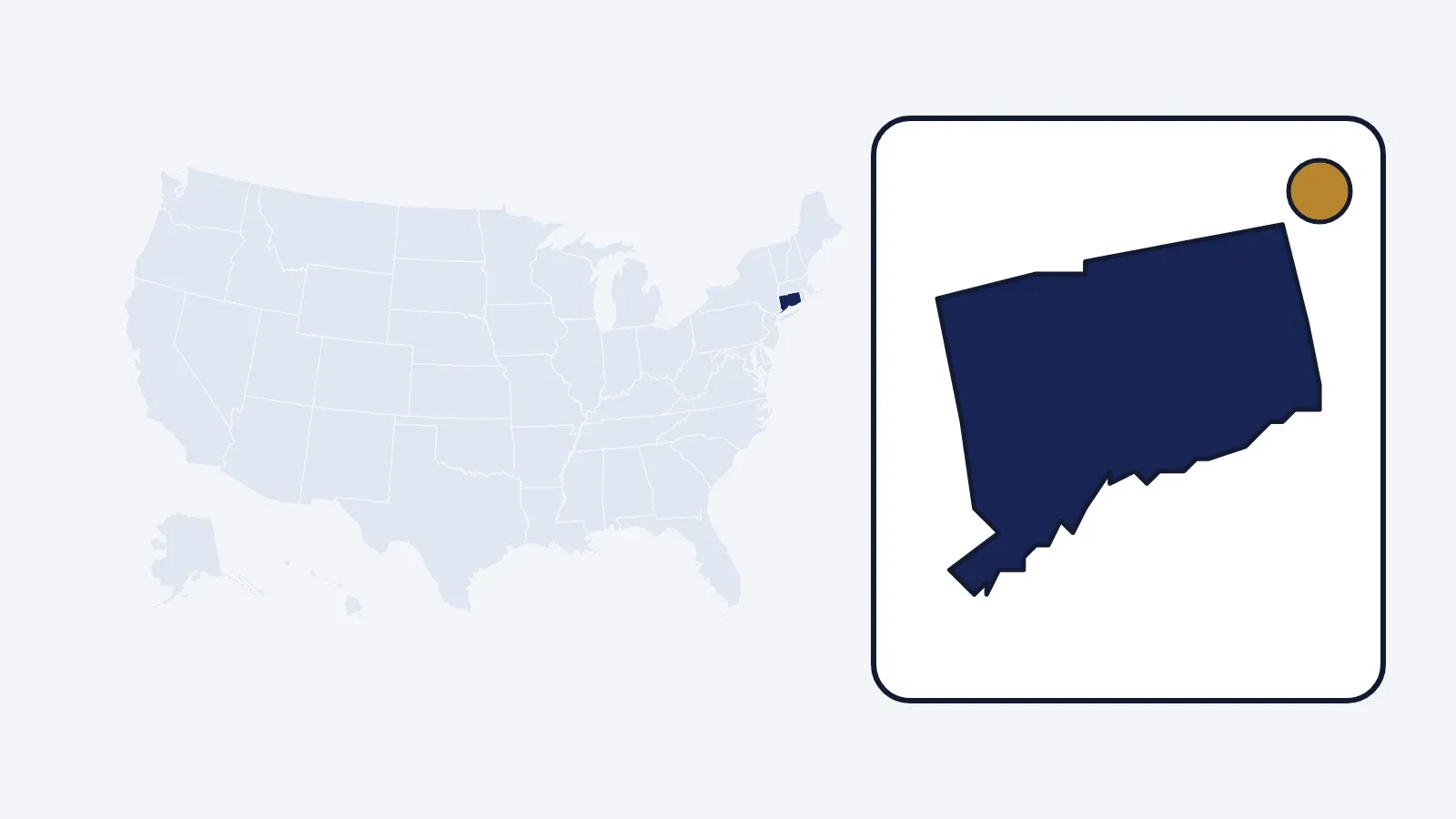
Connecticut claim rules on one sheet
- Total loss rule No percentage in law; insurer's formula The insurer declares a total loss and the DMV gets a title stamped Salvage (DMV form B-256).
- Insurer must acknowledge No fixed number; 'reasonable promptness' (statute) Conn. Gen. Stat. §38a-816(6)(B).
- Insurer must decide No fixed number; 'reasonable time' after proof of loss (statute) Conn. Gen. Stat. §38a-816(6)(E). Arbitration for amount disputes: $20 fee, decision 15 days after hearing.
- Deadline to sue 2 years from injury or discovery, 3 at most, for injury and property
- Fault system At-fault; barred if over 50% at fault
- Police report needed At once if you can't give your details at the scene Conn. Gen. Stat. §14-224; drivers must stop, help and exchange details after any crash.
- State crash report Officers file within 5 days: injury, death or damage over $1,000 Conn. Gen. Stat. §14-108a. Ask the DMV whether your crash also needs a driver's report.
A summary by Valoroath of the state's statutes and regulations, not an official document. The sources are listed at the end of this page.
What Connecticut requires of an insurer
Section 38a-816(6) of the Connecticut General Statutes lists unfair claim settlement practices. For car claims it uses "reasonable" standards rather than day counts. Fixed deadlines in that section apply only to accident and health claims.
- Communications: failing to acknowledge and act with reasonable promptness on communications about claims is an unfair practice.
- Decisions: failing to affirm or deny coverage within a reasonable time after proof of loss statements are completed is an unfair practice.
- Settlement: not attempting in good faith to reach prompt, fair and equitable settlements once liability is reasonably clear is an unfair practice.
Without a number to cite, the best tool is a written record. Ask the adjuster what is still needed, send it with a dated cover note, and ask for a decision by a specific date. A regulator reading the file will judge "reasonable" from it. Our page on claims that drag on shows how to write that letter, using the NAIC model regulation's 15-day and 21-day benchmarks as a reference point.
How a Connecticut car becomes a total loss
Connecticut sets no percentage of value. The Department of Motor Vehicles says insurance companies have the authority to declare a car a total loss, subject to regulation by the Insurance Department. The insurer then sends the DMV a copy of the title stamped "Salvage," and the plates should come off the car. A rebuilt salvage car goes through a DMV salvage inspection, where the insurance adjuster's report is required.
Because the decision rests on the insurer's own formula, ask for the repair estimate and the valuation side by side, and check the comparable cars. Our guide to total loss claims shows what the settlement should include, and the total loss check runs the numbers.
Appraisals, repair shops and the arbitration program
Motor vehicle physical damage appraisers are licensed in Connecticut, and Insurance Department regulations 38a-790-1 to 38a-790-8 set their conduct rules:
- No steering. An appraiser may not ask that appraisals or repairs be done at a specified repair shop.
- Price agreed with the shop. For a car repaired in Connecticut, the appraiser may agree on a repair price only with a repair shop.
- A copy at the shop. The appraiser must leave a legible copy of the appraisal with the shop chosen to do the repairs.
When coverage and fault are not in dispute but the amount is, and the department's Consumer Affairs staff can't resolve it, you can ask for arbitration. It is open to policyholders with collision or comprehensive claims and to owners claiming against an at-fault driver's insurer, and covers repair costs, the car's value, loss of use, rental and storage charges.
- Get the Request for Arbitration form from the Insurance Department and choose an in-person or documents-only hearing.
- Mail it with a $20 non-refundable check payable to "Treasurer, State of Connecticut" and your evidence to the Arbitration Unit, P.O. Box 816, Hartford, CT 06142-0816.
- Expect a written decision within 15 days after the hearing. If you win, the insurer must pay within 10 business days of receiving the decision.
Reporting a Connecticut crash
Under Section 14-224, a driver in a crash that causes death, injury or property damage must stop at once, give any help needed, and give their name, address, license and registration numbers to the injured person, the property owner, an officer or a witness. If you can't give that information for any reason, you must report the crash to the police immediately.
Officers who investigate a crash that kills or injures someone, or causes more than $1,000 of damage to any one person's property, send a uniform investigation of accident report to the Commissioner of Transportation within five days of finishing, under Section 14-108a. Ask the officer for the report number; your insurer will want it.
Fault, deadlines to sue and complaints
Connecticut is an at-fault state: the driver who caused the crash, through their liability insurance, pays for the damage. Under Section 52-572h, you can recover if your negligence was not greater than the combined negligence of those you claim against, and your damages are reduced by your share. Section 52-584 gives two years from the date an injury to a person or to property is first sustained or discovered to sue, and no more than three years from the crash itself.
- Ask the insurer in writing for the reason for a denial or a low offer and the policy language it relies on.
- Call the Consumer Affairs Helpline of the Connecticut Insurance Department at (800) 203-3447 or (860) 297-3900.
- File a complaint online, by email or with the mail-in form. Our guide to insurance department complaints shows what to include.
Questions people ask
How long does a Connecticut insurer have to settle a car insurance claim?
Connecticut law sets no number of days for car claims. Insurers must act with reasonable promptness on claim communications and affirm or deny coverage within a reasonable time after proof of loss.
What percentage of damage totals a car in Connecticut?
There is no percentage in Connecticut law. The insurer decides whether a car is a total loss, and the title is then stamped salvage.
What is the Connecticut auto arbitration program?
An Insurance Department program for disputes over repair costs, a car's value, loss of use, rental or storage when coverage and fault are not in dispute. Each party pays a $20 fee, and the decision is meant to be binding.
How long do I have to sue after a car accident in Connecticut?
Generally two years from when the injury or damage is first sustained or discovered, and never more than three years from the crash, under Section 52-584.
Sources on record
- Connecticut General Statutes §38a-816 — Unfair claim settlement practices
- Regulations of Connecticut State Agencies §§38a-790-1 to 38a-790-8 — Motor vehicle physical damage appraisers
- Connecticut Insurance Department — Auto Arbitration Program guide
- Connecticut DMV — Salvage inspection information (form B-256)
- Connecticut General Statutes §14-224 — Duties after an accident
- Connecticut General Statutes §14-108a — Uniform investigation of accident report
- Connecticut General Statutes §52-572h — Comparative negligence
- Connecticut General Statutes §52-584 — Limitation for injury to person or property
- Connecticut Insurance Department — File a complaint or ask a question
Facts on this page were checked against these sources on November 11, 2026. Connecticut's claim standards use "reasonable" time rather than day counts; your policy can add time limits of its own.
Ask a licensed agent to review your coverage
After a claim, the policy you had is the one you can still change. Describe your situation and Valoroath passes it to licensed insurance agents and insurers who can review your coverage and quote, if you want them to. Valoroath itself does not sell insurance or handle claims.
- 1 Five questions about your car, your record and your policy.
- 2 Who to ask for, and your consent to be contacted.
- 3 A licensed insurance agent or insurer reviews what you have. You change nothing unless you choose to.
Sending this request shares your answers and contact details with the licensed insurance agents and insurers who receive it, which some state privacy laws treat as a sale; see your privacy choices. An agent reviews your coverage; they can't take on your claim or a dispute with your insurer. You pay Valoroath nothing. The licensed insurance agents and insurers who contact you pay Valoroath for requests and set their own prices and terms; your claim stays with your insurer. How we make money.
Next in the file
-

Claim dispute
The appraisal clause
How appraisal settles a dispute over the amount: appraisers, the umpire, costs, and new state laws.
-

How claims work
Total loss claims
When a car is totaled, what actual cash value should include, and what happens to the loan and the title.
-

After a crash
When to call the police
The cases for 911, state damage thresholds from $50 to $4,000, and why a report helps after a small crash.