Total loss at 100%
Car insurance claim rules in Alaska
The deadlines an Alaska insurer has to meet on your claim, when a damaged car counts as a total loss, what to report after a crash, and how long you have to sue.
By Valoroath Editorial Team Updated 6 min read
In plain terms
Alaska's Division of Insurance sets claim deadlines in working days. The insurer must send a written acknowledgment within 10 working days, and on a claim under your own policy tell you within 15 working days after proof of loss whether it accepts or denies it, then pay the undisputed part within 30 working days. For title purposes an insurer-held car is a total loss when repairs would cost more than it is worth. A crash with an injury or $2,000 of damage must be reported to the police at once, and to the DMV within 10 days if no officer investigated. Most crash lawsuits must be filed within two years.
- Total loss rule
- Repairs over 100% of value
- Insurer must decide
- 15 working days
- Deadline to sue
- 2 years
- Fault system
- At-fault
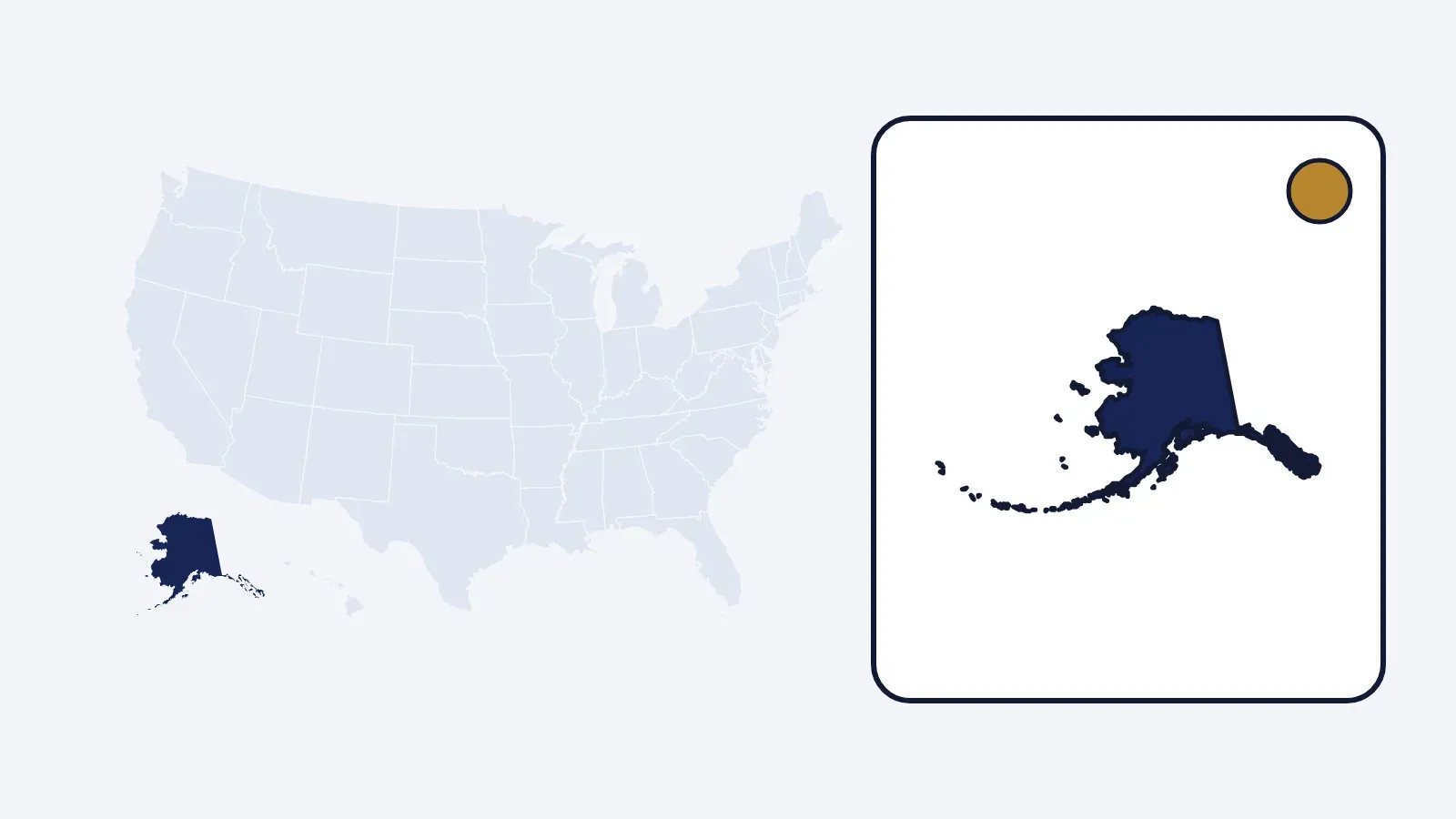
Alaska claim rules on one sheet
- Total loss rule Repairs exceed the car's worth or insured value: 100% DMV rule for insurer-acquired cars (constructive total loss), 2 AAC 92.170; no percentage in statute.
- Insurer must acknowledge 10 working days after receiving the claim, in writing
- Insurer must decide 15 working days after proof of loss; written reasons if longer First-party claims. Undisputed amounts paid within 30 working days (3 AAC 26.070).
- Deadline to sue 2 years for injury and for property damage
- Fault system At-fault; pure comparative fault
- Police report needed At once if anyone is hurt or killed, or damage is $2,000 or more
- State crash report Driver report within 10 days if no officer investigated (form 12-209) Same thresholds; AS 28.35.080(b). Certificate of insurance within 15 days.
A summary by Valoroath of the state's statutes and regulations, not an official document. The sources are listed at the end of this page.
The clock on an Alaska claim
Chapter 26 of Title 3 of the Alaska Administrative Code sets the standards. The acknowledgment and investigation limits protect you whether you claim under your own policy or against the other driver's insurer; the decision and payment limits in 3 AAC 26.070 cover first-party claims.
| Step | Deadline | Section |
|---|---|---|
| Acknowledge the claim in writing, with the handler's name and contact details | 10 working days after receiving it | 3 AAC 26.040 |
| Finish the investigation, unless due diligence can't | 30 working days | 3 AAC 26.050 |
| Accept or deny a first-party claim in writing | 15 working days after proof of loss, unless the policy sets another limit | 3 AAC 26.070 |
| If more time is needed, give the reasons in writing, then update you | Before the deadline, then every 45 working days | 3 AAC 26.070 |
| Pay the parts of a first-party claim not in dispute | 30 working days after proof of loss | 3 AAC 26.070 |
The decision clock starts when the insurer has a properly completed statement of claim or proof of loss, so send what it asks for quickly and keep dated copies. If the investigation runs past 30 working days, the Division of Insurance says the insurer must explain the delay in writing and give an expected completion time. When a file stalls, see claims that drag on.
When an Alaska car is a total loss
Alaska has no percentage-of-value threshold in statute. The DMV regulation for insurers that acquire a damaged car, 2 AAC 92.170, describes an actual total loss (the car is wrecked, dismantled or destroyed) and a constructive total loss, where the cost of repairing the car exceeds its worth or insured value. An insurer that gets the title marks it junk and surrenders it to the DMV. Since August 1, 2025, the DMV can also issue a salvage title for a car with a current junk brand that has not been rebuilt.
- Comparable car. On a first-party total loss settled at actual cash value, the insurer must offer a comparable, available replacement or pay a cash settlement based on the actual cost of a comparable car (3 AAC 26.080).
- Taxes and fees. A replacement must include applicable taxes, license fees and transfer charges, at no cost to you beyond your deductible.
- A written explanation. For damage to a car, the insurer must give you a reasonable written explanation of how it valued the damage.
An insurer may total a car before repairs reach its full value, when repairs plus salvage value come close. The total loss check shows how that math works, and our guide to total loss claims explains how to test the valuation.
Reporting an Alaska crash
Under AS 28.35.080, the driver in a crash that injures or kills someone, or causes total property damage of an apparent $2,000 or more, must notify the police immediately by the fastest available means: the local police inside a municipality, otherwise the Department of Public Safety.
The same section requires a written or electronic report within 10 days to the Department of Administration, and to the local police inside a municipality, unless a peace officer investigated the crash. The Alaska Department of Transportation directs drivers to the self-report form 12-209 when no officer came or an officer told them to self-report; it is submitted electronically to the DMV, and a certificate of insurance is due within 15 days.
Fault, repairs and who pays
Alaska is an at-fault state: the driver who caused the crash, through their liability insurance, pays for the damage and injuries they caused. Under AS 09.17.060, your own share of the fault does not bar your claim; it reduces your damages in proportion. That is pure comparative fault.
- Example: with $10,000 in damages and 40% of the fault, you can recover $6,000.
- Insurer-chosen shops. If the insurer picks a specific repair shop, it must guarantee the repairs, restore the car to its condition before the loss at no extra cost to you, and see that the work is done within a reasonable time (3 AAC 26.080).
- Your own collision coverage fixes your car while fault is argued; your insurer can then seek its money from the other side.
Deadlines to sue and where to complain
AS 09.10.070 gives two years from the date the claim arises to sue for personal injury or death, or for injuring personal property such as your car. Talks with an adjuster do not stop the clock.
- Ask the insurer in writing for the reason for a denial or a low offer and the policy language it relies on.
- Call the Alaska Division of Insurance at (907) 269-7900 in Anchorage, (907) 465-2515 in Juneau, or toll-free 1-800-INSURAK in-state outside Anchorage.
- File a complaint through the division's Complaints & Inquiries page or by email. Our guide to insurance department complaints shows what to include.
Questions people ask
How long does an Alaska insurer have to settle a car insurance claim?
It must acknowledge the claim within 10 working days. On a claim under your own policy, it must accept or deny within 15 working days after proof of loss or explain in writing why it needs more time, and pay the undisputed part within 30 working days.
What percentage of damage totals a car in Alaska?
Alaska law sets no percentage. The DMV's rule for insurer-acquired cars treats a car as a constructive total loss when repair costs exceed its worth or insured value; an insurer may total a car sooner.
Do I have to report a crash to the Alaska DMV?
If the crash caused an injury, a death or about $2,000 or more of damage and no officer investigated it, the driver must file a report within 10 days, usually on form 12-209, submitted electronically.
How long do I have to sue after a car accident in Alaska?
Generally two years from the date the claim arises, for both personal injury and damage to your car, under AS 09.10.070.
Sources on record
- Alaska Division of Insurance — Your rights when you file a claim
- 3 AAC 26.070 — Standards for prompt, fair and equitable settlements
- 2 AAC 92.170 — Salvage vehicles acquired by insurers
- Alaska DMV — Salvage vehicle titles
- AS 28.35.080 — Duty to report accidents
- Alaska Department of Transportation and Public Facilities — Driver crash self-report (form 12-209)
- AS 09.10.070 — Two-year limitation for torts and personal property
- AS 09.17.060 — Effect of contributory fault
Facts on this page were checked against these sources on November 11, 2026. The decision and payment limits in 3 AAC 26.070 apply to claims under your own policy unless the policy sets a different limit.
Ask a licensed agent to review your coverage
After a claim, the policy you had is the one you can still change. Describe your situation and Valoroath passes it to licensed insurance agents and insurers who can review your coverage and quote, if you want them to. Valoroath itself does not sell insurance or handle claims.
- 1 Five questions about your car, your record and your policy.
- 2 Who to ask for, and your consent to be contacted.
- 3 A licensed insurance agent or insurer reviews what you have. You change nothing unless you choose to.
Sending this request shares your answers and contact details with the licensed insurance agents and insurers who receive it, which some state privacy laws treat as a sale; see your privacy choices. An agent reviews your coverage; they can't take on your claim or a dispute with your insurer. You pay Valoroath nothing. The licensed insurance agents and insurers who contact you pay Valoroath for requests and set their own prices and terms; your claim stays with your insurer. How we make money.
Next in the file
-

How claims work
Total loss claims
When a car is totaled, what actual cash value should include, and what happens to the loan and the title.
-

Claim dispute
When your claim drags on
The time limits insurers work under, why files stall, and the written steps that move a claim.
-

After a crash
Information to exchange
What the law makes drivers share, the fuller list a claim needs, and what you can keep to yourself.